-
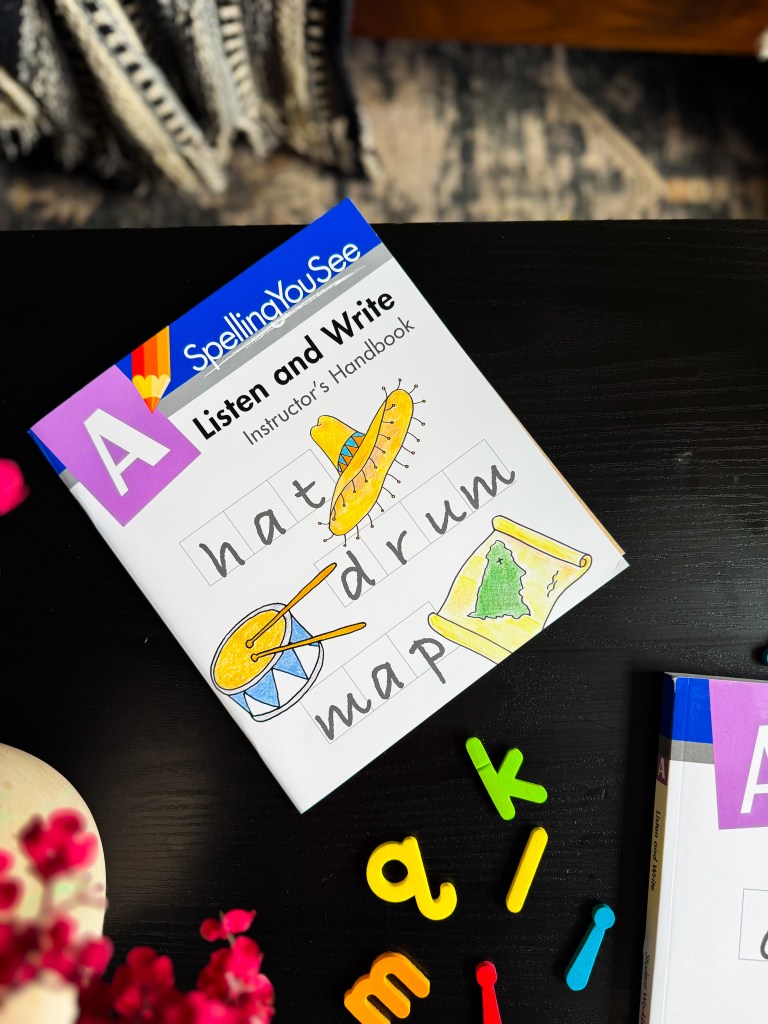
Spelling You See Level A Review: A Gentle Kindergarten Spelling Curriculum
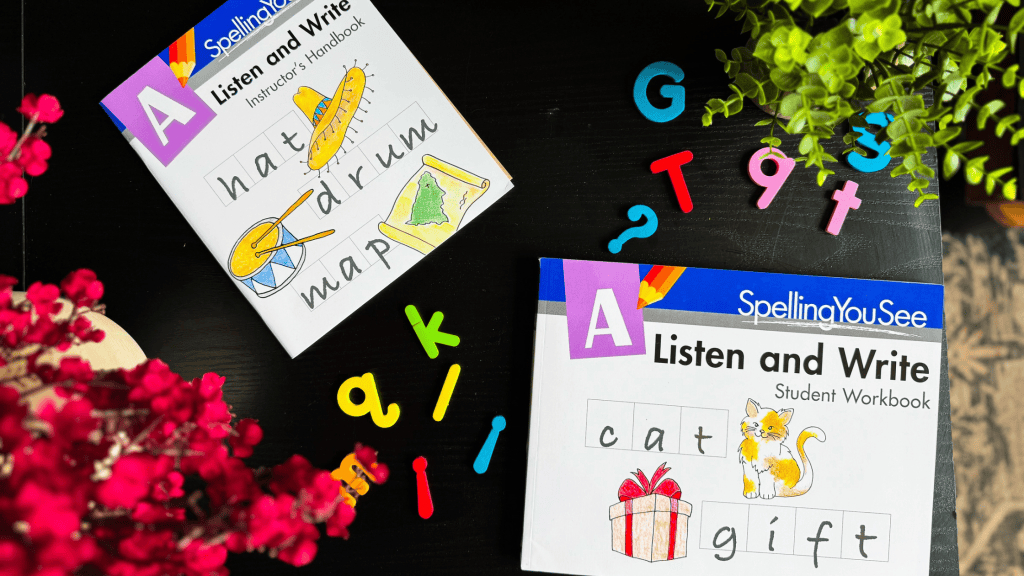
Teaching kindergarten spelling doesn’t have to involve long lessons, memorizing spelling lists, or weekly spelling tests! If you’re looking for a simple kindergarten spelling curriculum that helps young learners develop handwriting, phonics, and spelling skills, Spelling You See Level A is worth exploring.
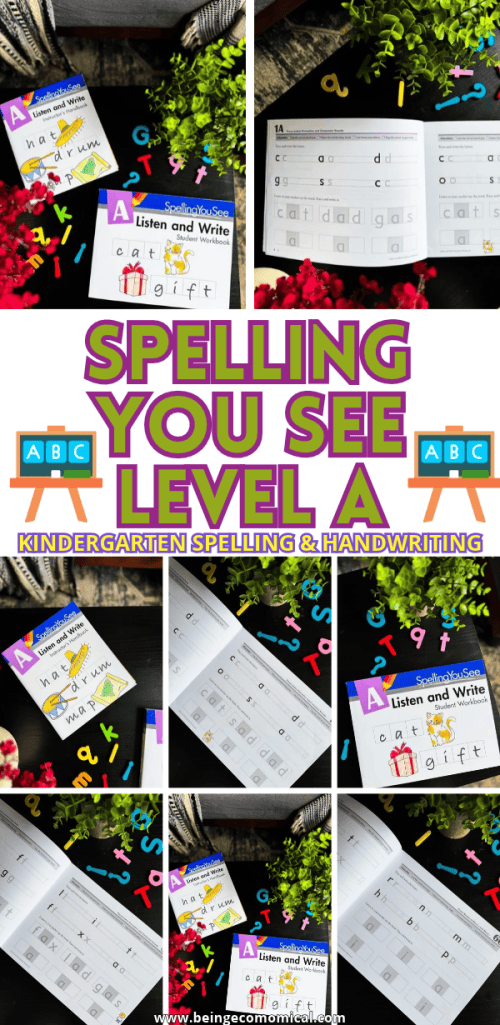
We received Spelling You See Level A: Listen and Write as part of our Timberdoodle Kindergarten Curriculum Kit, and I love the idea of introducing spelling through short, manageable lessons that fit naturally into our homeschool routine.
Related Posts:
- Fine Motor and Number Recognition Activity for Kindergarten: Djeco Caribbean Mosiacs Review
- Timberdoodle Uppercase Flashcard Set Review: A Fun Kindergarten Phonics Activity
- My Big Wimmelbook: My First 100 Word Review for Kindergarten Homeschool
What Is Spelling You See Level A?
Spelling You See Level A is a beginner-friendly homeschool spelling program designed for kindergarten students and emerging readers.
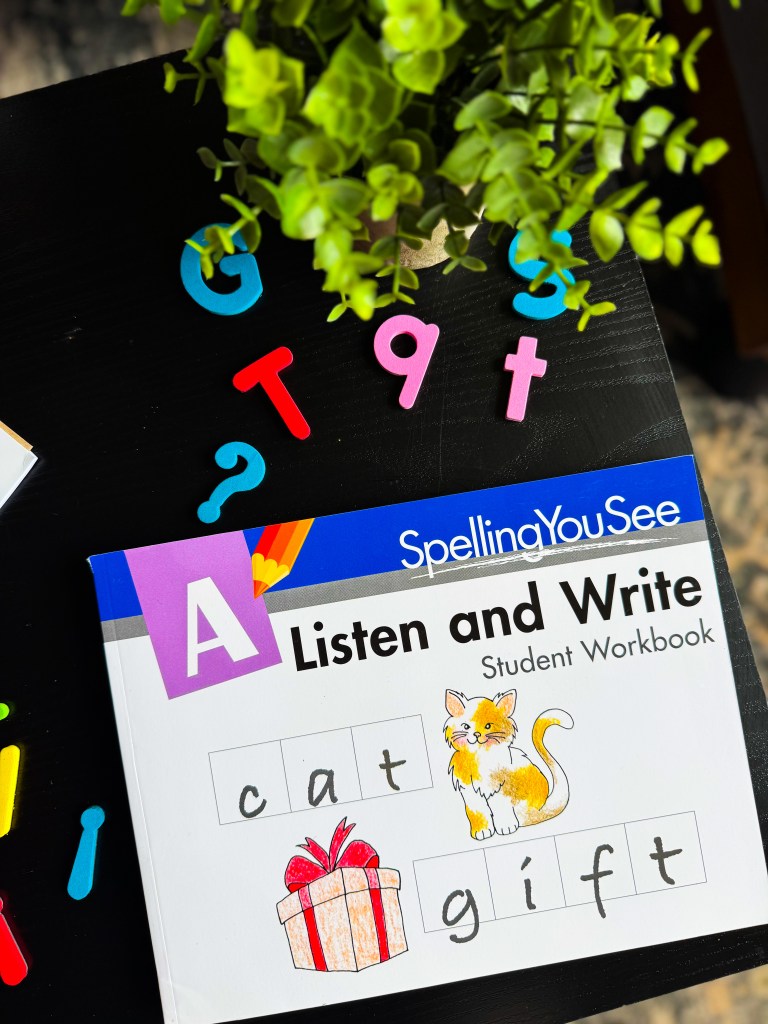
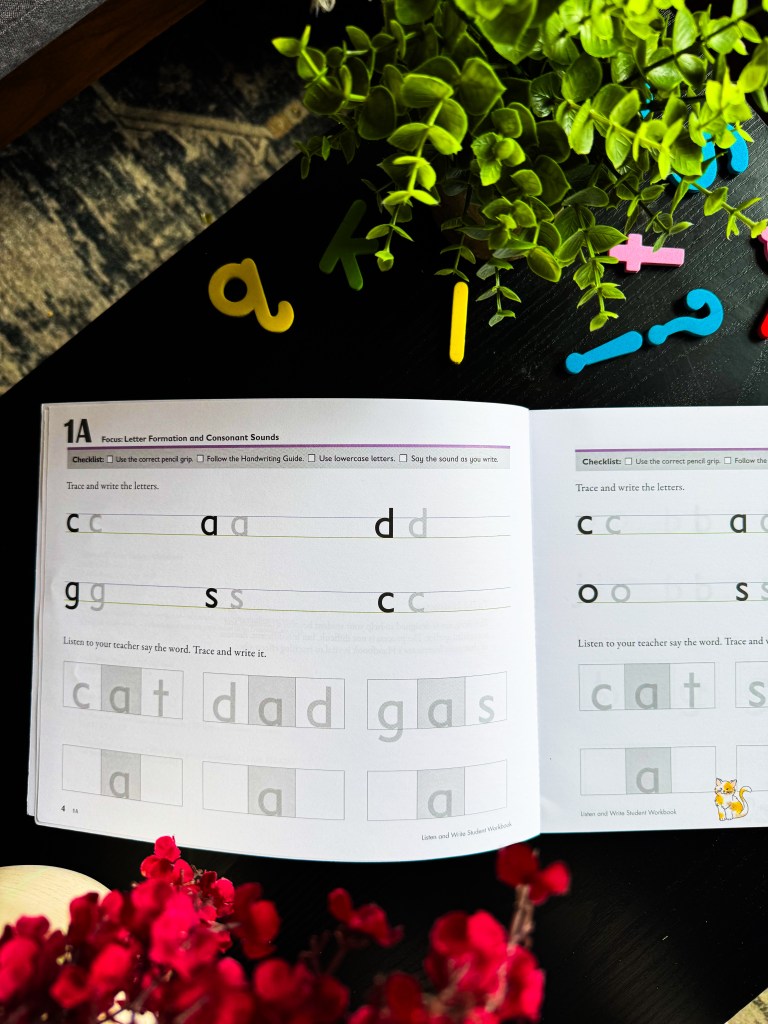
Instead of traditional spelling tests, the curriculum introduces spelling through listening, handwriting practice, phonics, and repetition.
The program includes:
- A student workbook with 36 lessons
- An instructor’s handbook with teaching instructions
- Letter tracing and handwriting activities
- Three-letter word and short-vowel practice
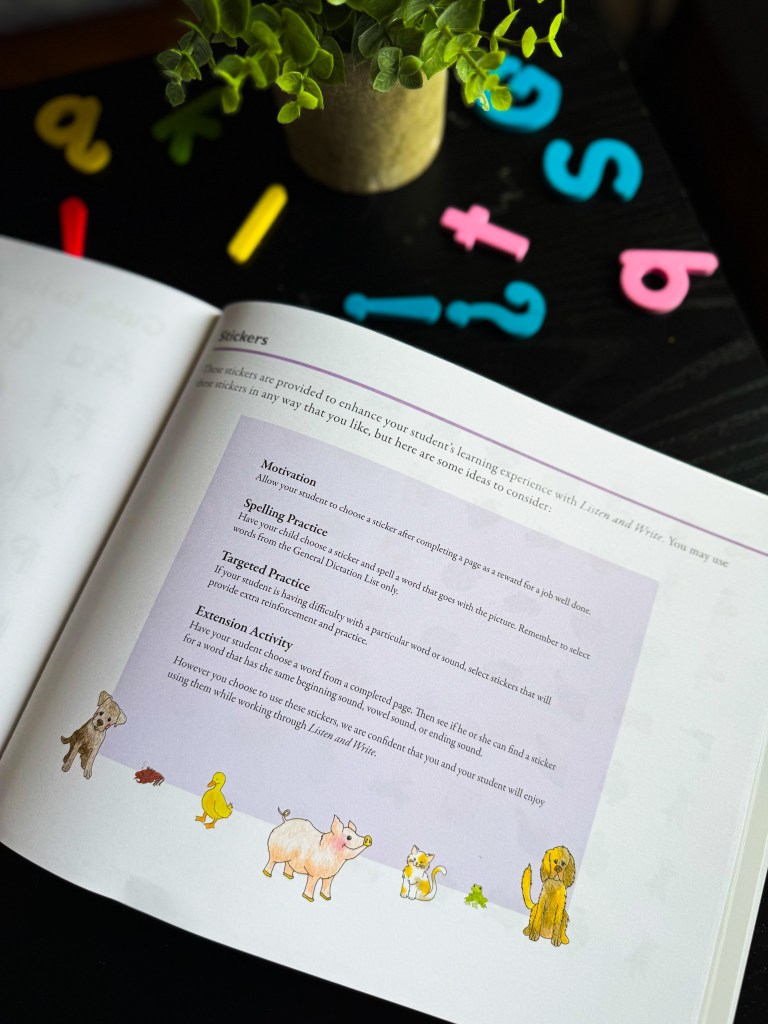
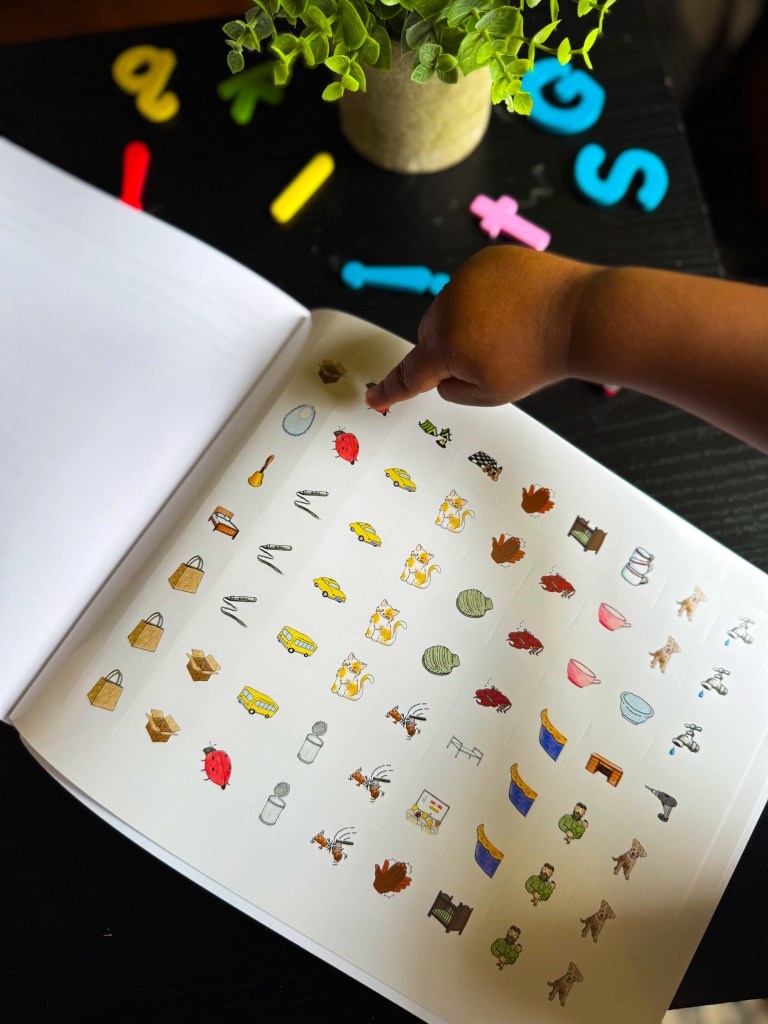
- Picture stickers for motivation and additional learning activities
Each lesson is designed to take approximately 10 minutes a day, making it a manageable addition to a kindergarten homeschool schedule.


How Does Spelling You See Level A Work?
One thing I appreciate about this kindergarten spelling program is how gradually the lessons progress.
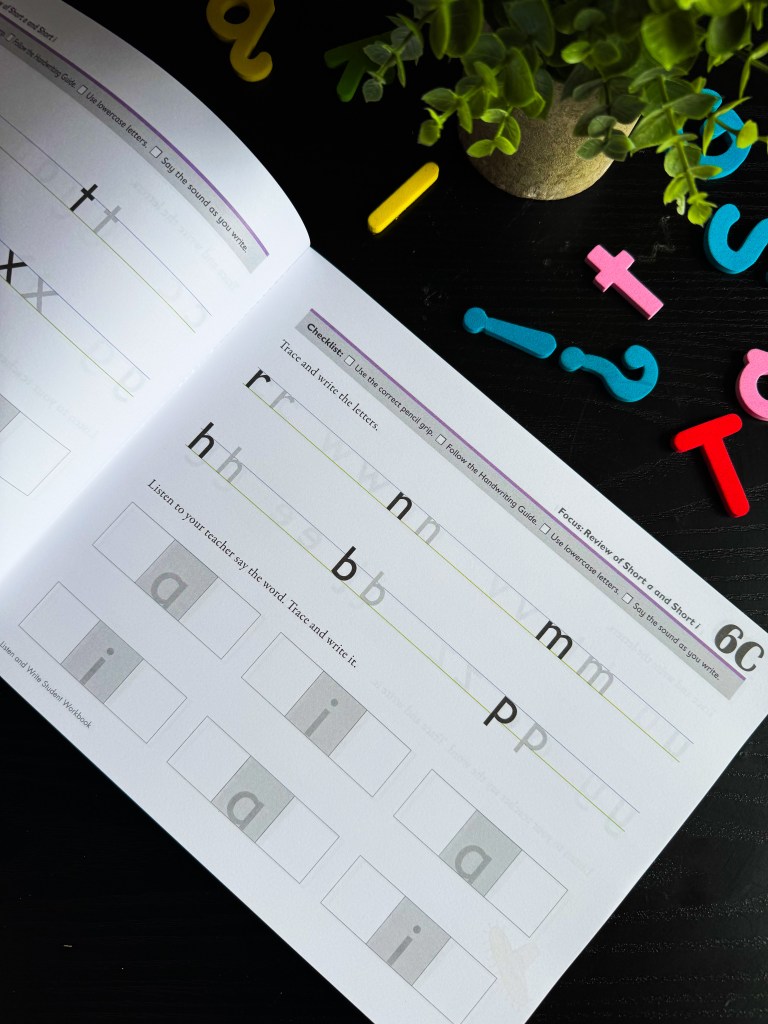
Children begin by practicing lowercase letter formation and identifying letter sounds. As they become more comfortable, they move into writing simple words like cat, dad, and gas.
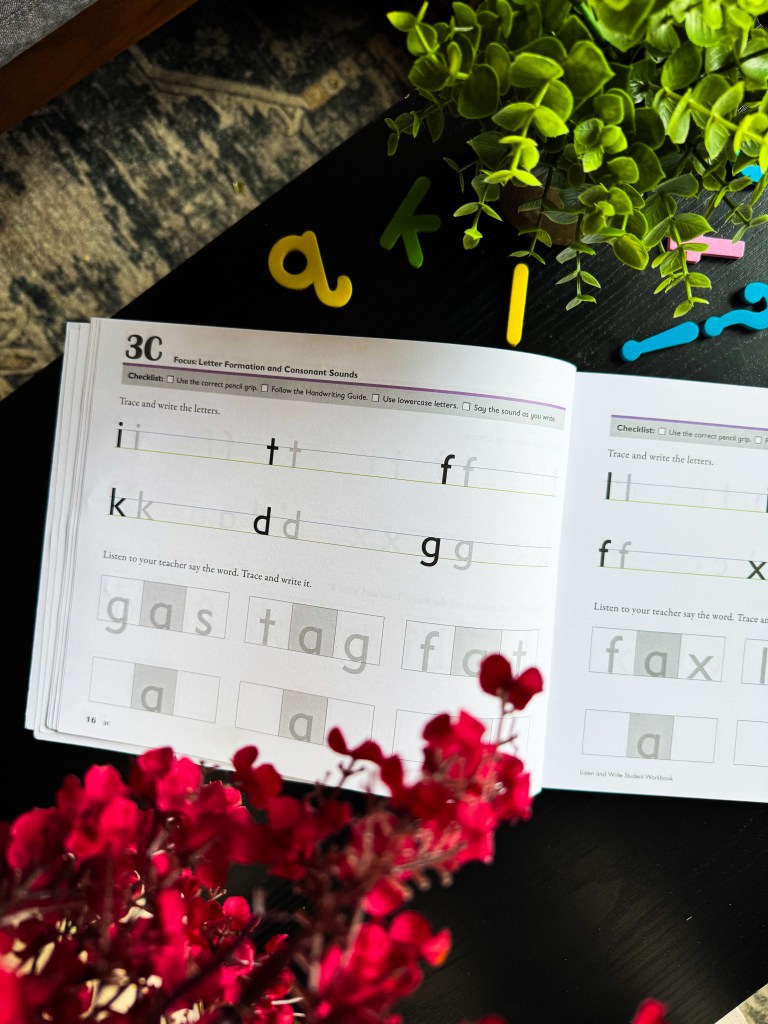
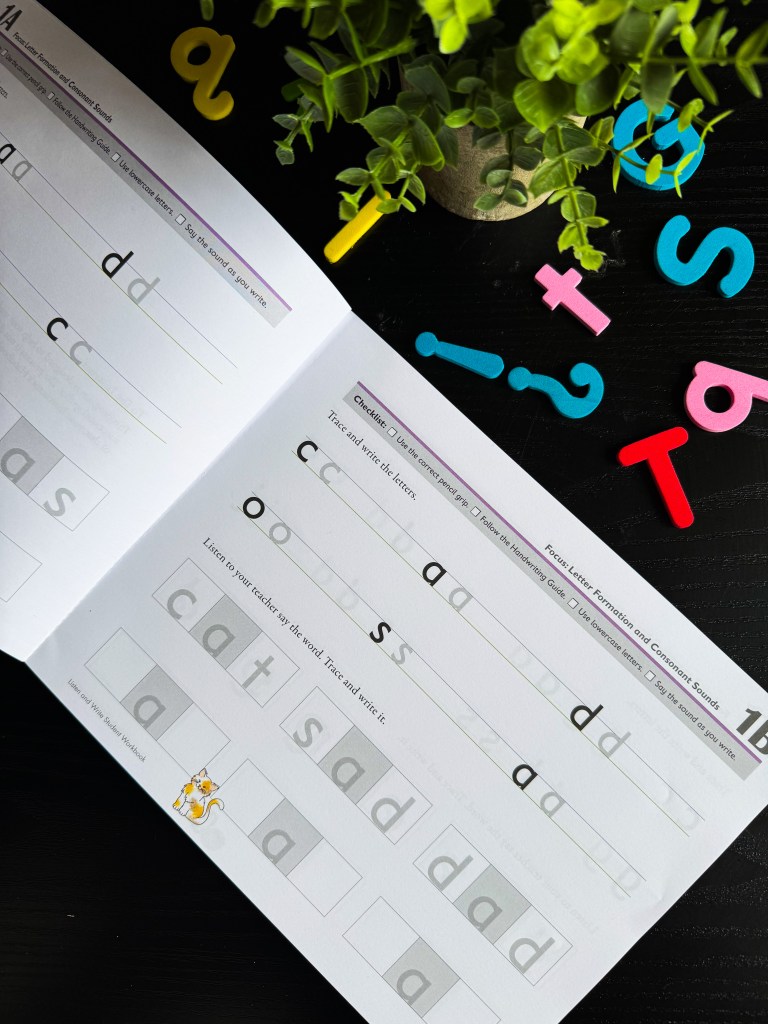
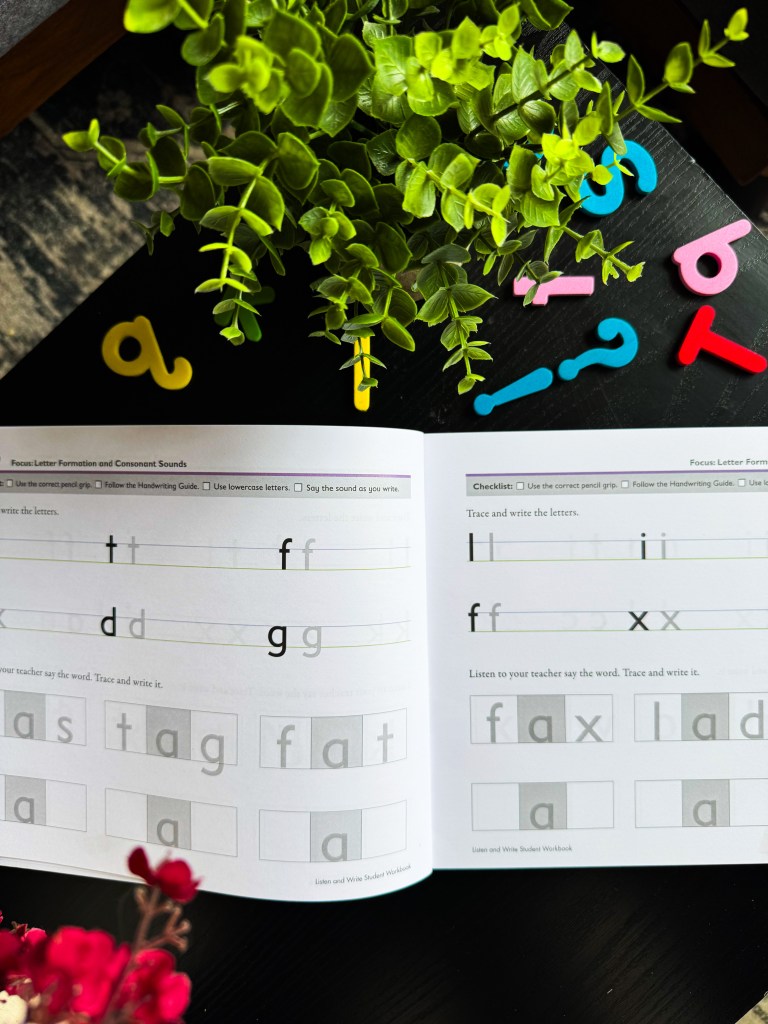
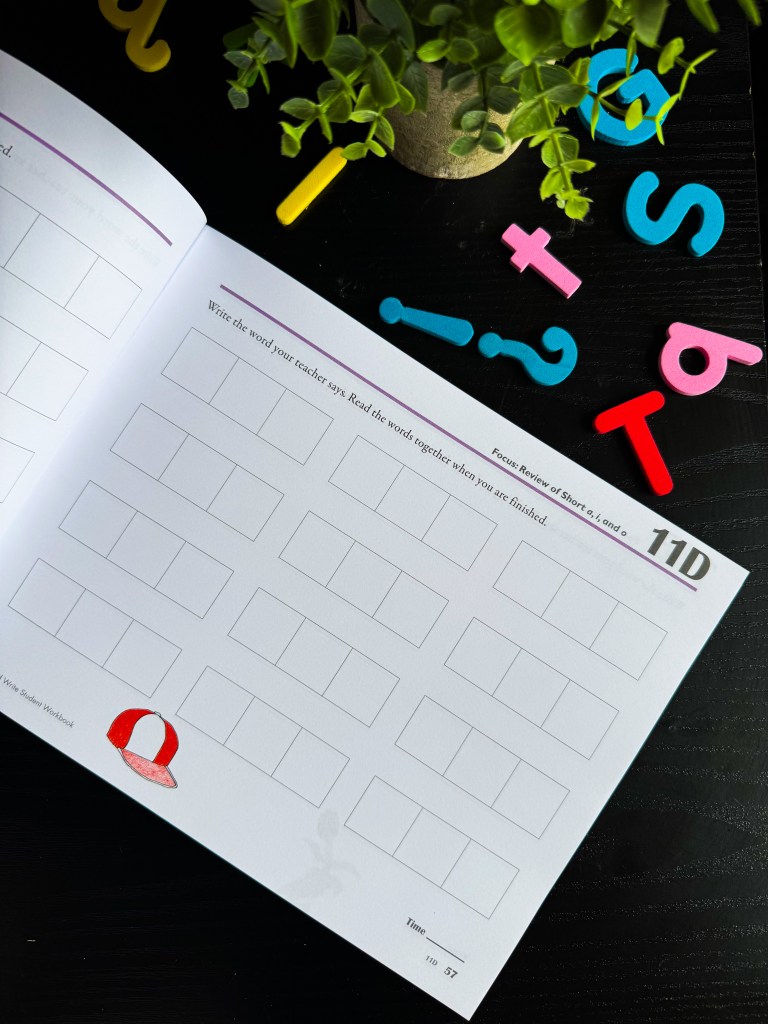
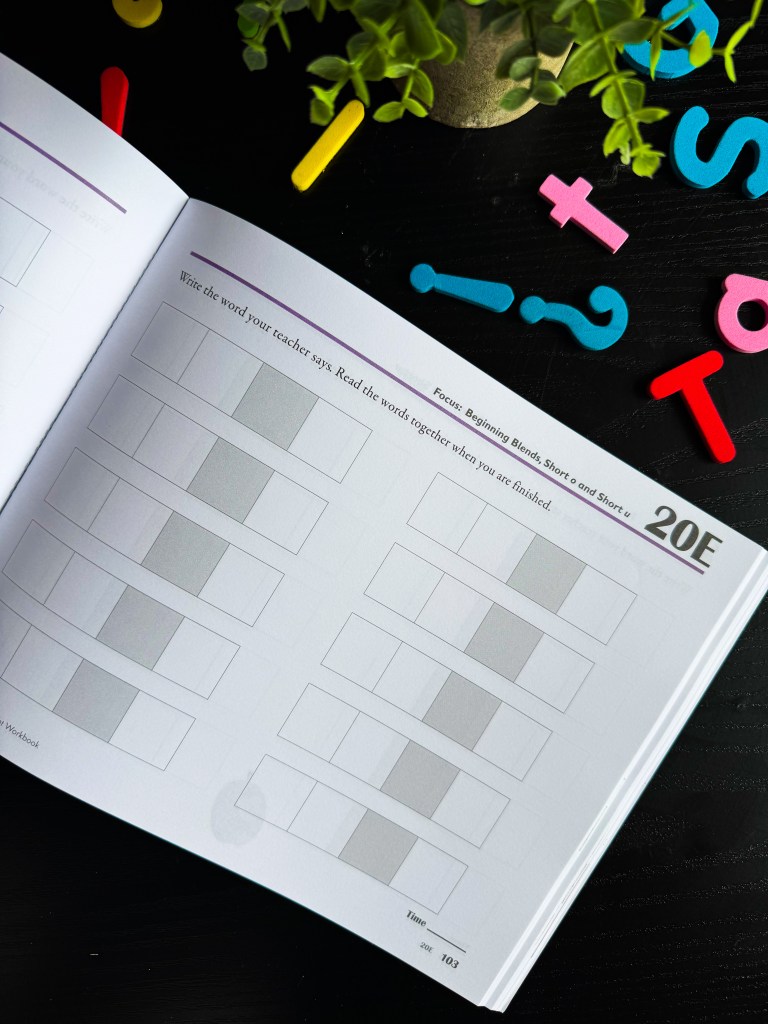
The workbook uses individual letter boxes to help children recognize how sounds correspond to written letters.
As the lessons advance, students practice short vowels, consonant blends, and spelling words from dictation.
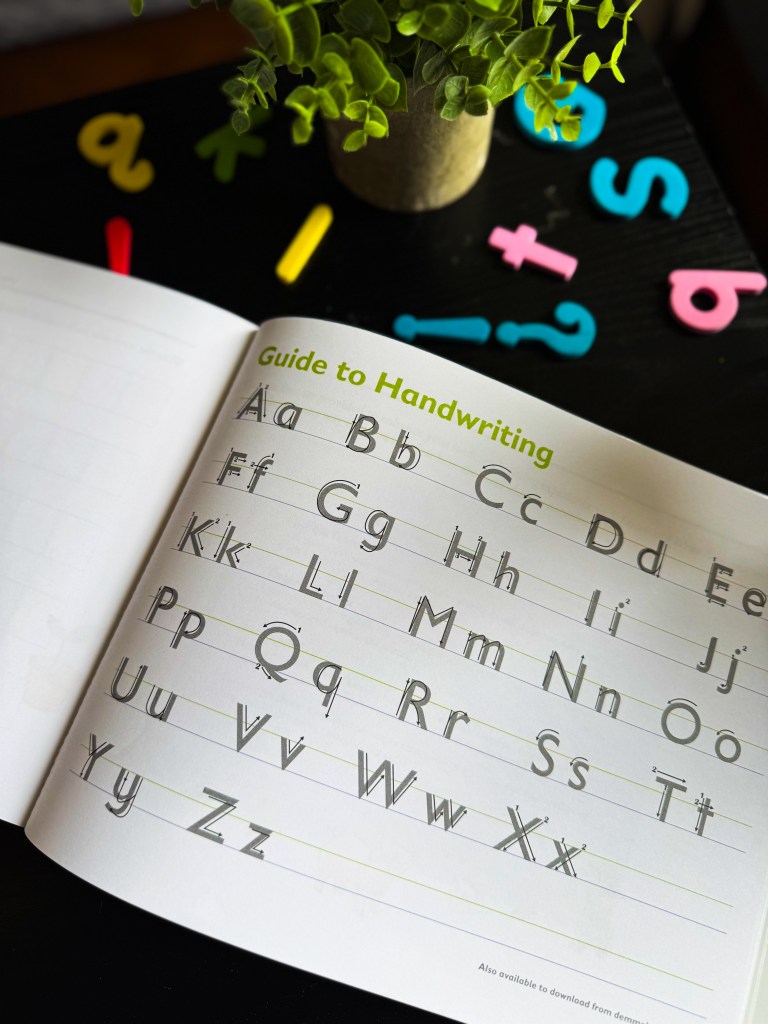
The included handwriting guide also helps parents teach proper letter formation, while colorful picture stickers offer an additional way to reinforce learning.
Why I Like This Kindergarten Spelling Curriculum
As a homeschooling mom and former teacher, I appreciate curriculum that introduces foundational skills without making lessons unnecessarily complicated.
What stands out to me about Spelling You See Level A is its simplicity.
The lessons are short, the worksheets are straightforward, and the instructor’s handbook provides guidance for parents who want a structured approach to teaching spelling.
I also appreciate how the curriculum combines handwriting, phonics, and spelling instead of treating them as completely separate subjects.
For kindergarten students who are still developing pencil control and learning to connect letters with sounds, that combination makes sense.
Is Spelling You See Level A Worth It?
If you’re searching for a homeschool kindergarten spelling curriculum, Spelling You See Level A is an option worth considering, particularly for children who already recognize letters and are beginning to connect sounds with written words.
It’s especially appealing for families who prefer short, consistent lessons rather than traditional spelling memorization.
Keep in mind that this is a parent-guided curriculum, so you’ll need to participate in the listening and dictation activities.
Ready to explore Spelling You See Level A?
You can shop Spelling You See Level A at Timberdoodle and take a closer look at the curriculum, sample lessons, and everything included in the program.
If you’re planning your kindergarten homeschool year, be sure to explore our other Timberdoodle curriculum reviews for more hands-on learning activities and homeschool resources!
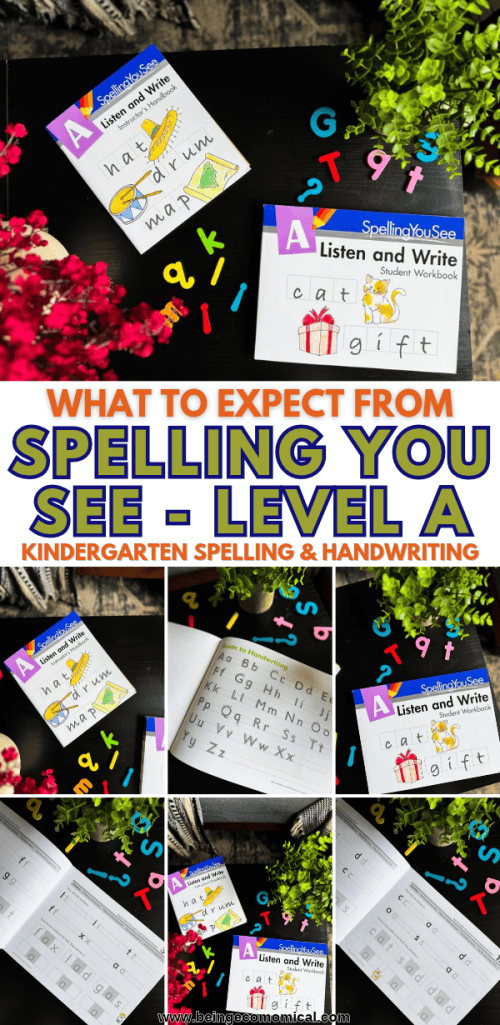
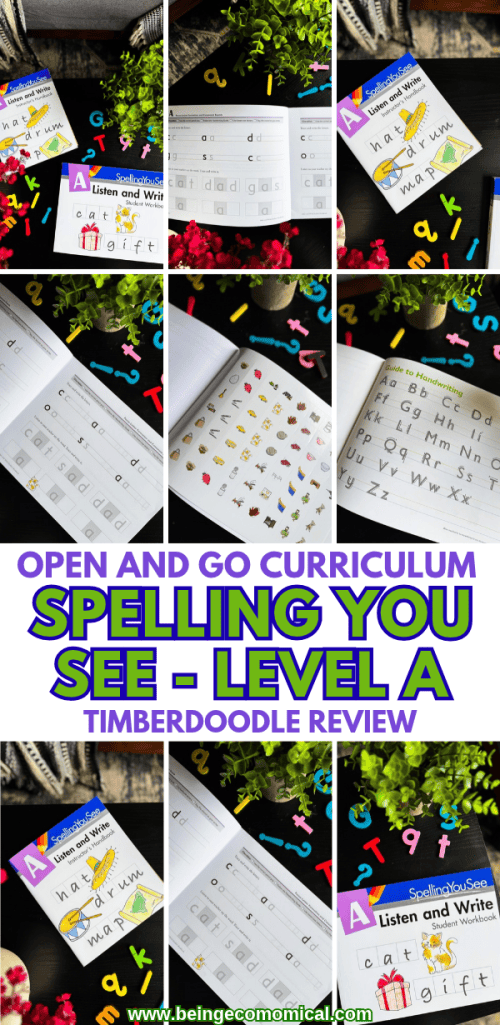
Pin these for later…
-
WonderWorks Pigeon Forge: What to Expect With Kids + Homeschool Fun

Planning a family trip to Pigeon Forge, Tennessee? WonderWorks Pigeon Forge is one of those attractions that immediately grabs your attention, starting with its enormous upside-down building! From hands-on science exhibits and interactive games to indoor rides and exciting physical challenges, there’s plenty for families to discover. And if you’re a homeschooling family like ours, it’s also a wonderful opportunity to incorporate STEM learning into your travels.
When we travel as a homeschooling family, I’m always looking for experiences that allow my children to explore, discover, and learn something new while having fun. One thing I love about homeschooling is that learning doesn’t have to stop just because we’re away from home.

During our family trip to Pigeon Forge, Tennessee, we had the opportunity to visit WonderWorks, an indoor amusement park that combines education and entertainment.
And I have to say, there’s something pretty exciting about walking into an upside-down building filled with science experiments, interactive exhibits, and activities for different ages!
Whether you’re planning a homeschool field trip, searching for indoor activities in Pigeon Forge, or simply looking for fun things to do in Pigeon Forge with kids, here’s what you can expect when visiting WonderWorks.
Related Posts:
- Where To Stay In Pigeon Forge With Kids: Home2 Suites by Hilton Pigeon Forge
- Jellystone Park Pigeon Forge Review: A Homeschool-Friendly Stay Near Dollywood
- Flapjack’s Pancake Cabin: A Must-Try Breakfast In Pigeon Forge
What Is WonderWorks Pigeon Forge?
WonderWorks Pigeon Forge is an indoor amusement park featuring more than 100 hands-on exhibits throughout approximately 42,000 square feet of interactive space.
Unlike a traditional amusement park, WonderWorks focuses on what it calls edutainment, combining education and entertainment to encourage visitors to explore science, technology, engineering, art, and mathematics.


You’ll find opportunities to experiment with gravity, explore space, discover how natural disasters work, challenge your physical abilities, and experience optical illusions.
And that’s before getting to some of the larger attractions, including the indoor ropes course, laser tag, and motion-based experiences.
One of the first things you’ll notice about WonderWorks is the building itself.
The entire exterior looks as though a massive house has been flipped upside down, complete with inverted columns, windows, and an upside-down sign.
It’s easily one of the most recognizable family attractions in Pigeon Forge and makes a fun backdrop for family photos before heading inside.

The Story Behind the Upside-Down Building
WonderWorks has a fun fictional backstory that helps bring the attraction to life.
According to the story, Professor Wonder was conducting experiments inside a secret laboratory in the Bermuda Triangle when a powerful tornado experiment went terribly wrong.

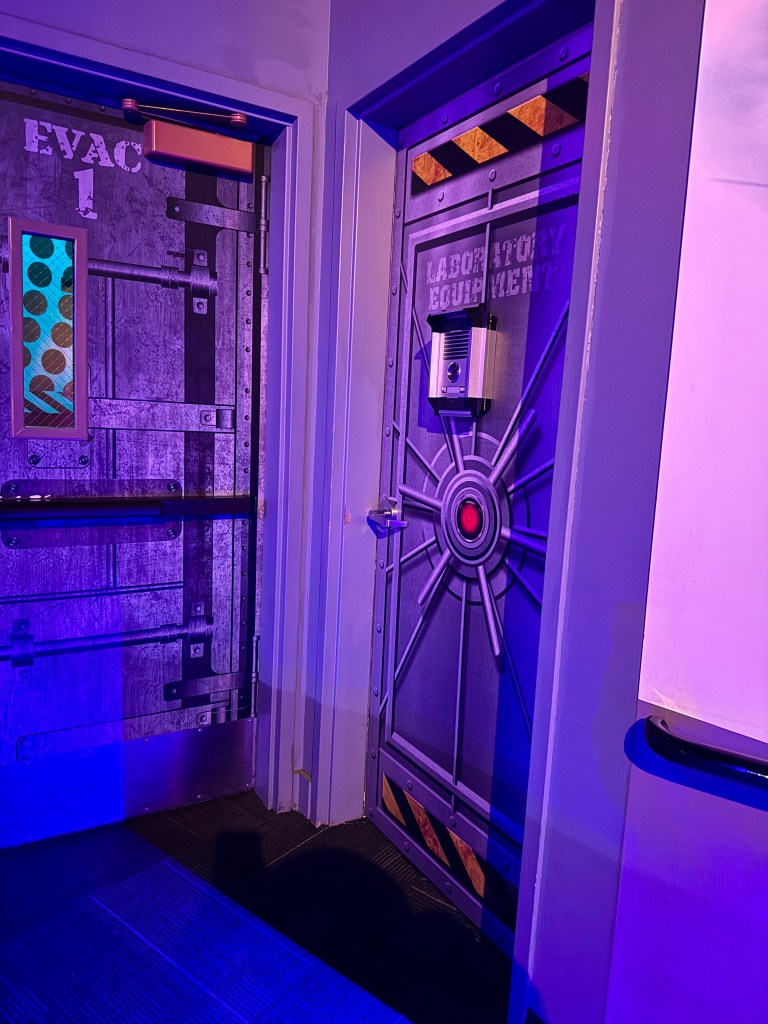
The storm lifted the entire laboratory from its foundation and carried it all the way to Pigeon Forge, where it landed upside down!
Of course, this is all part of the experience, and the imaginative storytelling continues once you enter the building.
What to Expect Inside WonderWorks Pigeon Forge
One of the things that makes WonderWorks different from other Pigeon Forge attractions is the variety of activities available in one building.
There are opportunities for younger children to explore imaginative play, older kids to test their abilities, and families to learn together.
The attraction is organized into six Wonder Zones, each focusing on different experiences and scientific concepts.



1. Start With the Inversion Tunnel
Before exploring the main exhibits, visitors encounter the Inversion Tunnel.

This colorful tunnel is designed to make you feel as though the room is spinning around you as you walk along the pathway.
The combination of bright lights, swirling patterns, and visual effects creates an unusual optical illusion.
It’s an interesting introduction to the way our brains interpret movement and balance.
For homeschooling families, this is also an easy opportunity to introduce the relationship between our eyes, brain, and sense of equilibrium.
Parent tip: If anyone in your family is sensitive to moving lights or visual stimulation, ask a staff member about the best way to navigate this experience.
2. Explore Extreme Weather and Natural Disasters
One of the most educational areas of WonderWorks is its Extreme Weather Zone.


Through interactive displays and simulations, children can learn more about tornadoes, hurricanes, earthquakes, and other powerful forces of nature.
During our visit, we explored exhibits featuring natural disasters, storm imagery, and educational displays explaining different weather-related events.
This is an excellent way to expand on topics children may already recognize from weather forecasts, documentaries, or their homeschool science curriculum.
Rather than simply reading about a natural disaster, children can explore displays that help illustrate what happens and why.
For younger children, you can keep the conversation simple by explaining how different types of weather occur.
Older students can take the learning further by researching weather patterns, atmospheric pressure, and how scientists study severe storms.
3. Discover the Space Zone
For children interested in astronomy, astronauts, or space exploration, the Space Zone is a particularly exciting area to visit.


This section features displays and interactive activities inspired by space science and NASA.
We explored space-themed exhibits, interactive screens, simulators, and an astronaut photo opportunity that made for some of our favorite pictures of the visit.



Children can also explore questions about spacecraft, the solar system, and what it takes to travel beyond Earth.
The space-related activities provide an opportunity to introduce concepts such as gravity, motion, and engineering.


As a homeschool mom, I appreciate attractions that make these topics feel approachable.
Sometimes seeing an idea represented in a simulation or exhibit can spark curiosity in a way that a textbook alone might not.
Homeschool extension: Have your children choose one NASA mission, astronaut, or planet to research after your visit. They can create a short presentation, draw a spacecraft, or explain what they learned.
4. Test Your Skills With Physical Challenges
WonderWorks also features experiences designed to challenge your strength, coordination, and balance.
Depending on the attraction and eligibility requirements, visitors can try activities such as the indoor rock climbing wall, spinning rides, and other physical challenges.
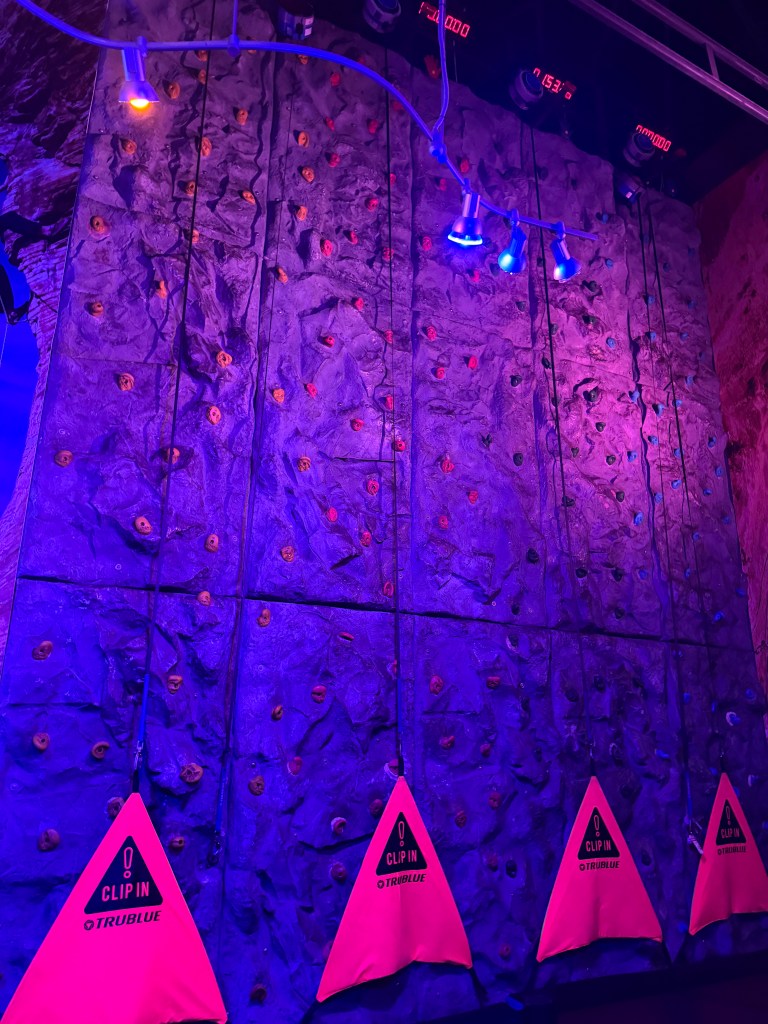
We spent time exploring this side of WonderWorks as well, including watching the spinning ride and enjoying the climbing activities.
These experiences aren’t just exciting—they can also open conversations about physics and the human body.
Think about the forces involved in climbing a wall or the way motion changes when a ride begins to spin.
Children are experiencing scientific principles while playing, even when they don’t realize it.
It’s a great example of how education can happen naturally through everyday experiences.


Keep in mind that some activities have height, weight, clothing, or footwear requirements, so it’s worth reviewing the attraction’s guidelines before your visit.
5. Get Creative in the Imagination Lab
If your children enjoy creative activities, interactive games, and experimenting with new ideas, they’ll appreciate the Imagination Lab.
This area encourages visitors to use their imagination while engaging with technology, art, and problem-solving activities.
During our visit, we explored colorful exhibits, interactive games, and creative displays that offered a different experience from the physical challenges.
One of the featured attractions is Wonder Brite, an oversized light board that allows visitors to create glowing designs.
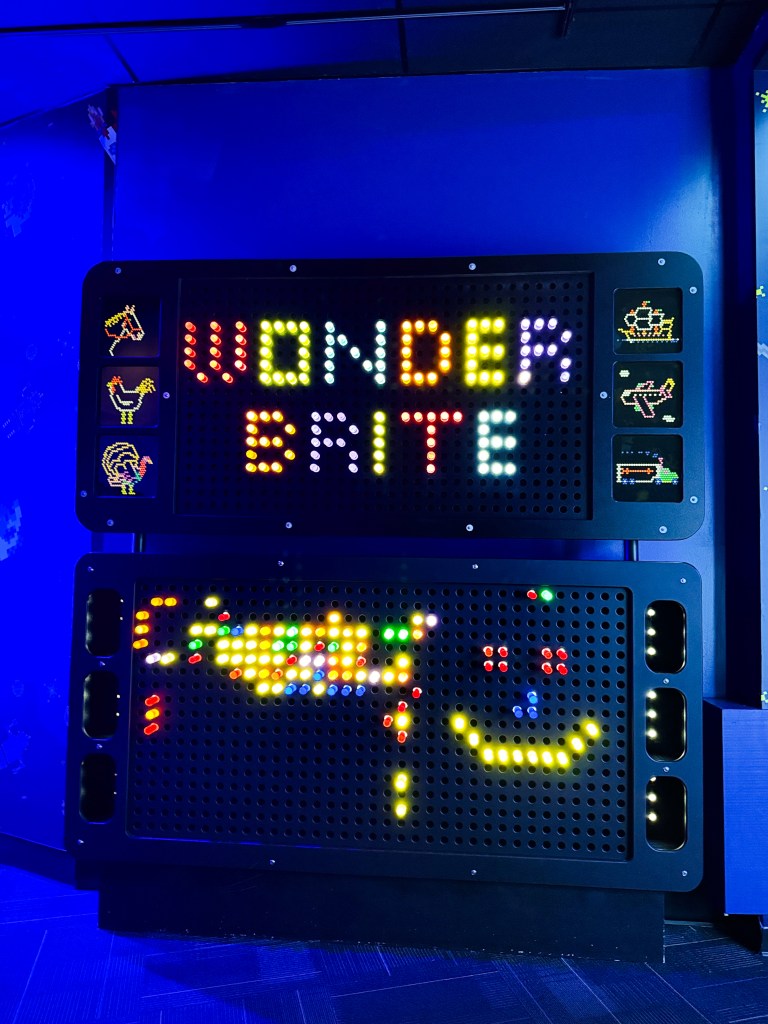
It’s a simple concept, but it’s also a fun way to explore patterns, colors, and creativity.
Other activities introduce visitors to technology, engineering concepts, and interactive digital experiences.

For families with children of different ages, areas like this are especially helpful because there’s more than one way to participate.
And for homeschoolers, it’s a reminder that learning through play doesn’t have to end once children reach elementary school.
6. Explore Optical Illusions and the Gallery of Wonders
Another interesting area inside WonderWorks is its collection of optical illusions and art exhibits.
We explored the Gallery of Wonders, which features artwork, unusual visual displays, and exhibits designed to challenge the way we perceive what we’re seeing.
Some displays encourage you to look twice, while others demonstrate how our eyes and brains can interpret the same image in different ways.

We also came across artwork inspired by Dr. Seuss and other interactive displays throughout this area.
These exhibits provide a wonderful opportunity to incorporate art appreciation, observation, and critical thinking into your visit.
Ask your children what they notice first, whether they see something different from their siblings, and why they think an illusion works.
Sometimes those simple questions lead to the most interesting conversations.
More Fun Things to Do at WonderWorks Pigeon Forge
The science exhibits are only part of the experience!
WonderWorks also has several attractions that make it feel more like an indoor amusement park than a traditional science museum.
Indoor Glow-in-the-Dark Ropes Course
One of the most visually impressive attractions inside WonderWorks is its indoor glow-in-the-dark ropes course.
Suspended high above the floor, this colorful course features bridges, obstacles, and platforms that challenge visitors to navigate their way through.
It’s a great opportunity for eligible children to practice balance, coordination, and problem-solving while building confidence.


Our older children had the opportunity to take part in the climbing activities, and this was definitely one of the more adventurous parts of our visit.
The ropes course is also a fun reminder that children don’t always need to be sitting at a desk to develop important skills.
Important: Closed-toe shoes are required, and height, weight, and clothing restrictions apply.
Indoor Rides and Simulators
WonderWorks offers motion-based attractions that add another level of excitement to the experience.
During our visit, we saw the Wonder Coaster simulator and the Extreme Bikes 360 attraction, where riders experience motion in a completely different way from traditional rides.

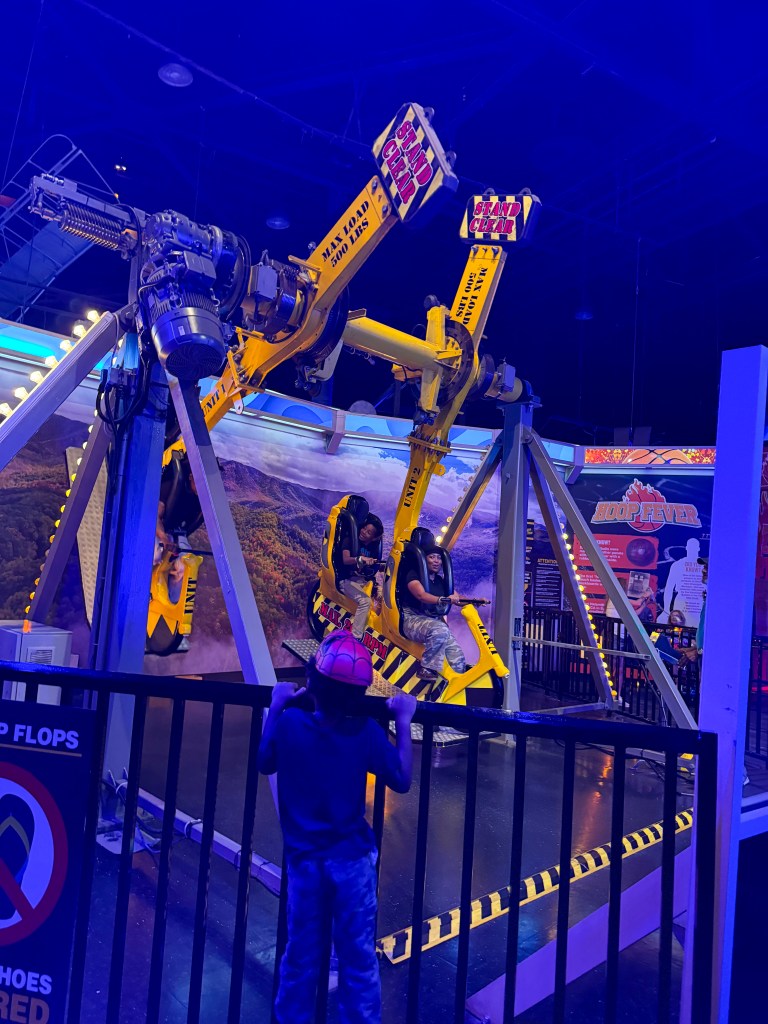
These are the kinds of activities that make WonderWorks appealing to families with older children and teenagers.
For students interested in engineering or physics, these attractions can also lead to conversations about how machines create motion and how different forces affect our bodies.
Interactive Games and Family Activities
In addition to the science exhibits and thrill rides, WonderWorks has interactive games and activities that offer plenty of opportunities to play together.
We came across activities including Pac-Man Battle Royale, Twister, interactive floor games, and flight simulators.


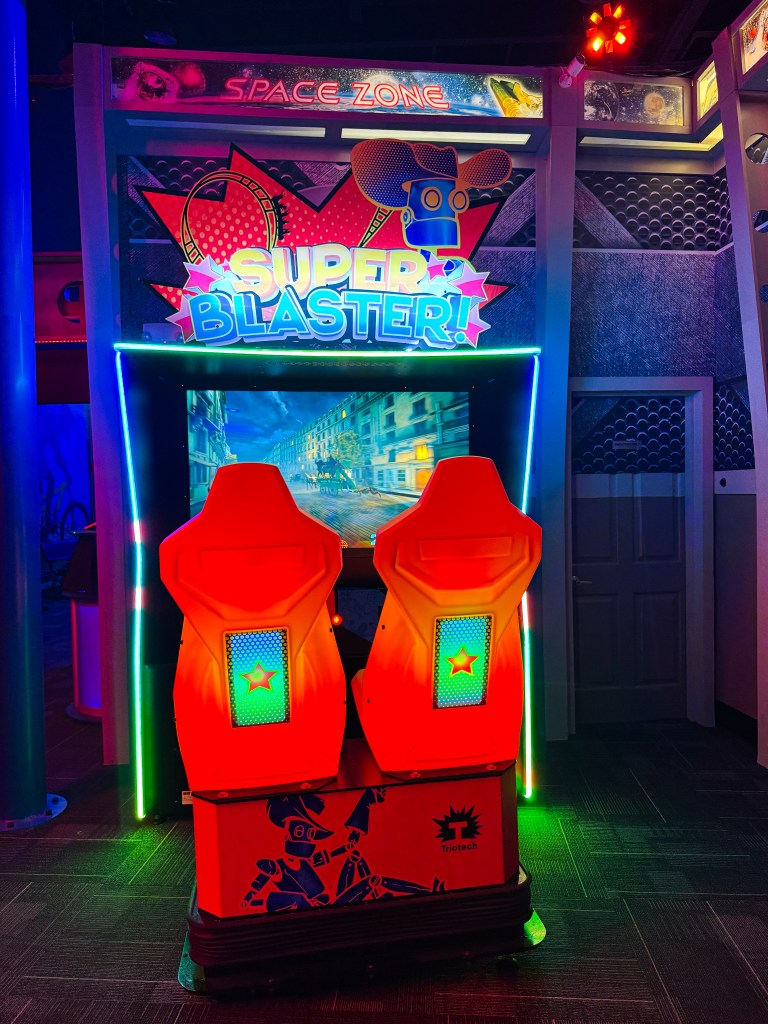
There were also colorful displays and creative activities that younger children could explore.
Having this variety is one of the reasons WonderWorks works well as a family attraction.

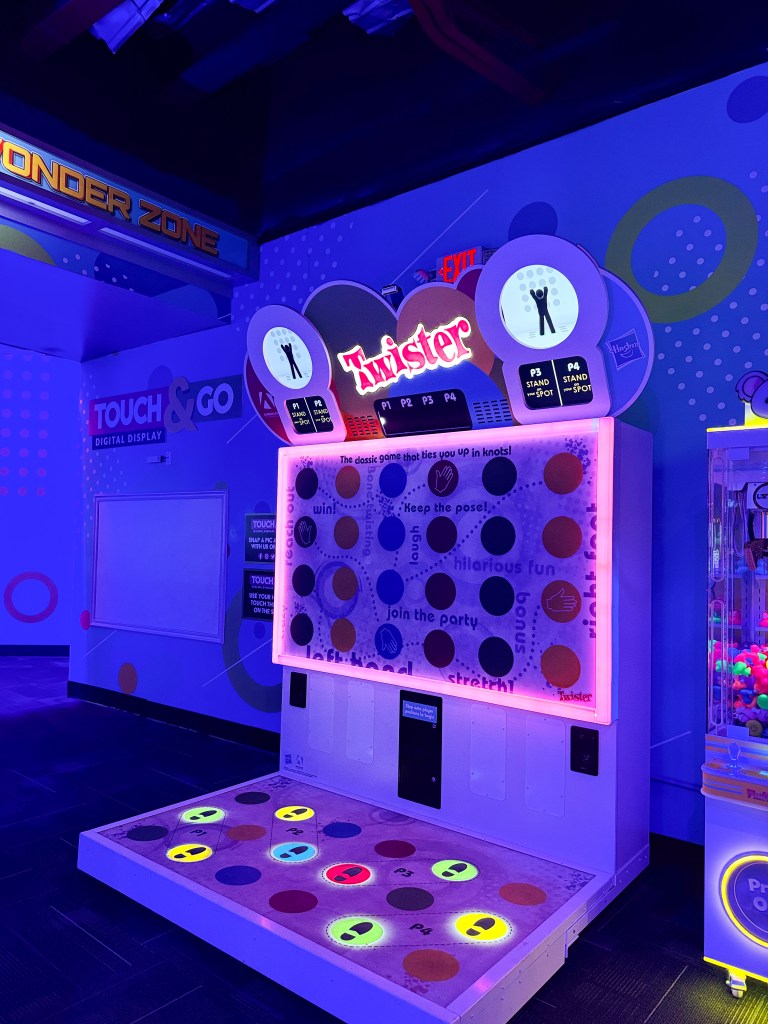
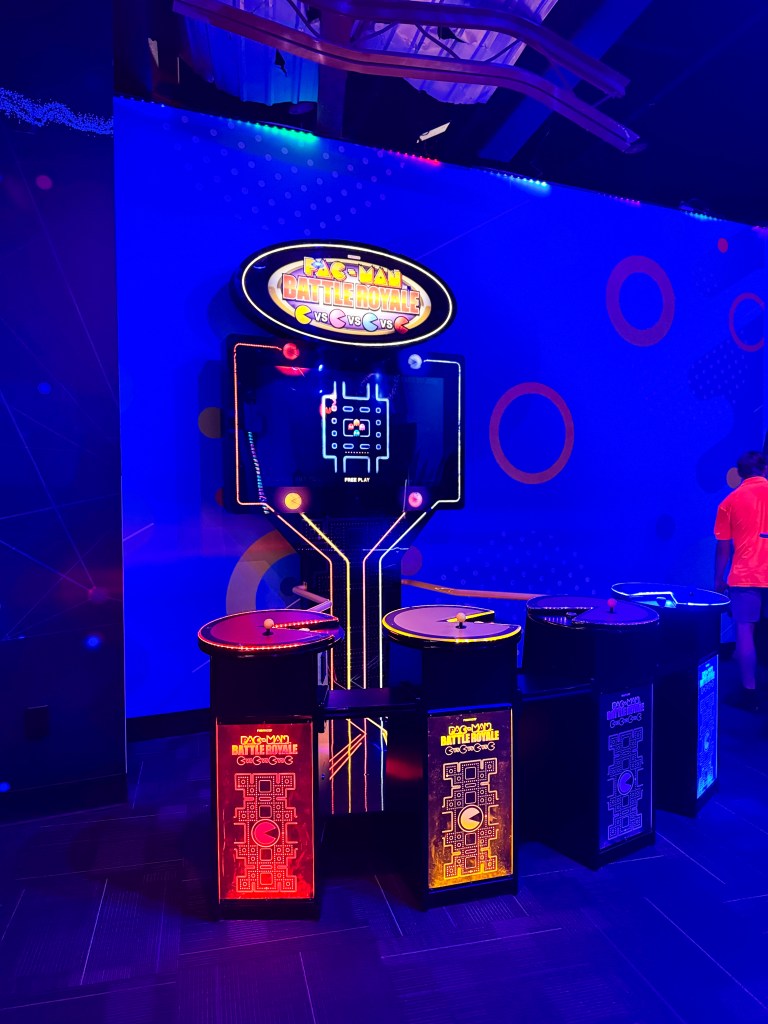
Not every child will be interested in exactly the same activity, and that’s okay!
Some may gravitate toward the interactive games, while others are more interested in science experiments, climbing, or space exploration.



Why WonderWorks Is a Great Homeschool Field Trip in Pigeon Forge
As a homeschooling family, this is one of the things I was most excited to discover about WonderWorks.
The attraction doesn’t simply offer exhibits that happen to be educational. It also has dedicated programs and resources designed to support homeschoolers, teachers, and students.



WonderWorks embraces hands-on learning and encourages children to explore STEM topics through activities that make science approachable and fun.
For families practicing roadschooling, this makes WonderWorks an excellent addition to a Pigeon Forge itinerary.
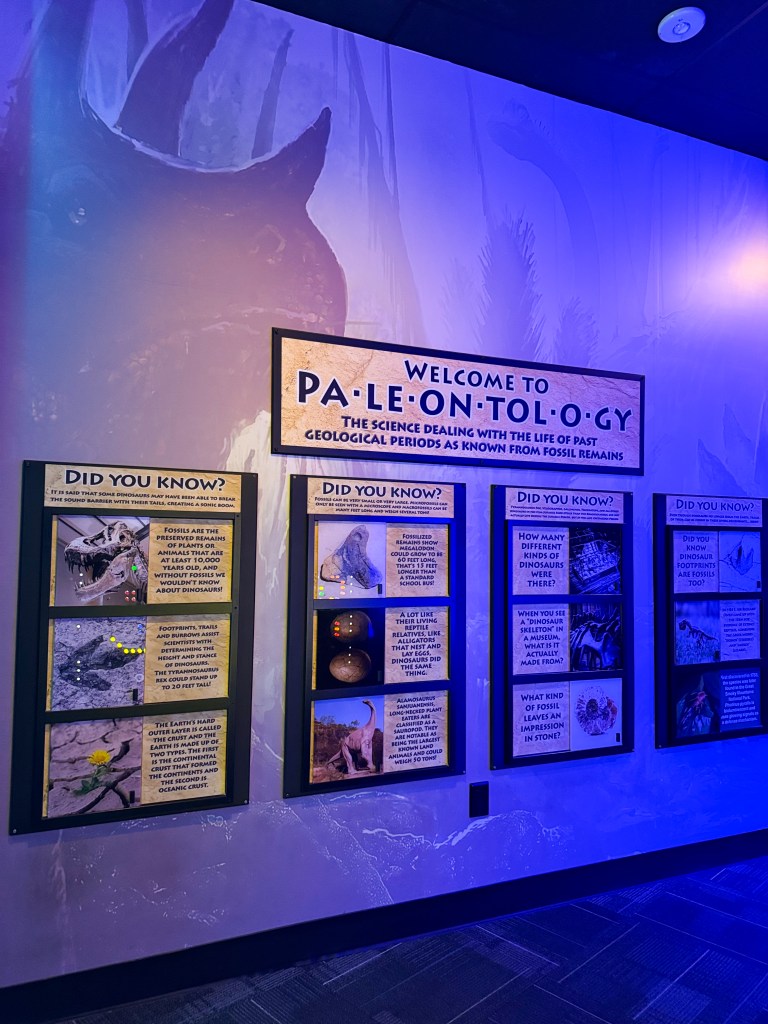
Instead of trying to fit formal lessons into every day of vacation, families can visit places that naturally reinforce what their children are learning at home.
WonderWorks Homeschool Days
WonderWorks Pigeon Forge offers special Homeschool Days during designated periods of the year.
For September and October 2026, the attraction is offering homeschool admission for $14.99 per person, plus tax, with a discounted $12.99 per person, plus tax, rate for eligible groups of 10 or more.
The promotional rate is available during qualifying school days, Monday through Friday, from opening until 3 p.m., excluding holidays and local school breaks.
Families must provide homeschool identification or other proof of homeschooling at the box office.
Groups of 10 or more must register in advance, with reservations required at least 72 hours before visiting to receive the group rate.
These details are specific to the 2026 promotion, so be sure to verify current dates, rates, and requirements when planning your visit.
You can find the latest information on the WonderWorks Homeschool Days page.
Homeschool Lesson Plans and Educational Resources
Another benefit for homeschool families is the availability of educational resources.
WonderWorks offers classroom activities, science lesson plans, and scavenger hunts upon request.
This is especially useful if you’re planning a visit with a homeschool co-op or want to turn the experience into a more structured educational outing.
Families can use the exhibits as inspiration for lessons covering weather science, engineering, astronomy, mathematics, art, and more.




You can even let your children choose which exhibits they want to investigate and build your follow-up lessons around their interests.
That’s one of my favorite approaches to homeschooling—paying attention to what naturally sparks curiosity and using it as an opportunity to explore further.
WonderWorks STEM Programs and Educational Initiatives
WonderWorks’ dedication to STEM education extends beyond its regular exhibits.
Its educational initiatives are designed to encourage young people to explore science, technology, engineering, and mathematics while recognizing the importance of creative thinking.
The attraction’s educational mission includes a program called I Think, Therefore I STEM, which encourages curiosity and highlights the importance of STEM-related education and careers.

Some of WonderWorks’ educational initiatives include:
- WonderKids: A program recognizing outstanding young people and their achievements.
- SM-ART: A Smoky Mountain youth art initiative highlighting student creativity.
- Science Fair Partnerships: Opportunities to support local and state science fairs.
- STEM Career Spotlights: Features designed to introduce visitors to careers in science, technology, engineering, and mathematics.
- On-site STEM Activities: Educational exhibits and occasional science demonstrations.
- Educational Resources: Activity sheets, science facts, and other learning materials families can use beyond their visit.
I particularly appreciate the emphasis on helping children see how STEM connects to the real world.
Not every child who enjoys a science exhibit will grow up to become a scientist, and that’s perfectly fine.
But introducing children to different subjects, careers, and ideas gives them the opportunity to discover interests they may not have encountered otherwise.
For more information, visit the WonderWorks STEM Programs page.
Sensory-Friendly Experiences at WonderWorks
Another important thing for families to know is that WonderWorks offers designated Sensory Days.
These events are intended to provide a lower-stimulation experience for visitors who may find the attraction’s usual lighting, music, motion, or noise overwhelming.

During these events, WonderWorks makes adjustments such as lowering the music, turning off some louder exhibits, and stopping the inversion tunnel.
This can be especially helpful for families who want to experience the exhibits in a more sensory-friendly environment.
The attraction has scheduled Sensory Days for select dates in 2026, including November 15 and December 13.
Check the WonderWorks Sensory Programs page for current dates and details.
Is WonderWorks Pigeon Forge Good for Toddlers, Kids, and Teens?
One of the biggest questions parents have when planning family attractions is whether there will be enough activities for everyone.
WonderWorks offers experiences for a wide range of ages, but the best activities for each child will depend on their interests, comfort level, and the attraction’s safety requirements.
Toddlers and preschoolers: Younger children may enjoy colorful displays, imaginative play areas, and interactive activities that don’t require riding or climbing. They’ll likely need help navigating some exhibits, and certain attractions will be too advanced or have height restrictions.
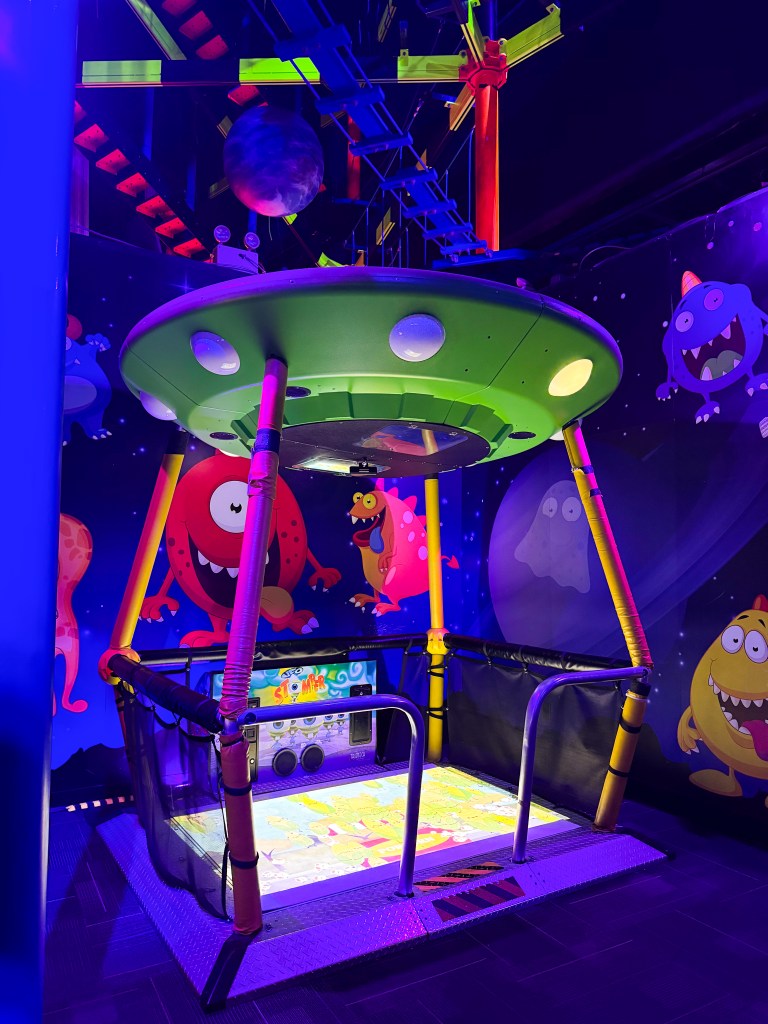
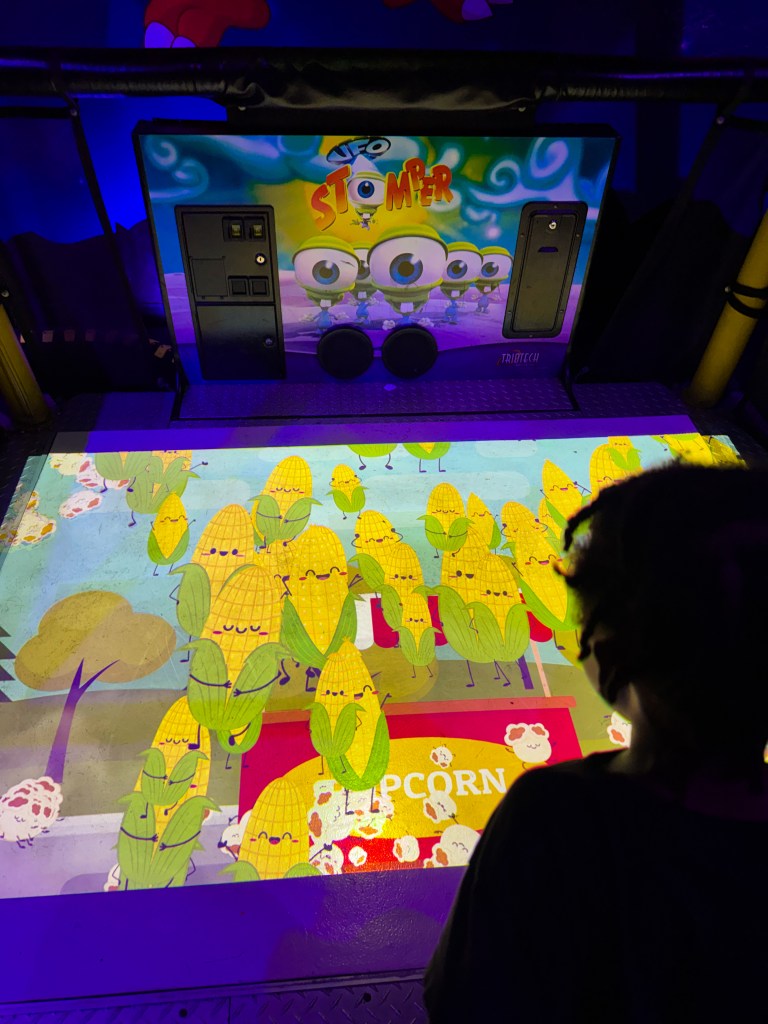
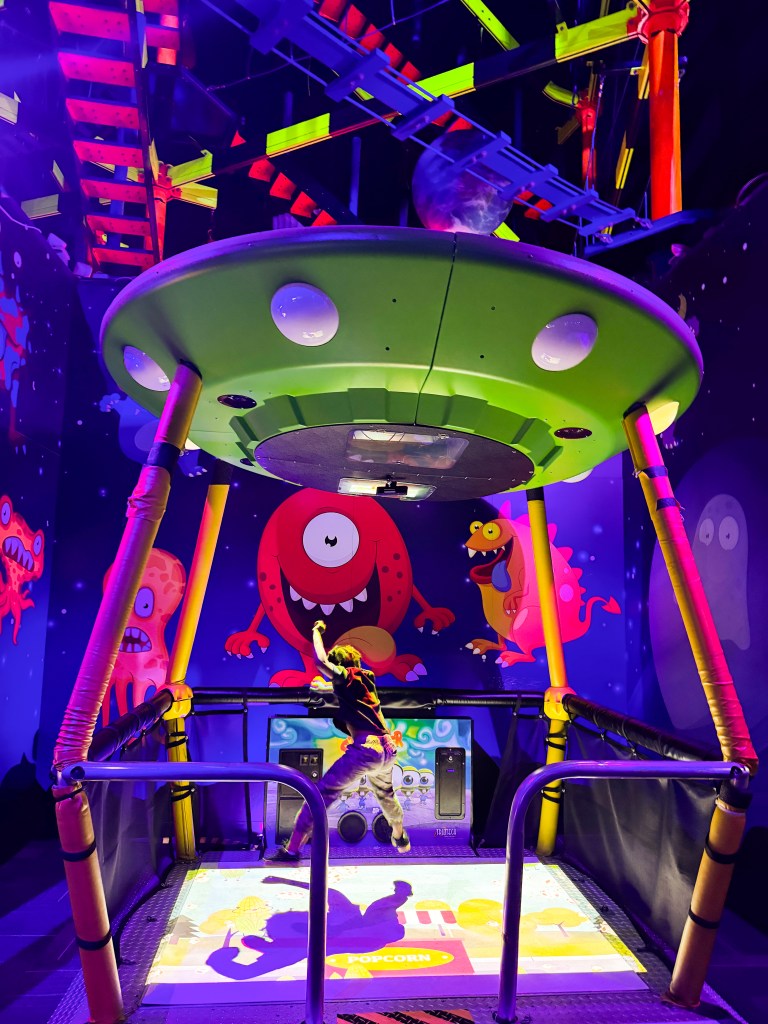
Elementary-aged children: This is a wonderful age to explore interactive science displays, creative exhibits, physical challenges, and hands-on activities that encourage curiosity.
Tweens and teenagers: Older children may especially appreciate the ropes course, climbing wall, motion-based attractions, simulators, and activities that challenge their skills.
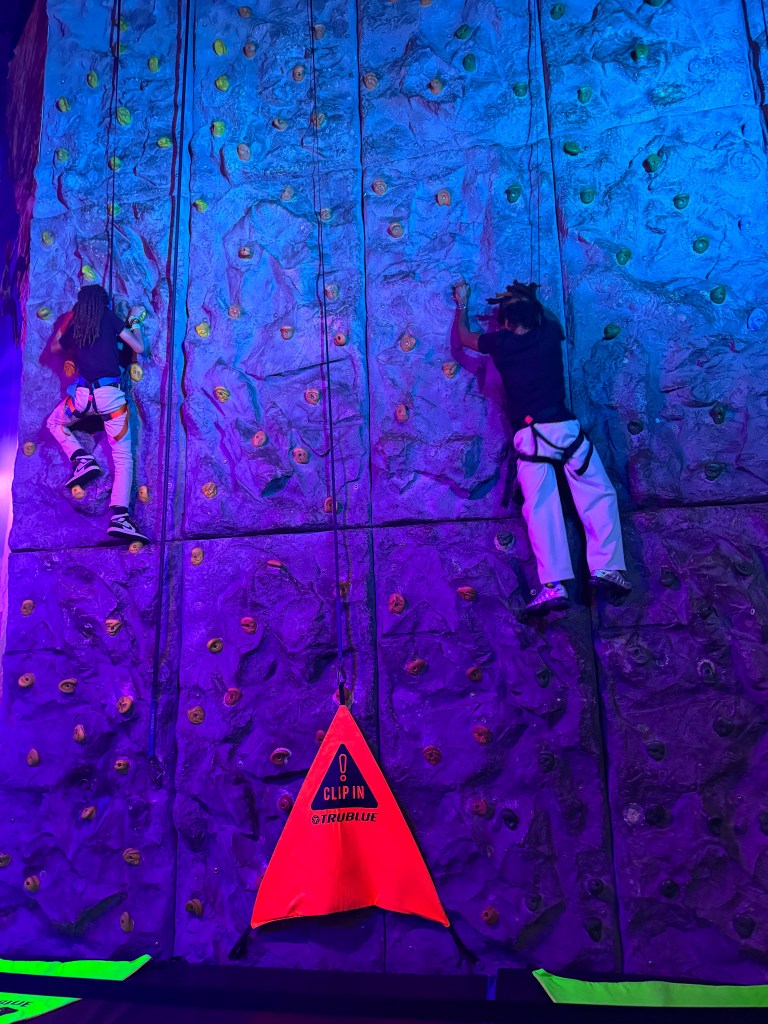
As a mom of children in different age groups, I appreciate being able to visit attractions with options that aren’t limited to one specific stage of childhood.
While not every activity will work for every child, there’s enough variety to make WonderWorks worth considering for families with a wide age range.
Tips for Visiting WonderWorks Pigeon Forge With Kids
A little preparation can make your WonderWorks visit easier, especially when traveling with several children.
Wear comfortable clothes and closed-toe shoes. You’ll be walking, exploring, and potentially participating in physical attractions. Closed-toe shoes are required for some activities, including the ropes course.
Review ride restrictions before your trip. Certain experiences have height, weight, and other safety requirements. Checking these ahead of time can help you set expectations with your children.
Plan enough time to explore. With more than 100 hands-on exhibits, there’s quite a bit to see. I recommend leaving several hours open rather than squeezing WonderWorks into a tightly scheduled afternoon.
Let your children explore their interests. Some children may be interested in space exploration, while others prefer interactive games or physical challenges. Allowing them to spend time in their favorite areas makes the experience more enjoyable.
Consider sensory needs. WonderWorks includes bright lighting, motion effects, and potentially loud activities. Families with sensory sensitivities should review the attraction’s accessibility information and special programming before visiting.
Visit earlier when possible. Like many popular Pigeon Forge attractions, WonderWorks can become busy during school breaks, holidays, and rainy days.
Bring your homeschool documentation if visiting during Homeschool Days. If you plan to use a homeschool promotion, review the current requirements and bring the necessary proof.
Where Is WonderWorks Pigeon Forge Located?
WonderWorks is located at:
100 Music Road
Pigeon Forge, TN 37863The attraction is conveniently situated along the Pigeon Forge Parkway area, making it easy to include in a family vacation itinerary.
Free on-site parking is available.
WonderWorks currently lists its regular operating hours as 9 a.m. to 9 p.m. daily, with the last ticket sold one hour before closing.
Hours may change, so check the official website before your visit.
For admission information, visit the WonderWorks Pigeon Forge ticket page.
Pin these for later…


Frequently Asked Questions About WonderWorks Pigeon Forge
Is WonderWorks Pigeon Forge worth visiting with kids?
If your family enjoys interactive exhibits, indoor activities, science experiments, and hands-on experiences, WonderWorks is definitely worth considering. Its combination of education and entertainment makes it different from many traditional Pigeon Forge attractions.
How long does it take to go through WonderWorks?
I recommend allowing at least two to three hours for your visit, with additional time if your children enjoy exploring exhibits or want to try the larger attractions. The total time will depend on crowds, wait times, and your family’s interests.
Is WonderWorks Pigeon Forge indoors?
Yes! WonderWorks is an indoor attraction, making it a convenient option for rainy days, hot afternoons, or colder weather in Pigeon Forge.
Does WonderWorks offer homeschool discounts?
Yes. WonderWorks offers special Homeschool Days during designated periods. Admission rates, dates, and eligibility requirements vary by promotion, so check the official homeschool page before planning your visit.
Is WonderWorks educational for kids?
Absolutely. WonderWorks incorporates STEM and STEAM concepts throughout its interactive exhibits, including space science, weather, engineering, art, mathematics, and physics.
Does WonderWorks have activities for younger kids?
Yes. Younger children can enjoy a variety of creative and interactive experiences, although certain rides and physical challenges have height or weight restrictions.
Does WonderWorks have food?
Yes. WonderWorks has an on-site café offering casual options such as pizza, hot dogs, popcorn, and drinks. Check current food options when planning your visit.
Final Thoughts: Is WonderWorks One of the Best Things to Do in Pigeon Forge With Kids?
If you’re searching for family-friendly things to do in Pigeon Forge, WonderWorks is an attraction I would definitely recommend adding to your list.
Between the upside-down building, interactive science exhibits, glow-in-the-dark ropes course, space exploration activities, and imaginative play experiences, there’s plenty to keep children interested.
But what I appreciate most as a homeschooling mom is the opportunity to incorporate meaningful learning into an activity that already feels exciting.
Our children don’t have to choose between learning and having fun. Experiences like WonderWorks show how naturally those two things can work together.
Whether you’re planning a full homeschool field trip or simply looking for an indoor family attraction during your Pigeon Forge vacation, WonderWorks offers a memorable combination of entertainment, creativity, and hands-on discovery.
Ready to plan your visit? Explore the available experiences, homeschool programs, admission options, and upcoming events on the official WonderWorks Pigeon Forge website.
And if you’re planning a family vacation to the Smoky Mountains, be sure to explore more of our Pigeon Forge travel guides for family-friendly attractions, places to stay, and things to do with kids.
Have you visited WonderWorks Pigeon Forge before? I’d love to hear which exhibits your family enjoyed most!
-
Best Christmas Gifts for Tween Girls Ages 8 to 12 Who Are Hard to Shop For
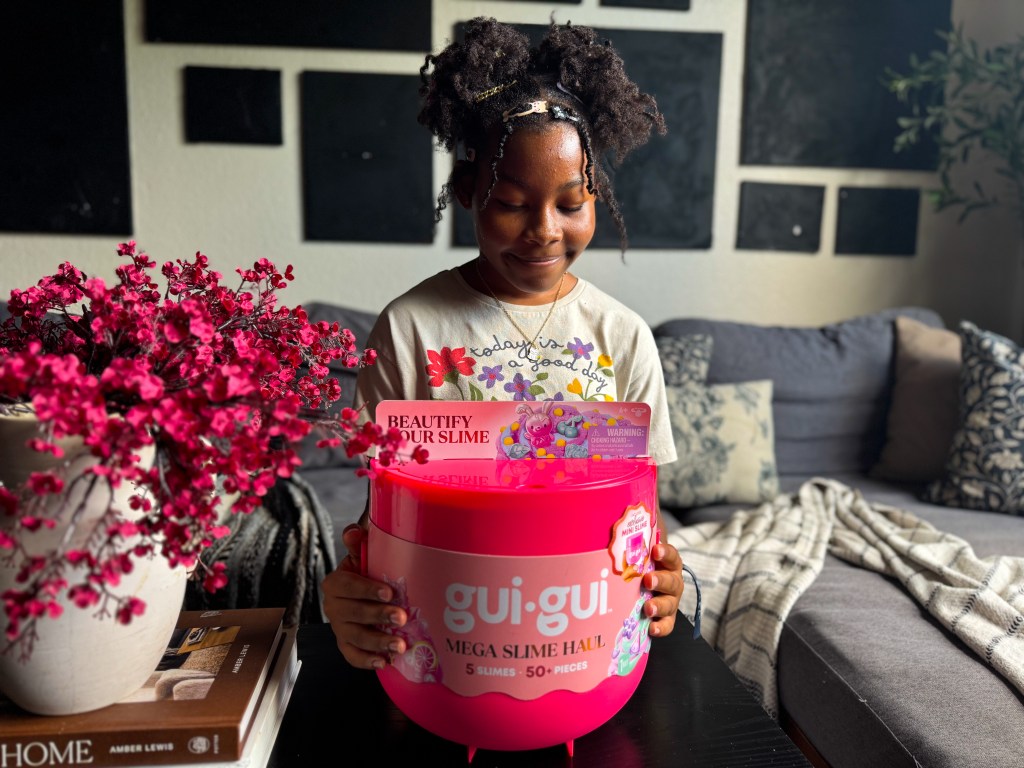
This post is sponsored by Moose Toys. All opinions and experiences shared are my own.
The best Christmas gifts for girls ages 8 to 12 are fun, creative gifts that don’t feel too young.
That is one reason the Gui Gui Mega Slime Haul caught my attention. My daughter got to try the set, and after watching her work her way through the different slimes, scents, textures, decorations and mini figures, I think this is exactly the kind of gift that fits that hard-to-shop-for tween stage.
Tweens are in that in-between stage where they may be moving away from traditional toys, but they still enjoy opening something exciting, creating with their hands and having an activity they can make completely their own.
And if you’ve ever asked a tween what she wants for Christmas only to get an “I don’t know,” then you already know how tricky shopping for this age can be.

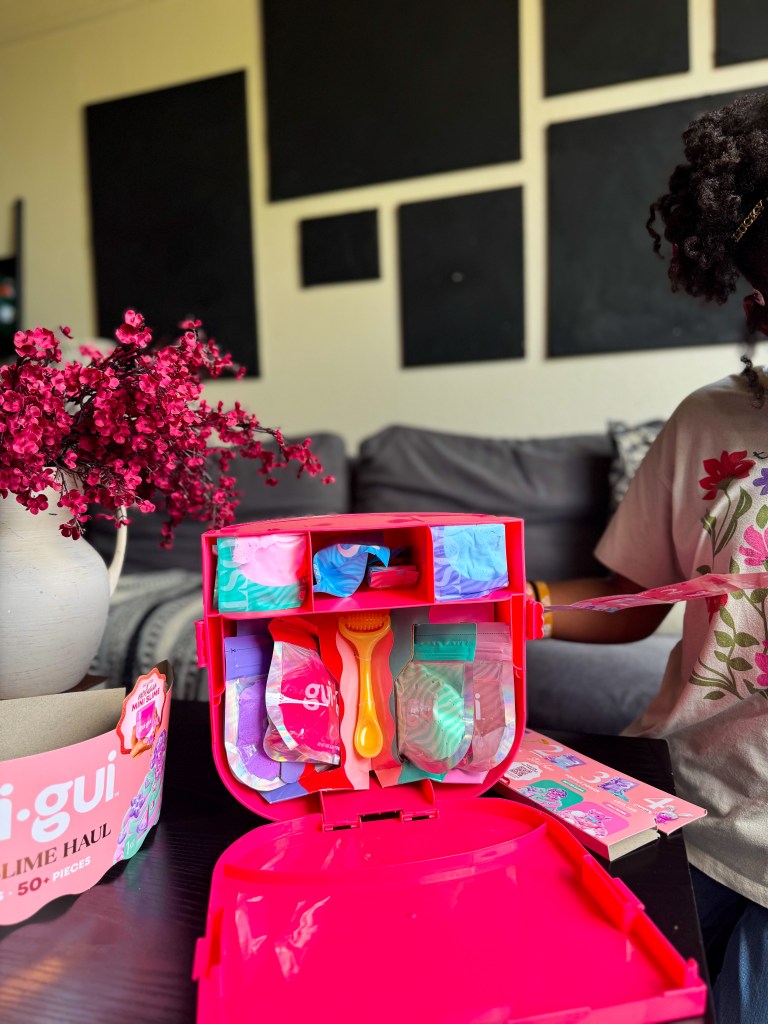
It isn’t just a container of slime. It’s a 50-piece creative set with five different slime experiences, tools, decorations, boosters, collectible mini figures, and plenty of ways for kids to customize what they make. It also comes in a portable storage case, which I appreciated as much as she did.
What Do Tween Girls Want for Christmas in 2026?
Tween girls often want Christmas gifts that give them more independence and creativity while still being genuinely fun. With the Gui Gui Mega Slime Haul, there was a lot to discover before she even started making anything.
She opened the different packets, looked through the decorations and accessories, chose which slime to try first, and decided how she wanted to customize it.
From ages 8 to 12, many girls start developing stronger personal interests and preferences, so gifts they can customize, collect, or use their own way can be especially appealing.
My daughter is at the age where the experience of a gift matters just as much as the gift itself.
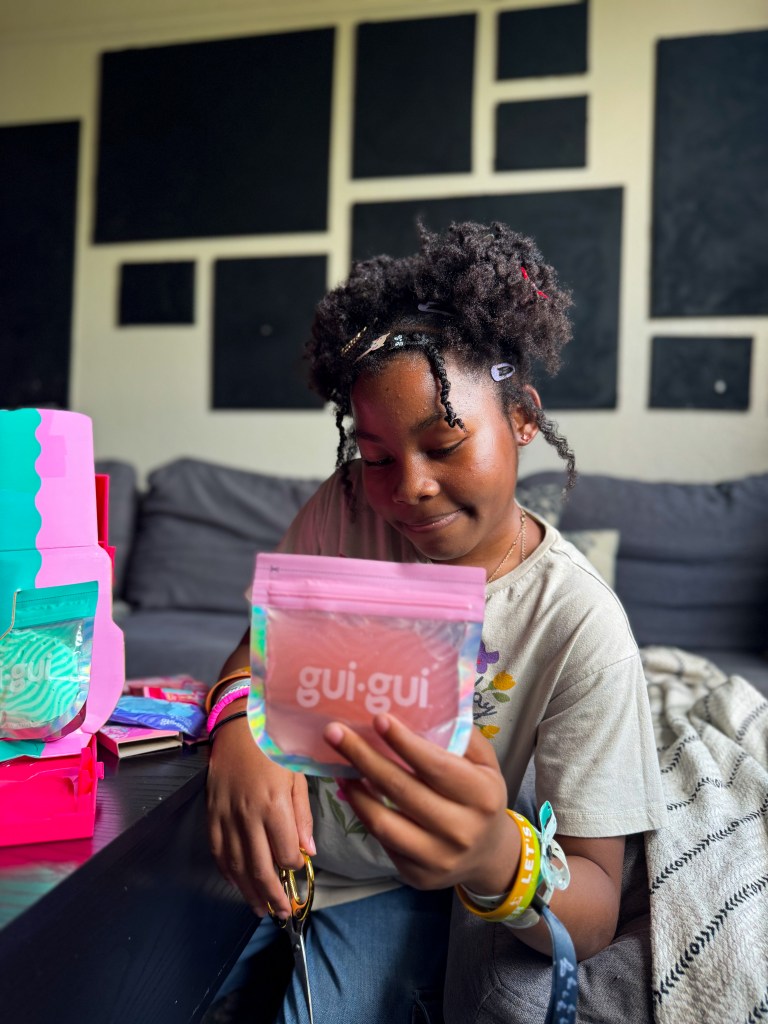

The set includes five different types of slime rather than five versions of the same thing: Out of the Hat Cloud Slime, Glam Guava Clear Slime, Poodle Power Butter Slime, LOTL Lux Jelli Slime and an exclusive Lil Flutter Crunch Slime.
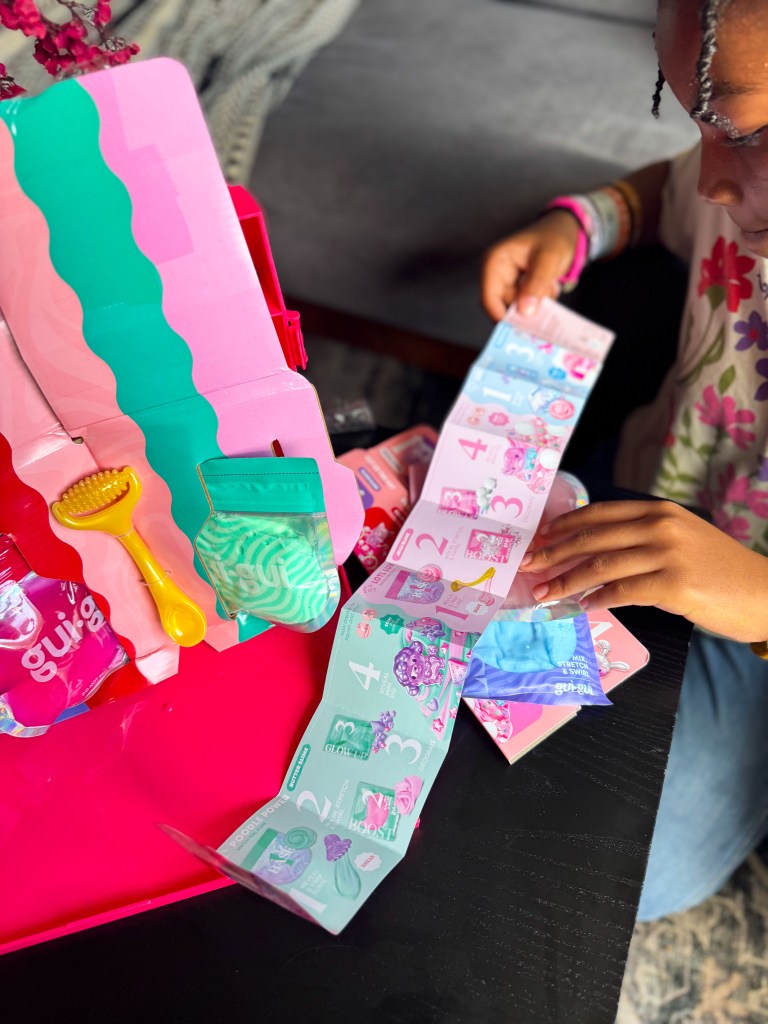
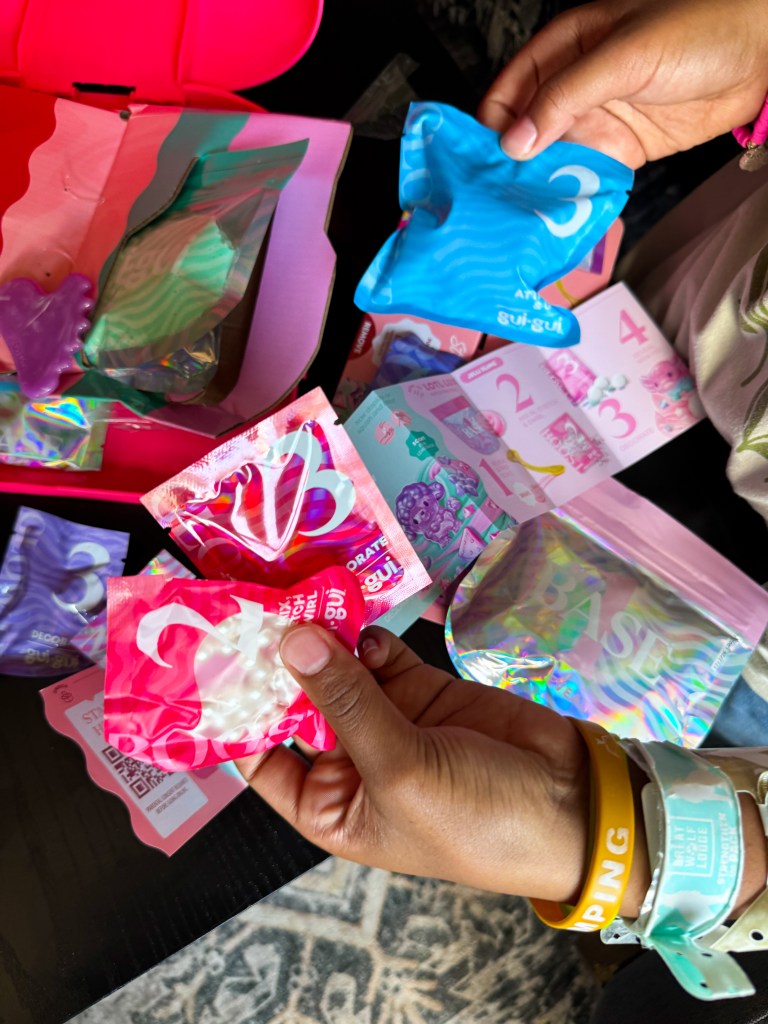
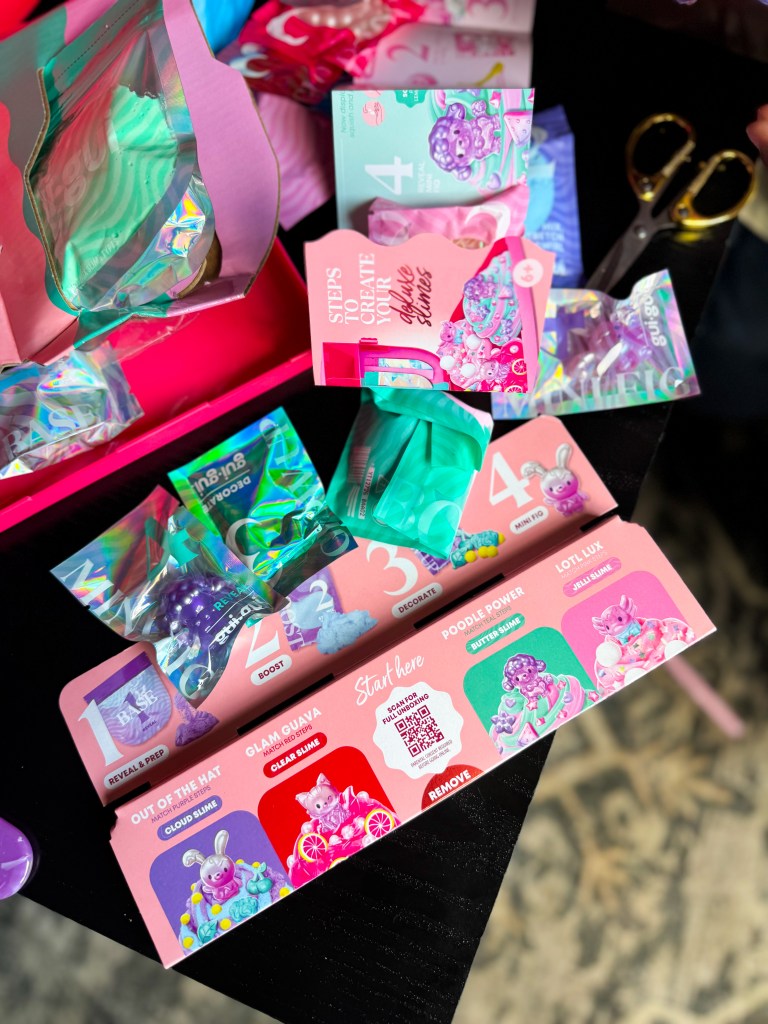
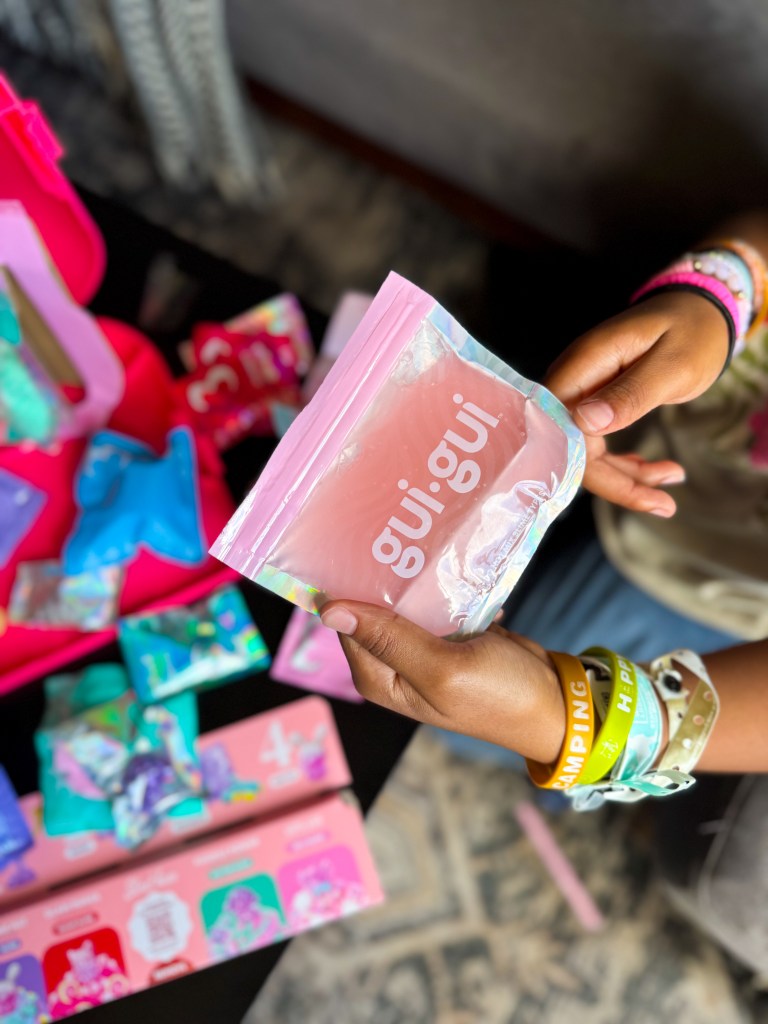
That variety made the activity much more interesting because each one offered a different texture and experience.
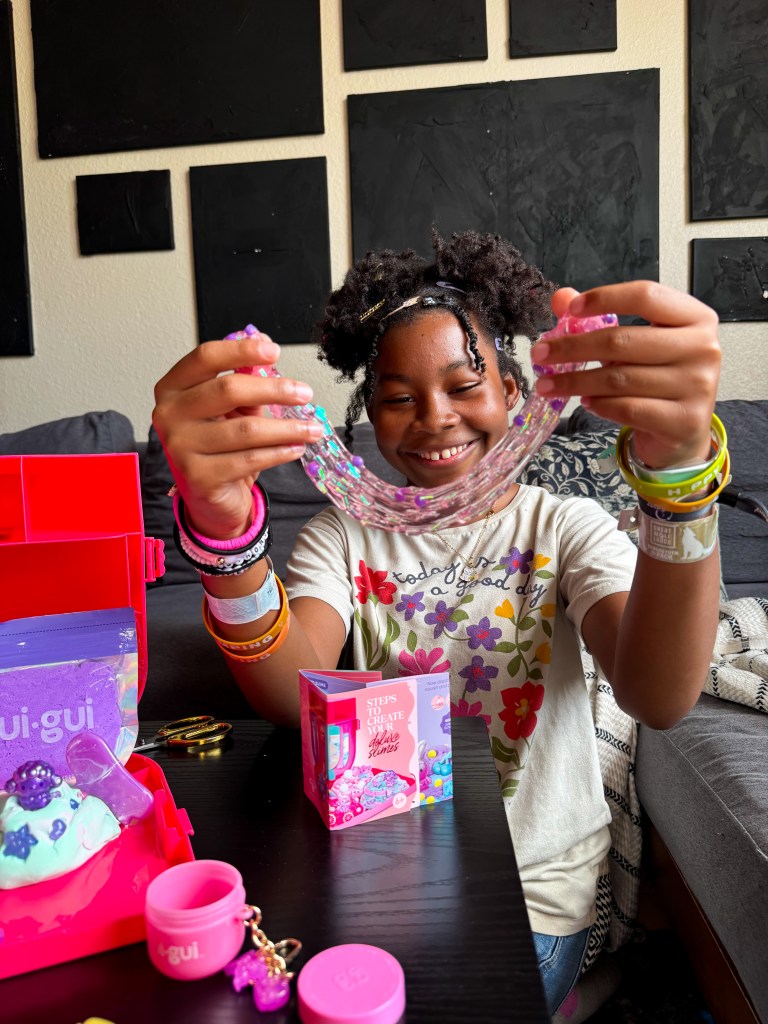
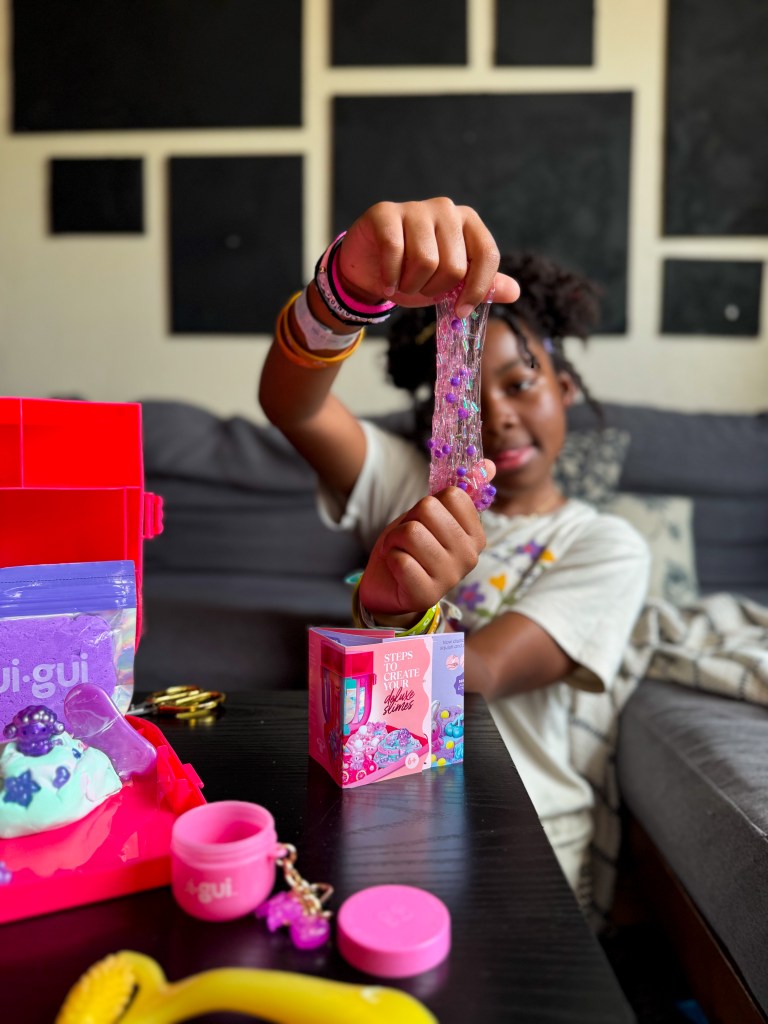
She could stretch them, swirl them, add boosters, press designs into them with the included tools, and finish them with decorations and mini figures. There wasn’t one exact finished result she had to recreate, so she could really make each slime her own.
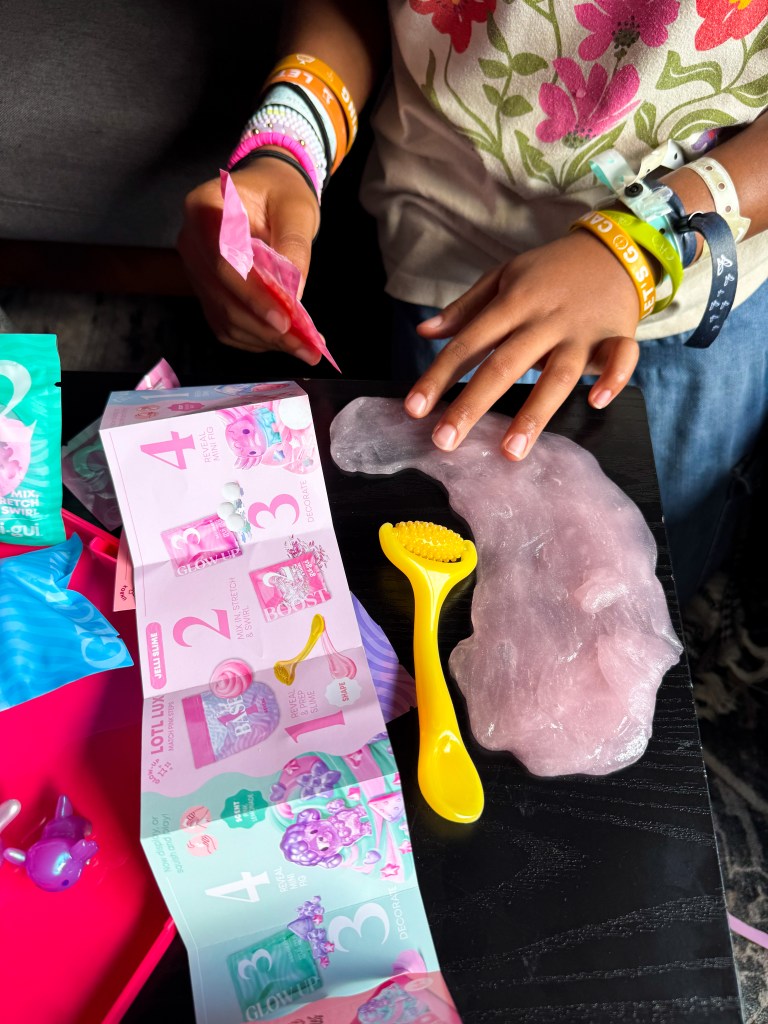
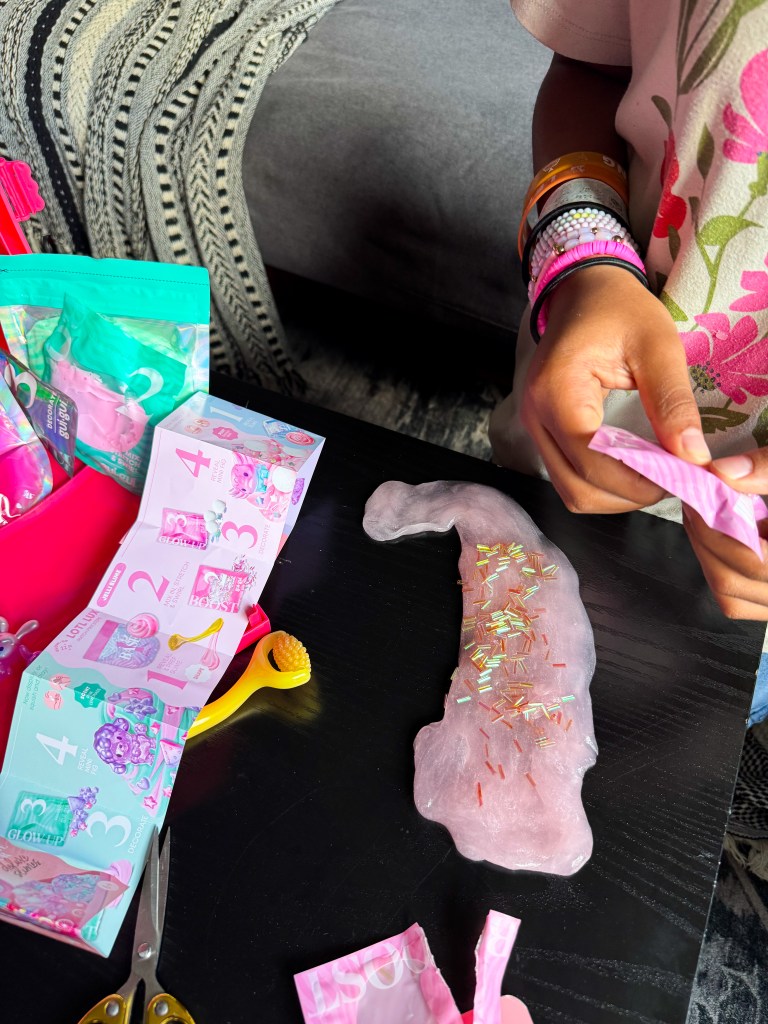
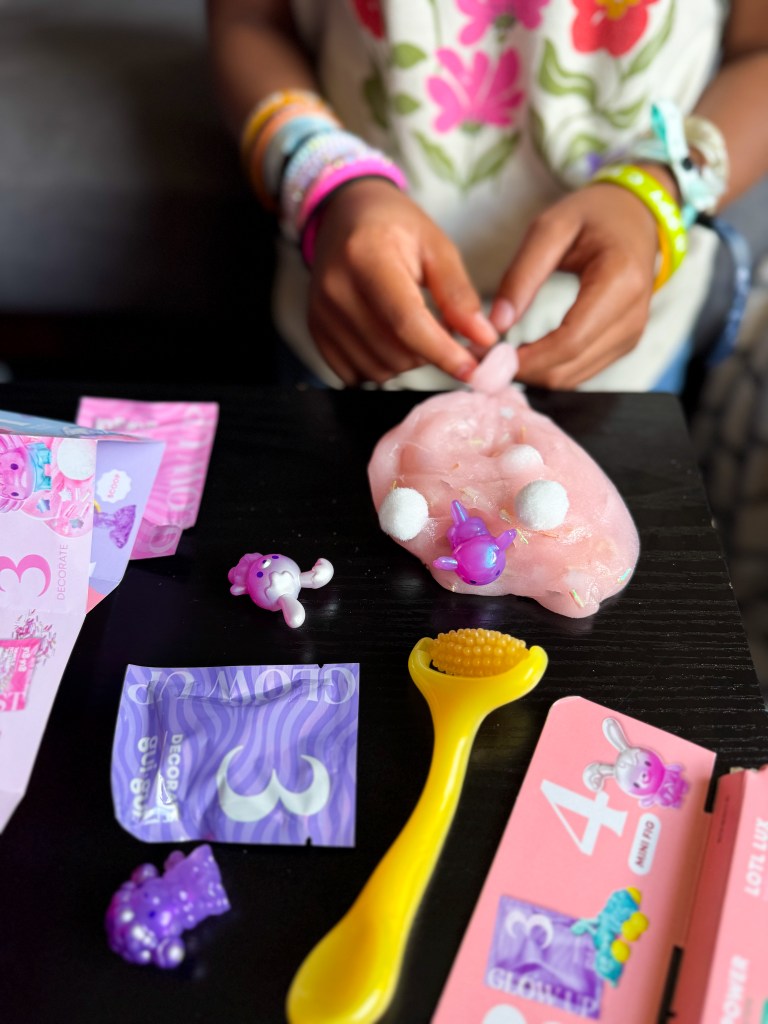
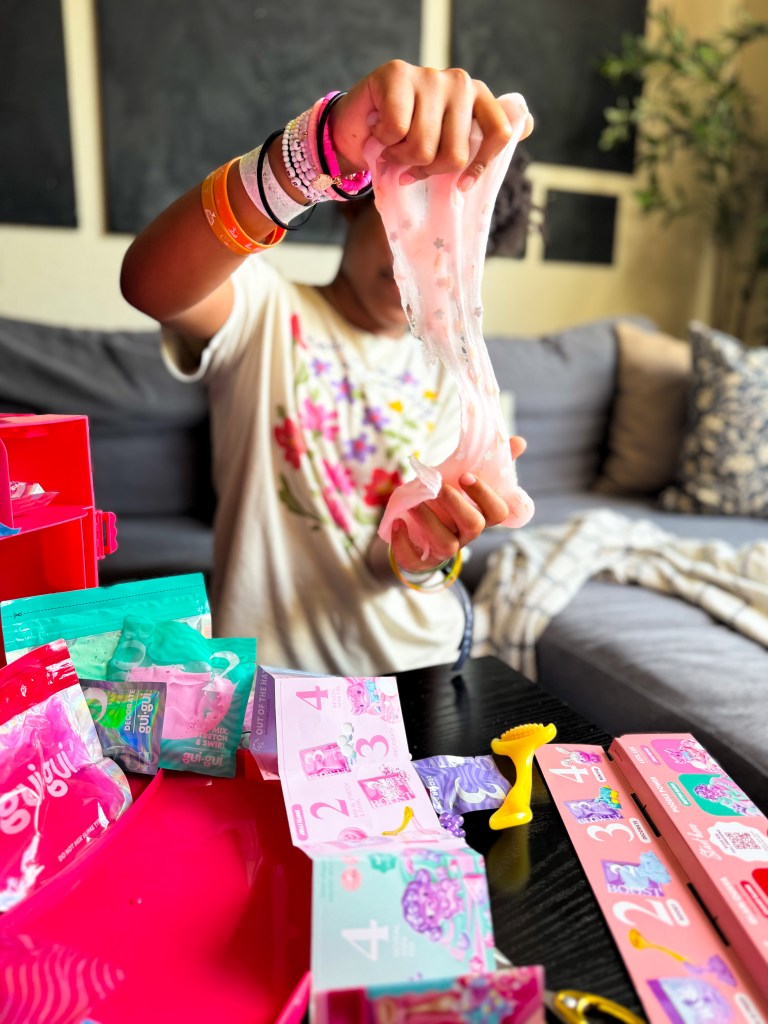
That’s the type of Christmas gift I appreciate more as my kids get older—something that still feels exciting to unwrap but also gives them an activity afterward.
Best Gifts for Girls Who Say They Don’t Want Toys Anymore
Some of the best gifts for girls who say they don’t want toys anymore are things that feel more like activities, hobbies or creative experiences than traditional toys. Gui Gui falls right into that category for me.
There comes a point where you ask what they want and suddenly everything is:
“I don’t know.”
“I don’t really play with toys anymore.”
The funny thing is, many tweens haven’t actually outgrown play. Their version of play is just changing.
They may be more interested in making something, decorating it, collecting things, experimenting with different combinations or doing activities with friends. That’s why DIY kits, crafts, creative sets and other hands-on gifts can work so well for girls in this age group.
My daughter wasn’t sitting at the table following one exact set of instructions from beginning to end. She was choosing what she wanted to use, changing textures, deciding which decorations looked good together and going back to customize things again.
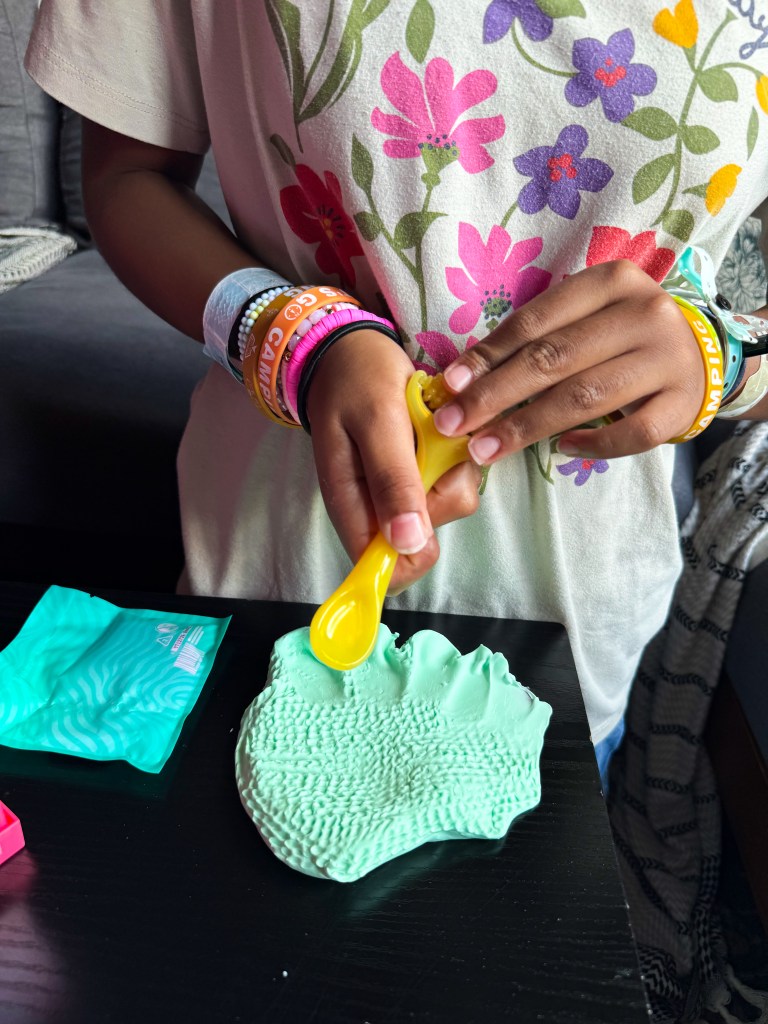
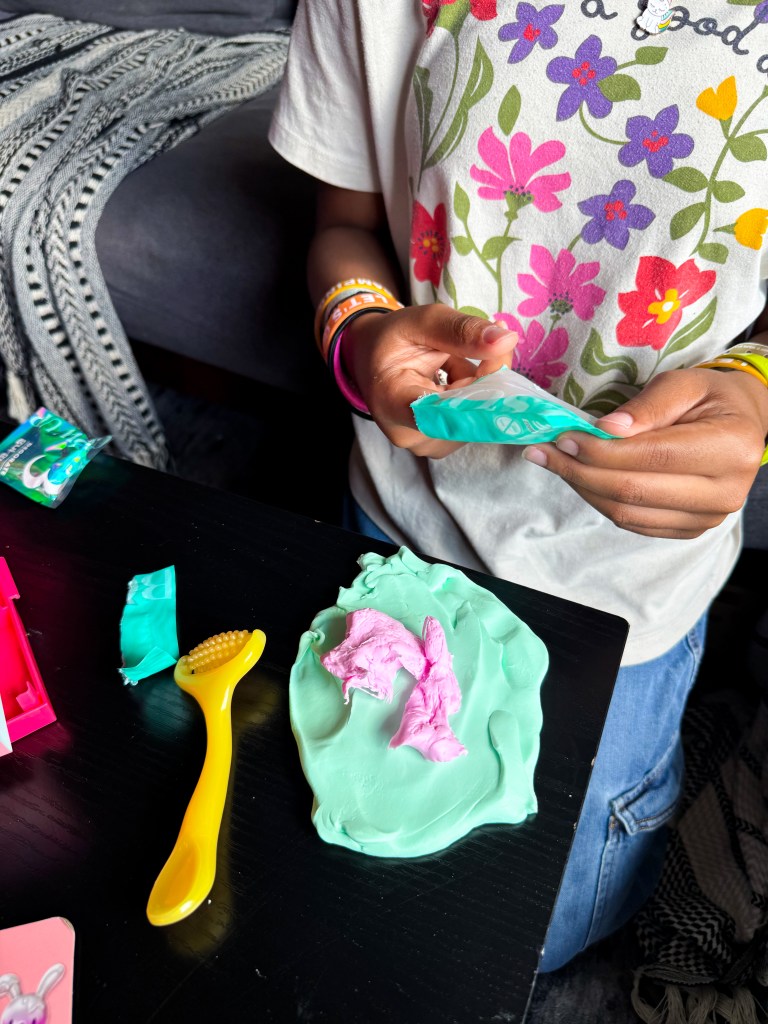
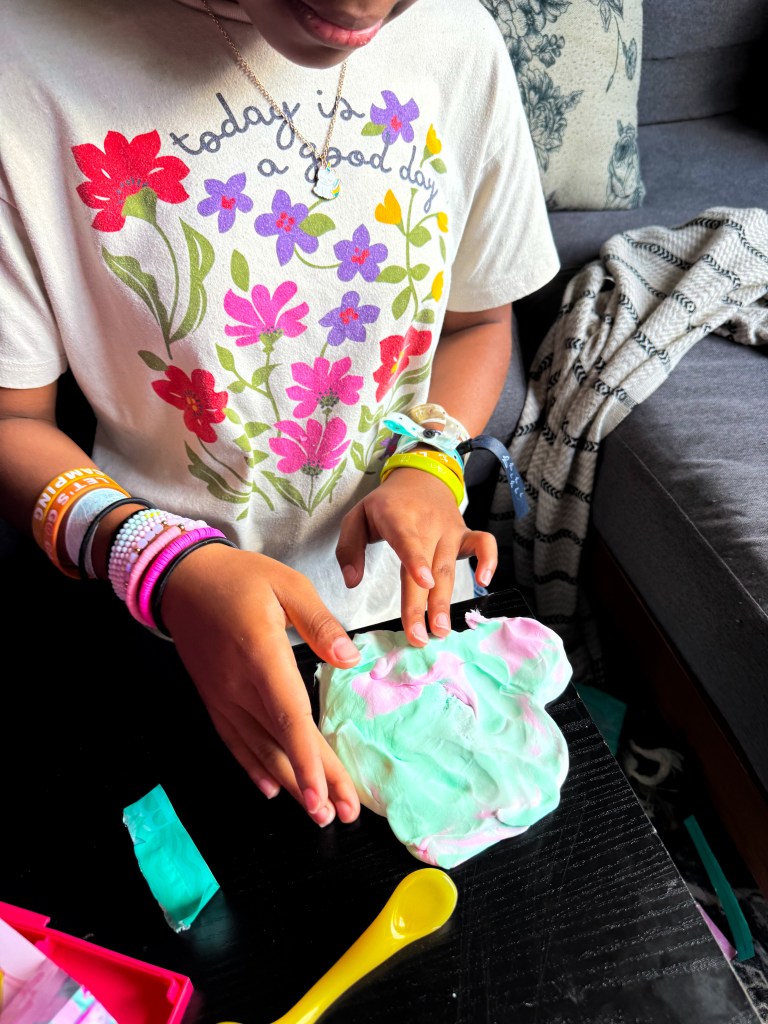

The scents also became a much bigger part of the experience than I expected.
She kept stopping to tell me how good the slime smelled, and once I smelled them myself, I completely understood why she kept mentioning it.
Each slime has its own fragrance along with its own texture. Out of the Hat has a jasmine blossom scent, Glam Guava smells like pink lemonade, Poodle Power has a guava scent, LOTL Lux has a shimmer berry scent, and Lil Flutter has a cherry blossom scent.
And they really were pleasant.
The different scents helped make opening each slime feel like another little discovery instead of simply moving on to a different color.
Gifts That Don’t Feel Too Young for Tween Girls
The best gifts for tween girls don’t have to eliminate everything playful—they simply need to give older kids enough freedom to enjoy it in their own way.
That’s an important distinction when shopping for girls around 10, 11 or 12 especially. Something can be colorful and fun without automatically feeling like it was made for a much younger child.
I think the customization is what helps Gui Gui work for this age.
Instead of just handing kids slime to stretch, the set gives them different tools and steps they can use to change it. The Mega Slime Haul includes a Gua Sha-style tool for shaping and sculpting the slime along with a 3-in-1 tool that can be used for scooping, drizzling and rolling. Kids can then add boosters, decorations, charms and mini figures to finish their creations.
My daughter experimented with several completely different combinations. One slime ended up soft and colorful with little decorative pieces mixed throughout. Another became a mint-and-pink creation that she covered with tiny gems.
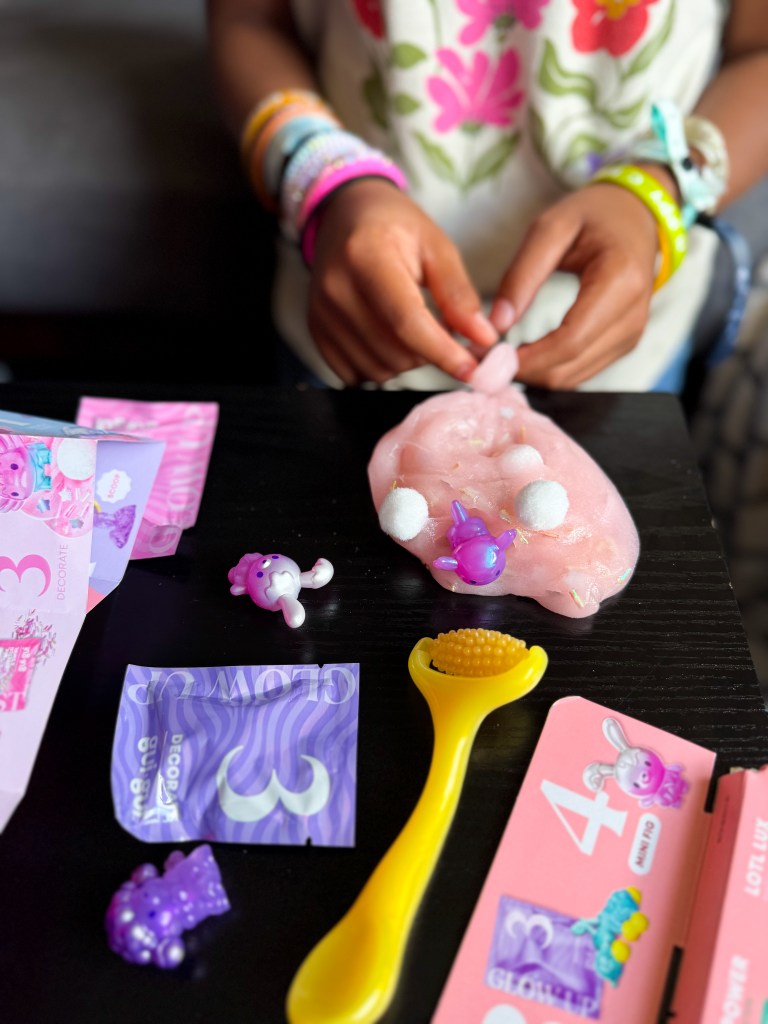


There was plenty of stretching, poking, swirling and remixing happening along the way.
And because there isn’t one “correct” finished slime, the activity leaves room for kids to decide what looks good to them.
That feels much more appropriate for this age than something that dictates exactly how they’re supposed to play with it.
Creative Gifts for Girls Ages 8 to 12
Creative gifts for girls ages 8 to 12 are a great option because they combine the excitement of getting something new with an activity they can actually spend time doing. Slime kits, craft sets, DIY activities and collectible sets all allow tweens to experiment and create instead of simply opening another item.
That is probably my favorite thing about the Gui Gui Mega Slime Haul.
There is a lot happening inside one case.
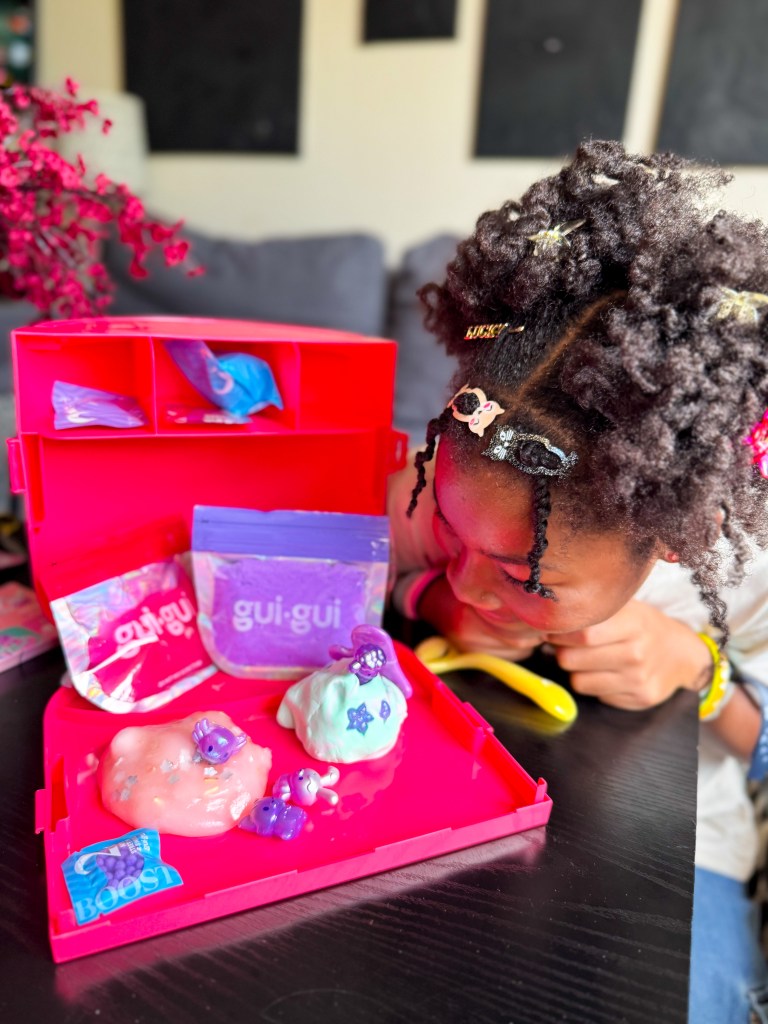
The set includes five slimes, two tools, four mini figures, nine decoration packs, an instruction manual and additional pieces for a total of 50 pieces. My daughter could open a slime, work with the texture, add a booster, choose decorations and finish it with one of the mini figures. Then she could move on and create something completely different with the next one.
The Mini Slime Might Be the Cutest Extra
And then there’s Lil Flutter.
Lil Flutter is the exclusive mini Crunch Slime included with the Mega Slime Haul. It has a cherry blossom scent and is designed so kids can attach it and take it with them.
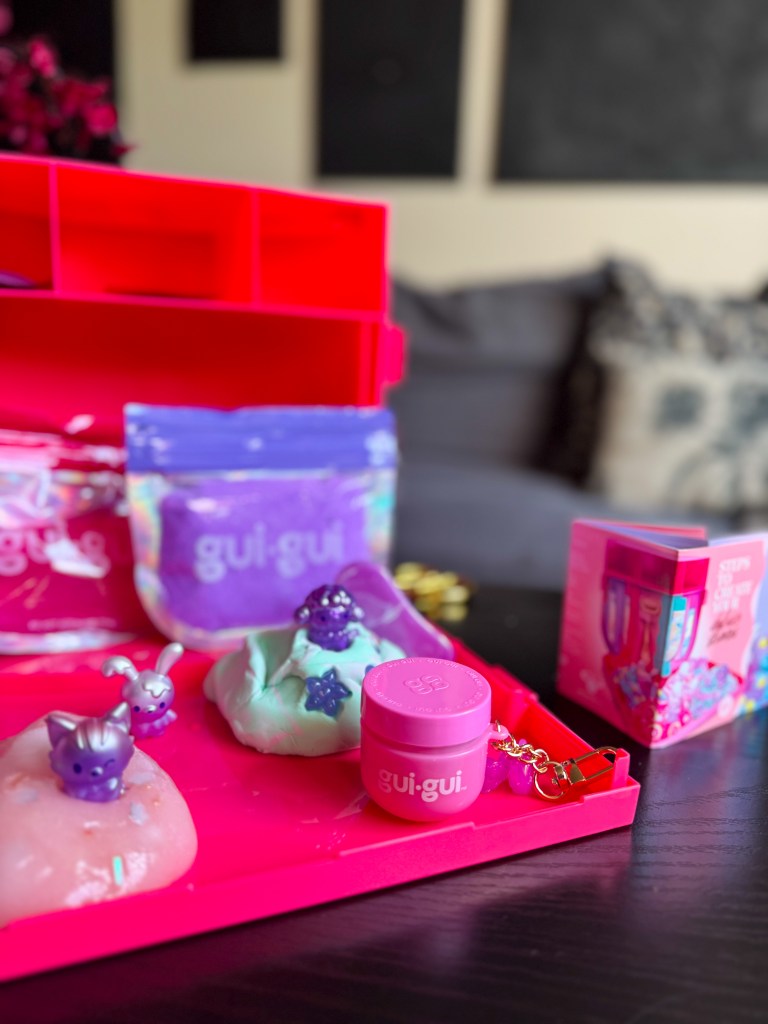
My daughter immediately clipped hers to her pants.
Immediately.
And she has been carrying it around with her ever since.
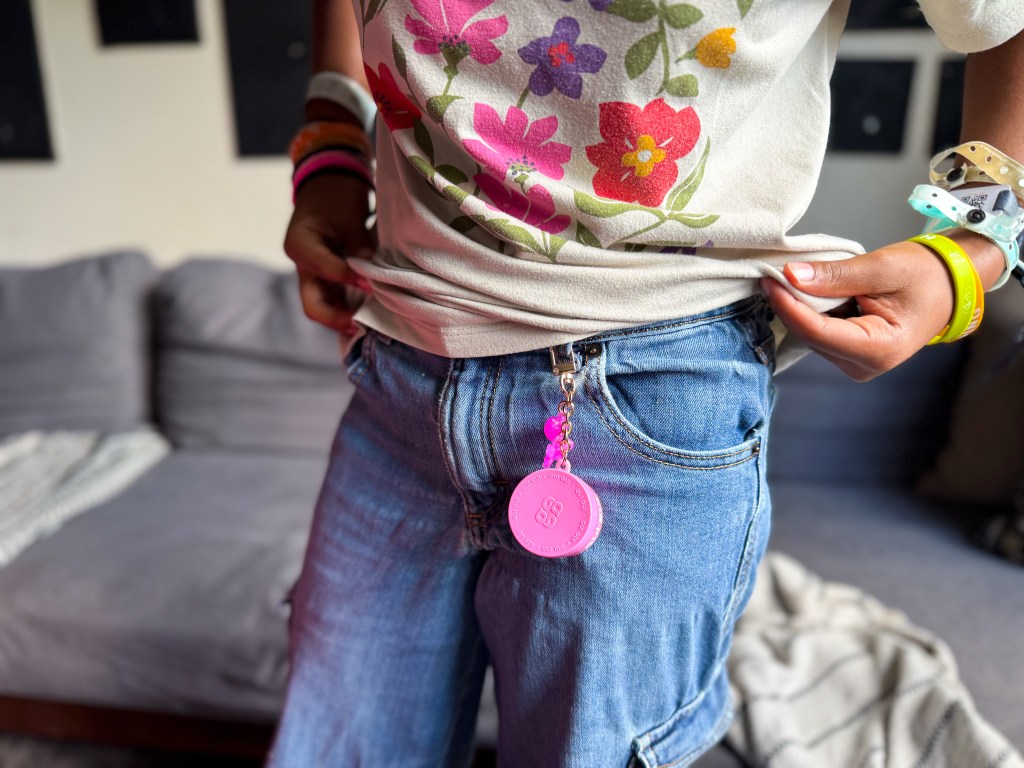
For other tween girls, I could easily see the mini slime becoming a cute addition to a backpack, gym bag or tote—or being clipped onto an outfit the same way my daughter wears hers.
It’s a small part of the overall set, but it’s one of those little details that made the product feel especially fun for this age.
There Are Collectible Pieces, Too
The mini figures also add a collectible element to the experience.
Kids can use them as part of their finished slime creations, but I can also see friends or siblings comparing which figures and decorations they have, sharing pieces or creating different slime combinations together.
That makes a set like this especially fun for sleepovers, playdates, Christmas break activities or a screen-free afternoon with friends.
Instead of the gift being completely “finished” once it’s opened, there’s something to create, something to collect and plenty to customize.

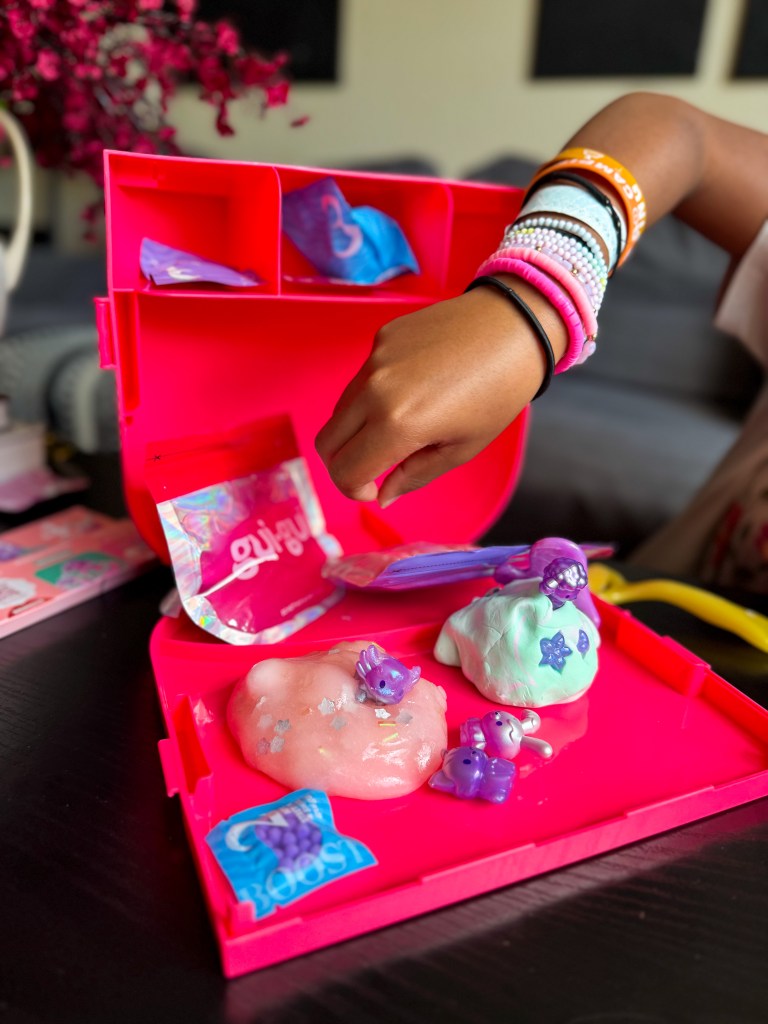
And Mom Gets Somewhere to Put Everything
Can we also discuss the case?
Because once I saw dozens of little slime accessories coming out, my brain immediately went to:
Where am I putting all of this when she’s done?
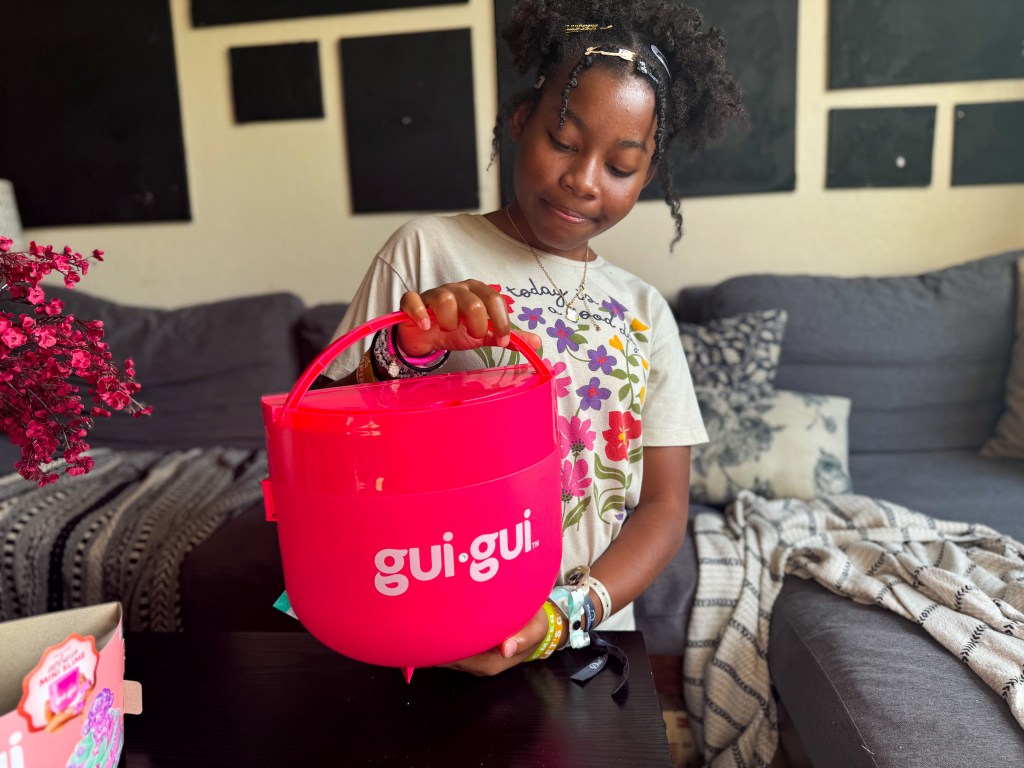
She can pack the slime, tools and accessories back inside when she’s finished instead of having loose pieces sitting around the house. The handle also means the entire kit can travel with her.
She can take it to a sleepover, bring it along while visiting family or carry it wherever she wants to have something creative to do.
I love a kids’ activity that comes with its own storage.
Why Gui Gui Slime Works for the Hard-to-Shop-for Tween
Gui Gui works for the hard-to-shop-for tween because it lands right in that middle space between traditional toys and older teen gifts. It still gives girls something playful to enjoy, but the customization, fragrances, different textures, accessories and collectible elements make the experience feel more personal.
And after watching my daughter use it, I think that distinction matters.
She didn’t just open the box, play with something for five minutes and walk away.
There was the excitement of seeing everything inside. Then there was choosing a slime. Smelling it. Feeling the different texture. Using the tools. Adding the booster. Choosing decorations. Finding a mini figure. Stretching everything out again. Mixing another one. And then, of course, clipping Lil Flutter onto her clothes and walking away with it.

That gave the gift more staying power than I expected.
As a parent, I also liked that she could work through much of the activity independently. Once she understood what everything was for, she was able to make her own choices and create without needing me to sit beside her and direct every step.
And when she was done, everything could go right back inside the case.
So if you’re shopping for an 8-, 9-, 10-, 11- or 12-year-old girl who is difficult to shop for, I would look beyond the traditional toy aisle and consider gifts that let her create, customize or collect.
The Gui Gui Mega Slime Haul checks all three boxes.
It feels fun without feeling too young, gives tweens plenty to do after Christmas morning, and based on the number of times my daughter stopped what she was doing just to tell me how good the slime smelled, the fragrances were definitely a win over here too.
You can find the Gui Gui Mega Slime Haul at Walmart.
Related Posts:
- Woolbuddy Needle Felting Starter Kit Review
- The Perfect Tween Birthday Trip At Great Wolf Lodge In Grapevine TX
Frequently Asked Questions About Christmas Gifts for Tween Girls
What are good Christmas gifts for girls ages 8 to 12?
Creative and experience-based gifts are great options for girls ages 8 to 12 because they allow tweens to make choices and personalize the activity. DIY kits, slime kits, crafts, collectibles and other hands-on gifts can be especially helpful when a girl is starting to outgrow traditional toys.
Is Gui Gui Mega Slime Haul good for tweens?
Yes. Although the manufacturer’s suggested age is 6 and older, the different slime textures, scents, customization options, decorations and mini figures make the Gui Gui Mega Slime Haul especially appealing for older kids and tweens who already enjoy creative activities and slime.
What comes in the Gui Gui Mega Slime Haul?
The Mega Slime Haul is a 50-piece set that includes five slimes, two tools, four mini figures, nine decoration packs, an instruction manual and additional accessories. The five slimes include Cloud, Clear, Butter, Jelli and Crunch textures.
Are the Gui Gui slimes scented?
Yes. The slimes have different fragrances, including jasmine blossom, pink lemonade, guava, shimmer berry and cherry blossom. Each slime also has a different texture, so the scents are only one part of what makes each one feel different.
Is the Gui Gui Mega Slime Haul easy to store?
One of my favorite features is the handled case. We can put the slime, tools and accessories back inside when my daughter isn’t using them, and she can carry the kit with her when she wants to take it somewhere else.
-
Best Soap for Dry Skin: What to Look for in a Moisturizing Bar Soap
Finding the best soap for dry skin can make a difference in how your skin feels after a shower. If you’ve ever stepped out of the shower only to notice that your skin feels tight, rough, or uncomfortable, your cleansing routine might be part of the problem.
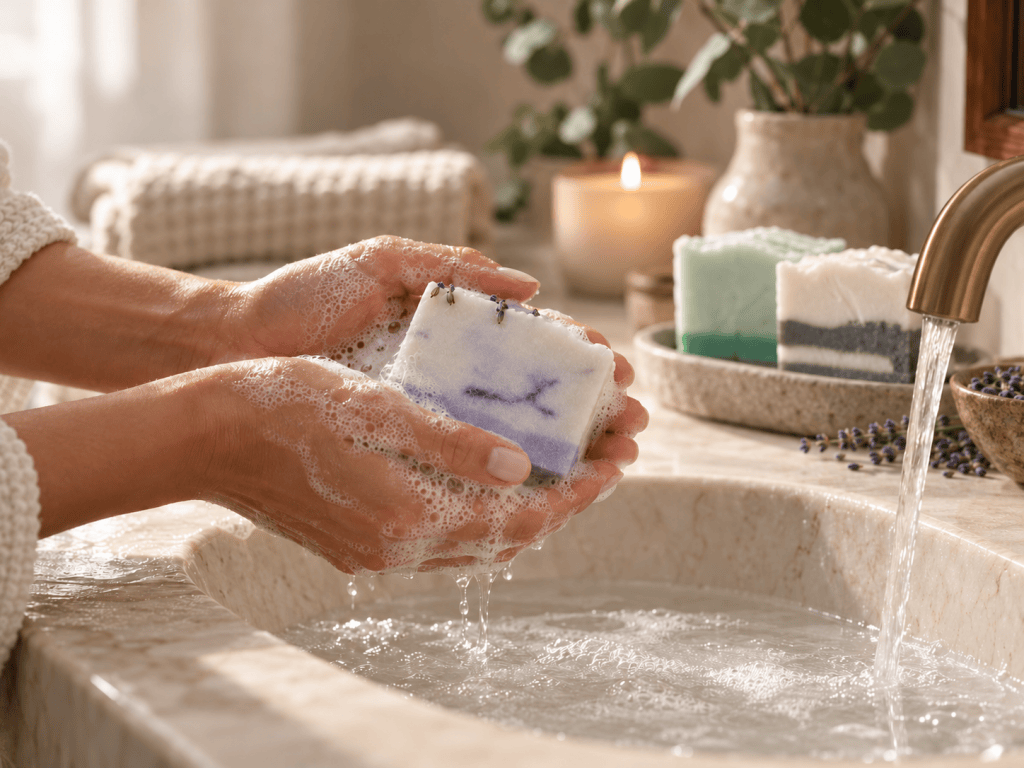
Not all soaps are created equal. Some cleansing bars remove dirt and oil effectively but can also leave skin feeling stripped. Others are formulated with milder cleansing ingredients and skin-conditioning components that may be more comfortable for everyday use.
The secret isn’t necessarily finding a soap that produces the most bubbles or has the strongest fragrance. It’s finding a cleanser that works with your skin’s needs.
Whether you’re considering a moisturizing bar soap, a handmade soap for dry skin, or a gentle everyday cleanser, here’s what you should know before choosing your next bar.
What Is the Best Soap for Dry Skin?
The best soap for dry skin is one that cleanses effectively without leaving your skin feeling excessively tight or irritated.
For people with very dry or sensitive skin, dermatologists generally recommend gentle, fragrance-free cleansers. A non-soap cleansing bar, sometimes called a syndet bar, may be a better option than traditional soap because its formulation can be gentler on the skin.
When comparing bar soaps, look for:
- Gentle cleansing ingredients
- A formula appropriate for your skin type
- Fragrance-free options if you’re sensitive to fragrance
- Skin-conditioning ingredients such as glycerin
- Clear ingredient labeling
A beautifully made handmade soap can be enjoyable to use, but it’s important to remember that handmade doesn’t automatically mean gentle or moisturizing. The complete formula matters.
The right cleanser should leave your skin feeling comfortably clean, rather than squeaky, tight, or stripped.

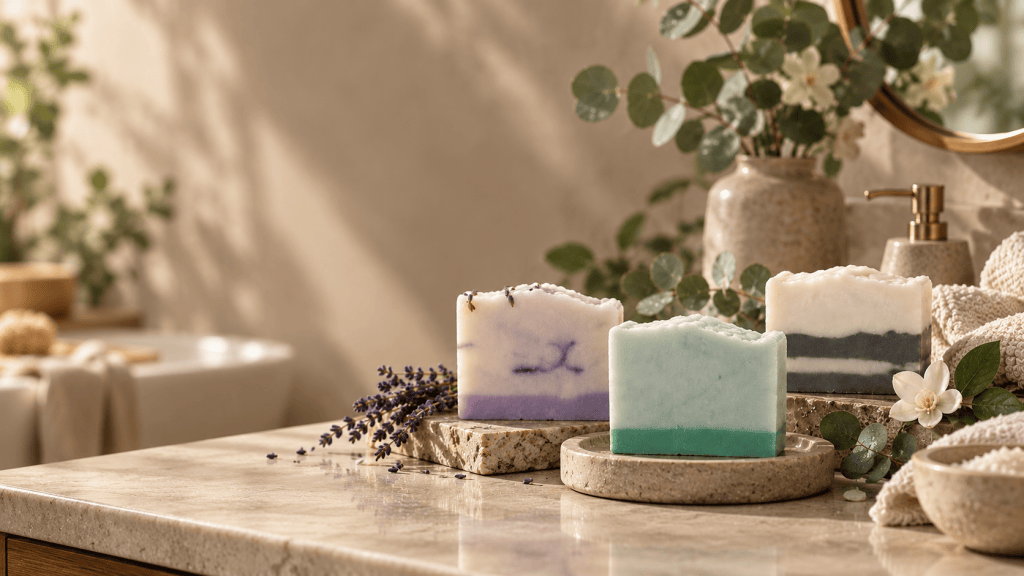
Meet FORM For The Body, a collection of handcrafted shea butter soaps featuring three beautiful fragrances: STILL (Lavender Jasmine), NORTH (Cedarwood, Mint & Eucalyptus), and VEIL (Coconut Vanilla).
Thoughtfully crafted for your everyday shower routine, each bar brings its own unique scent and character.
Shop the FORM Soap Collection →Why Does Soap Sometimes Make Your Skin Feel Dry?
Your skin naturally produces oils that help support its protective barrier.
Cleansing removes dirt, sweat, and excess oil, but certain cleansing ingredients can remove more of your skin’s natural oils than necessary.
When that happens, you might notice flaky patches, tightness after bathing, rough skin, or increased discomfort.
Several factors can contribute to dry skin after showering, including:
- Hot water and long showers
- Harsh or highly alkaline cleansers
- Frequent washing
- Fragrance sensitivity
- Cold weather and dry indoor air
- Not moisturizing after bathing
If your skin feels uncomfortable after every shower, switching to a gentler cleanser is one practical place to start.
However, your soap is only one part of your skincare routine. Daily moisturizing is just as important for managing dry skin.
5 Ingredients to Look for in a Moisturizing Bar Soap
When shopping for a moisturizing bar soap, reading the ingredient list is one of the best ways to understand what you’re purchasing.
Here are five ingredients commonly found in cleansing or skincare products that may be worth looking for.
1. Glycerin
Glycerin is a humectant, meaning it attracts water.
It’s commonly used in moisturizing skincare products and may also be present in bar soap formulations.
Although glycerin can help support skin hydration, the overall cleanser formula still determines how gentle the finished product will be.
2. Shea Butter
Shea butter is widely used in moisturizers because it contains fatty components that help soften and condition skin.
You’ll also find it in some handmade bar soaps.
Keep in mind that a shea butter soap isn’t necessarily equivalent to applying a leave-on shea butter moisturizer. Cleansing products are rinsed away, so their benefits depend on how the entire soap is formulated.
3. Olive Oil
Olive oil is a popular ingredient in traditional soapmaking.
When used in soap, oils undergo a chemical process called saponification, which creates soap.
Olive oil-based soaps can have different cleansing characteristics depending on the recipe, the amount of oil used, and the other ingredients included.
4. Coconut Oil
Coconut oil is another common soapmaking ingredient.
It’s valued for helping produce cleansing action and lather. However, a high proportion of coconut oil in a finished soap formula can be too cleansing for some people with dry skin.
Rather than choosing a soap based on coconut oil alone, consider the complete formulation.
5. Colloidal Oatmeal
Colloidal oatmeal is well known for its use in products intended to comfort dry, irritated skin.
It’s found in some specialty cleansers, bathing products, and moisturizers.

Prefer something warm and comforting? Meet VEIL, a coconut-vanilla shea butter soap with a beautifully layered design.
Shop VEIL Nº 03 →If you’re considering an oatmeal soap, check whether the product contains colloidal oatmeal or another form of oatmeal, and whether the formulation is appropriate for your skin.
The takeaway: One impressive ingredient doesn’t automatically make a soap the best choice. Pay attention to the complete formula and how your skin responds.
Is Handmade Soap Good for Dry Skin?
Handmade soap can be a lovely addition to your everyday bathing routine, especially if you enjoy thoughtfully crafted products and having more variety in your shower.
But is handmade soap actually better for dry skin?
That depends on the ingredients and how the soap is made.
Traditional handmade soaps are generally alkaline, and some people with especially dry or sensitive skin may find them irritating.
Other people may enjoy particular handcrafted formulations without experiencing discomfort.
When choosing a handmade soap for dry skin, consider the cleansing oils, added ingredients, fragrance, and the way your skin feels after use.
One benefit of shopping with a small soap brand is the opportunity to explore different formulations and learn more about the products you’re bringing into your home.
If you enjoy artisan bath products and want to discover something new, explore the soap options available from Form Soaps.
How to Choose the Best Bar Soap for Dry Skin
With so many bar soaps available, finding the right one can feel overwhelming.
Here’s how to narrow down your options.
Consider Your Skin Type
Before buying a bar soap, think about how your skin normally behaves.
Do you experience occasional dryness during colder months? Does your skin feel tight after showering? Are you sensitive to fragrances?
If your skin is extremely dry, reactive, or eczema-prone, a fragrance-free, non-soap cleansing bar may be the safest starting point.
If your skin tolerates traditional soap well, you may have more flexibility when exploring handmade options.
Read the Ingredient List
Don’t choose a bar solely because it has a beautiful design or appealing scent.
Take a moment to look at the ingredients.
If you know certain ingredients irritate your skin, avoid products containing them.
And if you aren’t sure how your skin will react, introduce one new product at a time.
Think About Fragrance
One of the pleasures of using artisan soaps is exploring different scents.
However, fragrance can cause irritation for some people, especially those with sensitive or eczema-prone skin.
Essential oils can also trigger reactions.
For dry, sensitive skin, a fragrance-free product is generally a better choice than one marketed only as natural or unscented.
Choose a Soap You’ll Enjoy Using
Your daily shower is part of your everyday self-care routine.
Choosing a bar soap with a texture, appearance, and cleansing experience you enjoy can make that routine feel a little more special.
Just remember that the most beautiful soap isn’t necessarily the right formulation for every skin type.

Love a soft, floral fragrance? Discover STILL, a lavender-jasmine shea butter soap designed to bring a little luxury to your everyday shower.
Shop STILL Nº 01 →Shopping for Handmade Bar Soap? Explore Form Soaps
There is something special about finding a soap you genuinely enjoy using.
Instead of automatically reaching for the same product every time you shop, exploring handcrafted soap offers an opportunity to discover different ingredients, styles, and bathing experiences.
At Form Soaps, you can browse the shop’s soap offerings and find a bar that fits your personal preferences.
Whether you’re purchasing a soap for your everyday shower, trying a new bath product, or shopping for someone who enjoys self-care gifts, start by looking at the available bars and reviewing their ingredients.

Refresh your shower routine with NORTH, a shea butter soap featuring the fresh, botanical scents of cedarwood, mint, and eucalyptus.
Shop NORTH Nº 02 →Ready to find your next favorite bar?
Explore the Form Soaps collection →
How to Keep Your Skin From Feeling Dry After Showering
Even the gentlest cleanser may not be enough to keep naturally dry skin comfortable without a good moisturizing routine.
Fortunately, a few simple habits can help.
Use Warm Water Instead of Hot Water
As relaxing as a hot shower can feel, excessive heat can contribute to skin dryness.
Try showering with warm water and limiting your bathing time to around five to ten minutes.
Avoid Overwashing
Use enough cleanser to remove dirt, sweat, and excess oil.
If your skin is very dry, you may not need to lather your entire body heavily every time you shower.
Focus on areas that need cleansing, while following your dermatologist’s advice if you have a specific skin condition.
Apply Moisturizer While Your Skin Is Damp
After showering, gently pat your skin with a towel.
While your skin is still slightly damp, apply a fragrance-free moisturizing cream or ointment.
This is one of the most important steps for maintaining comfortable, hydrated skin.
Store Your Bar Soap Properly
Leaving bar soap sitting in water can cause it to become soft and wear down more quickly.
A draining soap dish helps your bar dry between uses.
You can also keep unused bars in a cool, dry location until you’re ready for them.
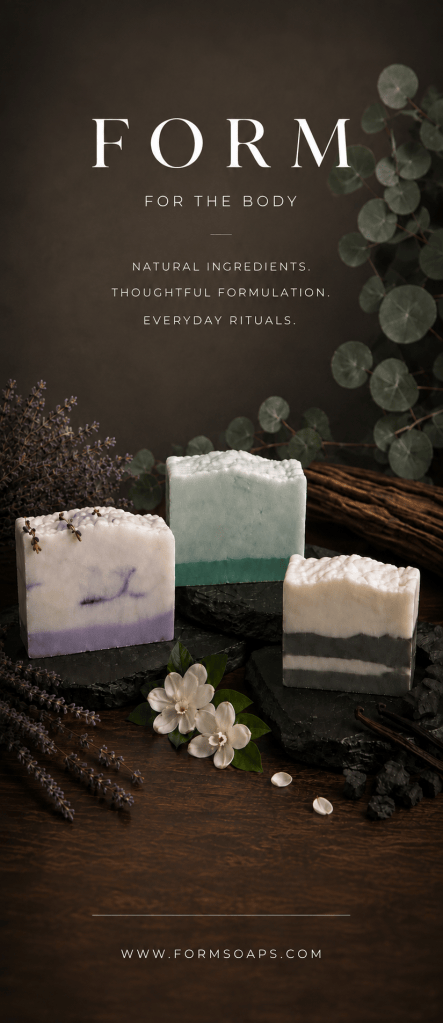
Your next favorite shower ritual starts here. Explore the FORM collection of handcrafted shea butter soaps and discover a scent you’ll love.
Explore the FORM Collection →Frequently Asked Questions About the Best Soap for Dry Skin
What is the best bar soap for very dry skin?
For very dry skin, choose a mild, fragrance-free cleansing bar formulated for dryness or sensitivity. Dermatologists often recommend non-soap cleansing bars instead of traditional alkaline soaps for highly reactive skin. Follow cleansing with a rich moisturizer.
Is moisturizing bar soap better than body wash?
Not necessarily. Both bar cleansers and liquid body washes can be formulated to be gentle or harsh. The ingredients, formulation, and your skin’s needs matter more than whether the product comes in a bar or bottle.
Can handmade soap help with dry skin?
Some handmade soap formulations may feel comfortable on dry skin, while others can be too cleansing. Handmade soap isn’t a treatment for dry skin or eczema, and the finished formula should be evaluated rather than assuming all natural ingredients are beneficial.
What ingredients should I avoid in soap for dry skin?
If you have dry or sensitive skin, consider avoiding heavily fragranced products, harsh cleansing formulas, and ingredients that have previously caused irritation. Essential oils and botanical extracts can also trigger reactions in some people.
Can I use bar soap every day?
Many people use bar cleansers daily without problems. However, if daily use leaves your skin tight, itchy, or uncomfortable, try a gentler cleanser and reduce unnecessary washing. Moisturize after bathing.
Why does my skin feel tight after using soap?
That tight feeling can occur when cleansing disrupts your skin’s moisture barrier or removes too much surface oil. Hot water, long showers, and strong cleansing formulas may contribute.
Is natural soap always better for sensitive skin?
No. Natural ingredients can still irritate skin or trigger allergies. For particularly sensitive skin, ingredient transparency and a gentle, fragrance-free formulation matter more than a natural label.
Final Thoughts: Finding the Best Soap for Dry Skin
Finding the best soap for dry skin is about more than choosing a pretty bar or the richest lather.
The most important things are understanding your skin, choosing a suitable formula, and following a moisturizing routine that helps keep your skin comfortable.
And if you enjoy discovering handcrafted bath products, there’s no reason your everyday shower can’t feel like a little moment of self-care.
Start with the ingredients, consider what your skin needs, and find a soap that makes your daily routine more enjoyable.
Looking for a new bar soap to add to your shower?
Visit Form Soaps to explore the collection and discover your next everyday favorite.
Pin these for later…


-
Fischertechnik Junior Max Review: Hands-On STEM Learning for Kindergarten
One thing I’ve learned throughout our homeschooling journey is that some of the best learning experiences don’t involve worksheets, textbooks, or even sitting at a desk. Sometimes, all it takes is a box of building pieces, a little imagination, and a child who’s ready to figure out how things work!
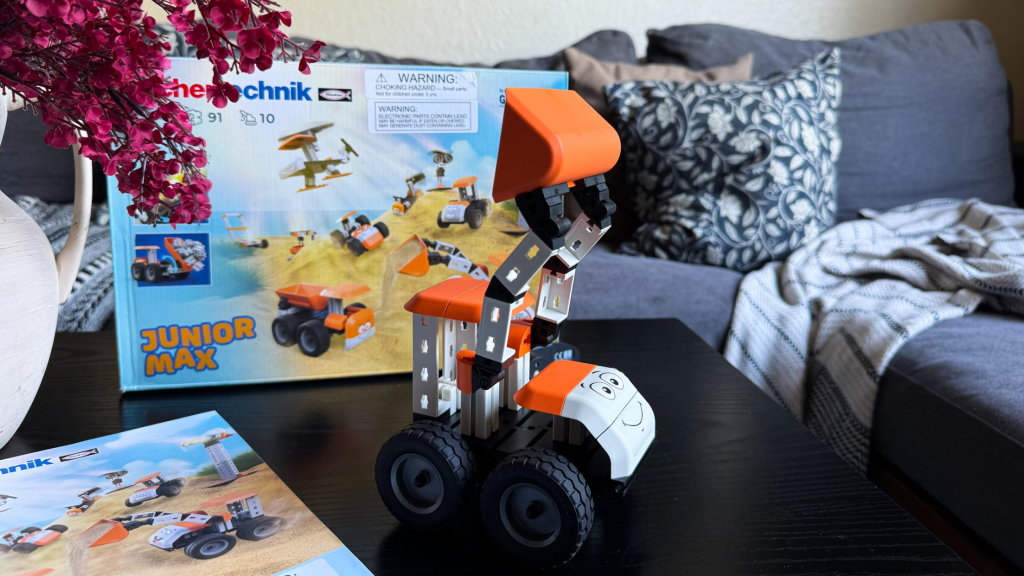
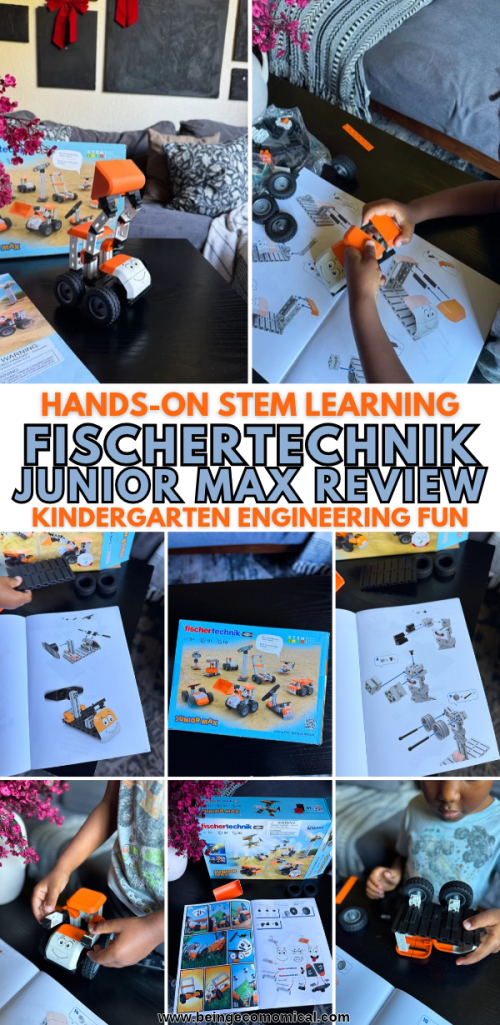
That’s exactly what we experienced with the Fischertechnik Junior Max building kit, which was included in our Timberdoodle Kindergarten Curriculum Kit.
And I couldn’t be more pleased with this addition to our homeschool!
If you’re looking for hands-on STEM activities for kindergarten, engineering toys for 5-year-olds, or educational building kits that encourage problem-solving, this is definitely one worth exploring.
What I especially appreciate about Fischertechnik Junior Max is that children aren’t simply building something to look at. They’re learning how individual parts work together to create something functional.
And when they’re finished? They have a new toy to play with!
What Is Fischertechnik Junior Max?
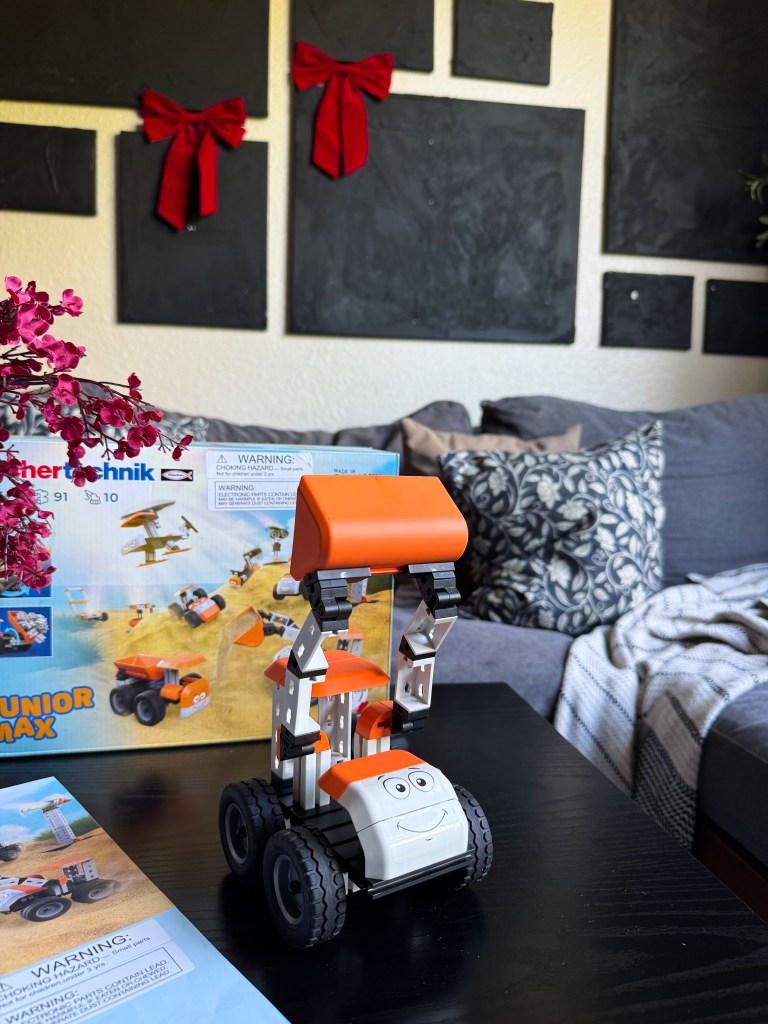
Fischertechnik Junior Max is an educational construction kit designed to introduce children ages 5 and older to engineering, mechanical systems, and basic STEM concepts through hands-on building.
Our set includes 91 building pieces and instructions for 10 different models, featuring construction vehicles and other mechanical creations.
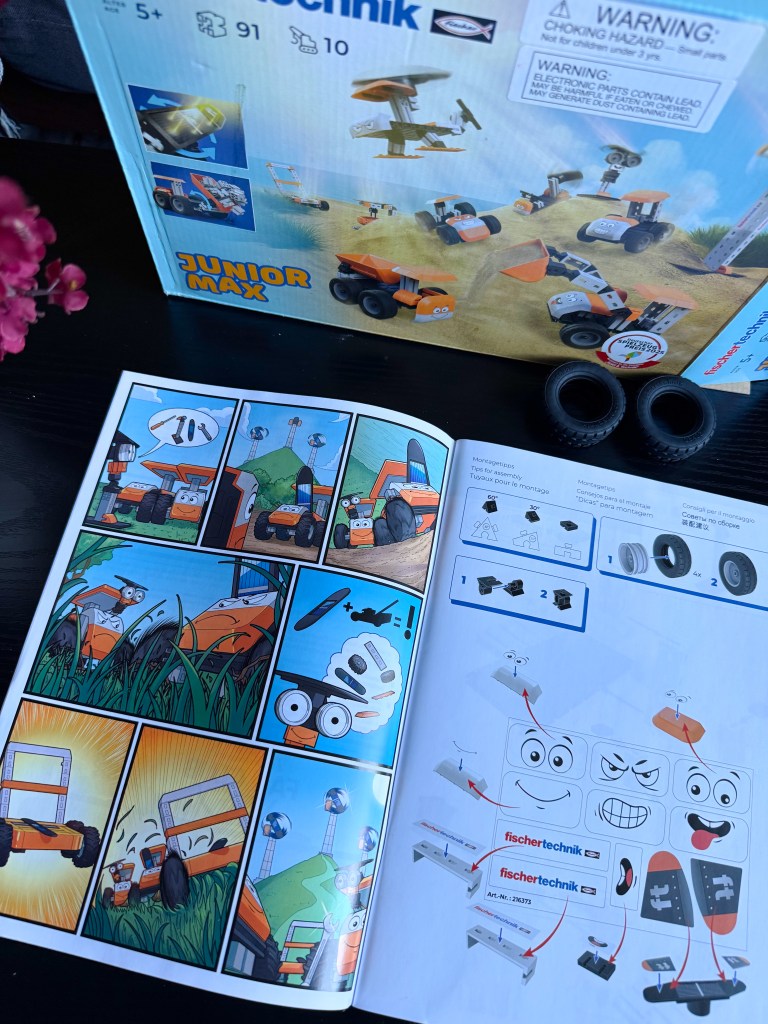
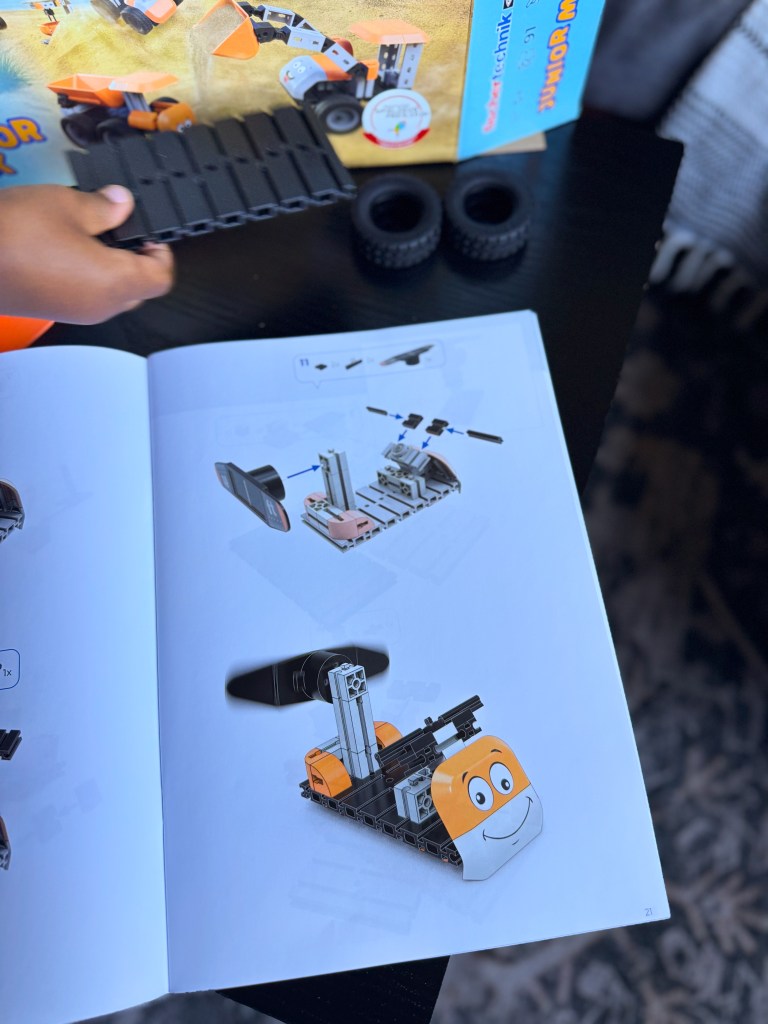
The kit includes colorful orange, gray, black, and white components, including wheels, connectors, axles, structural pieces, and accessories that children can use to create working models.
Unlike traditional building blocks, Fischertechnik uses a construction system that allows pieces to connect in ways that introduce children to how real mechanical structures work.
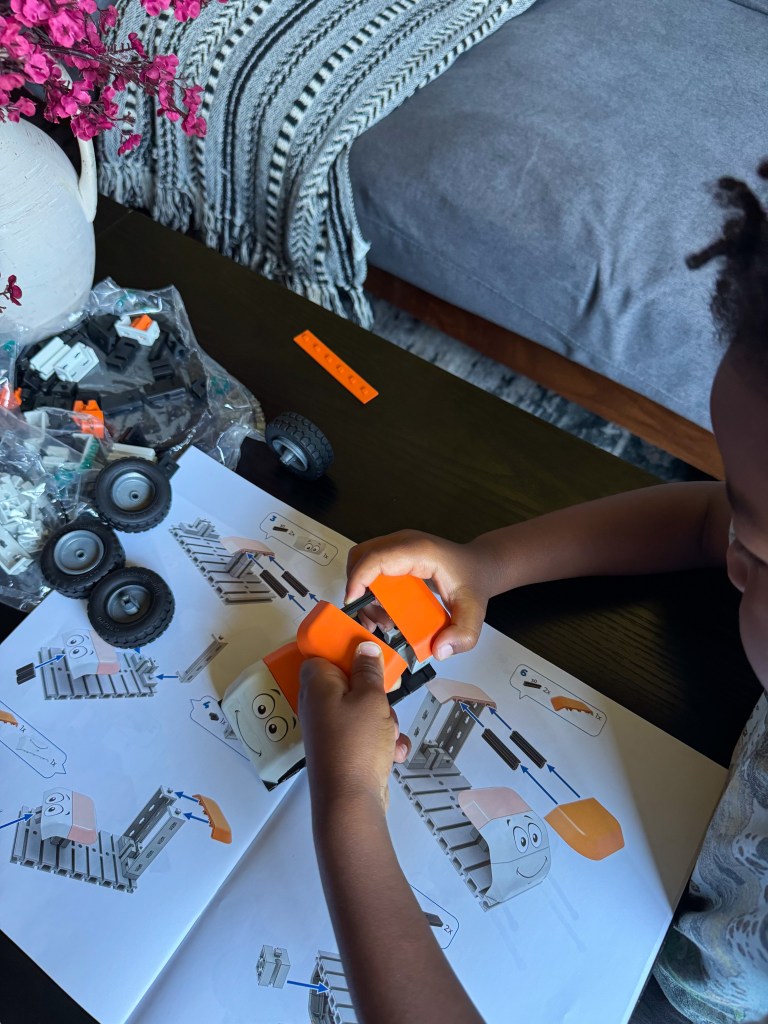
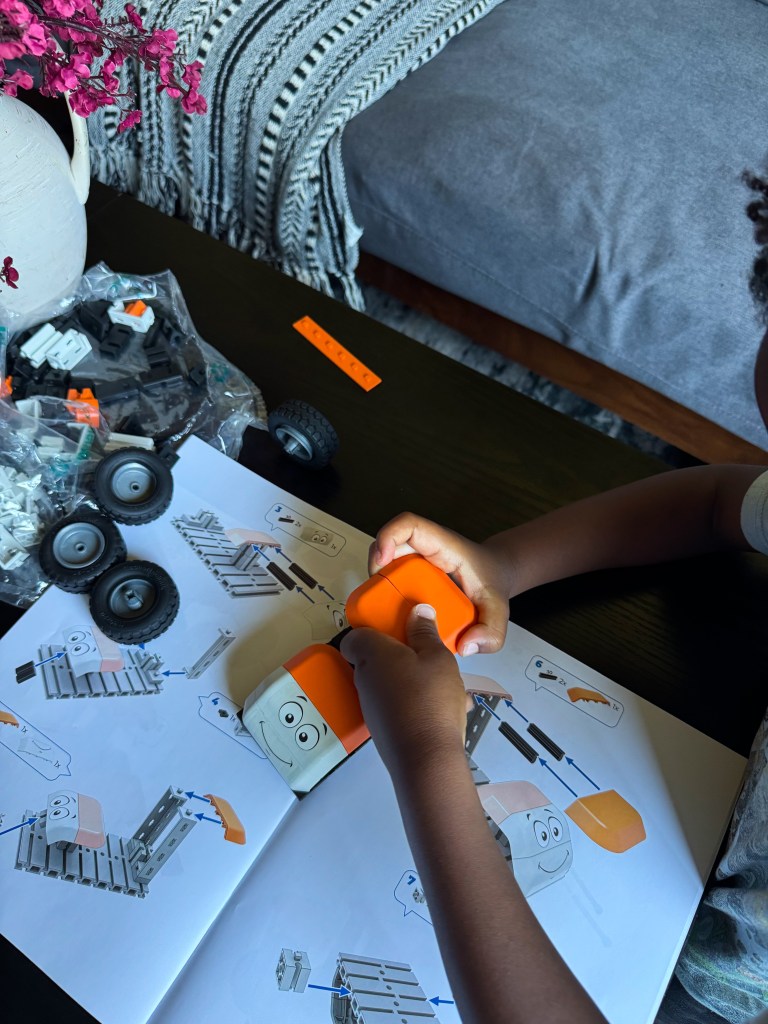
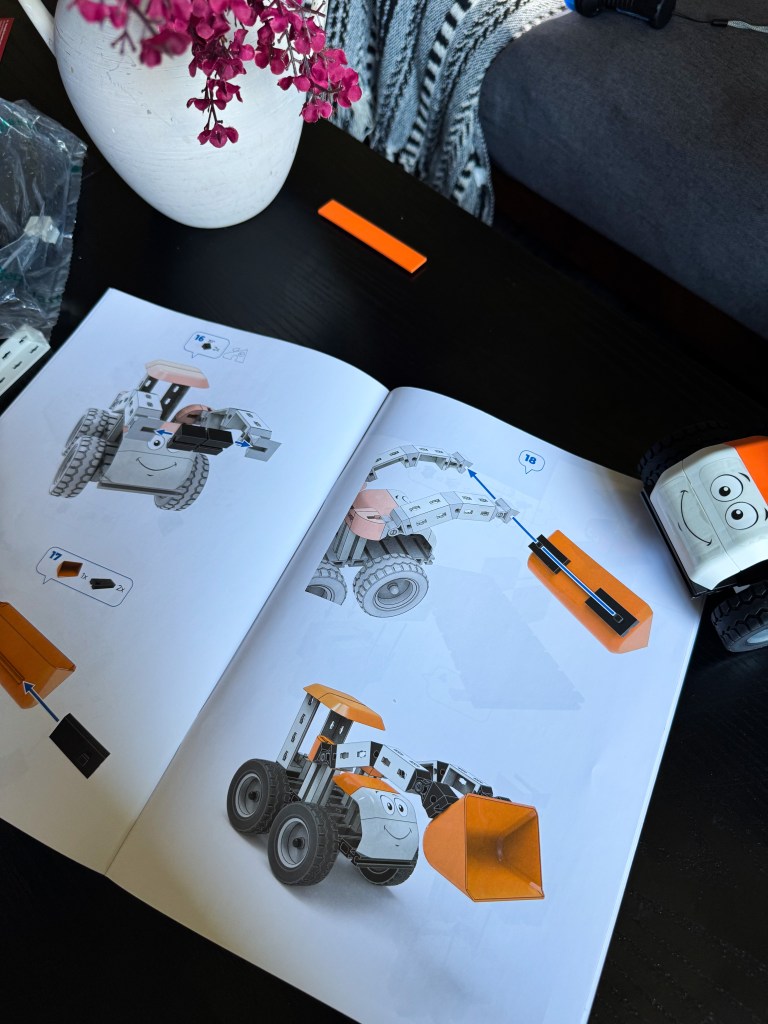
The illustrated instruction booklet guides young builders through the assembly process, showing which pieces are needed and how they fit together.
It’s a wonderful introduction to engineering without overwhelming children with complicated explanations.
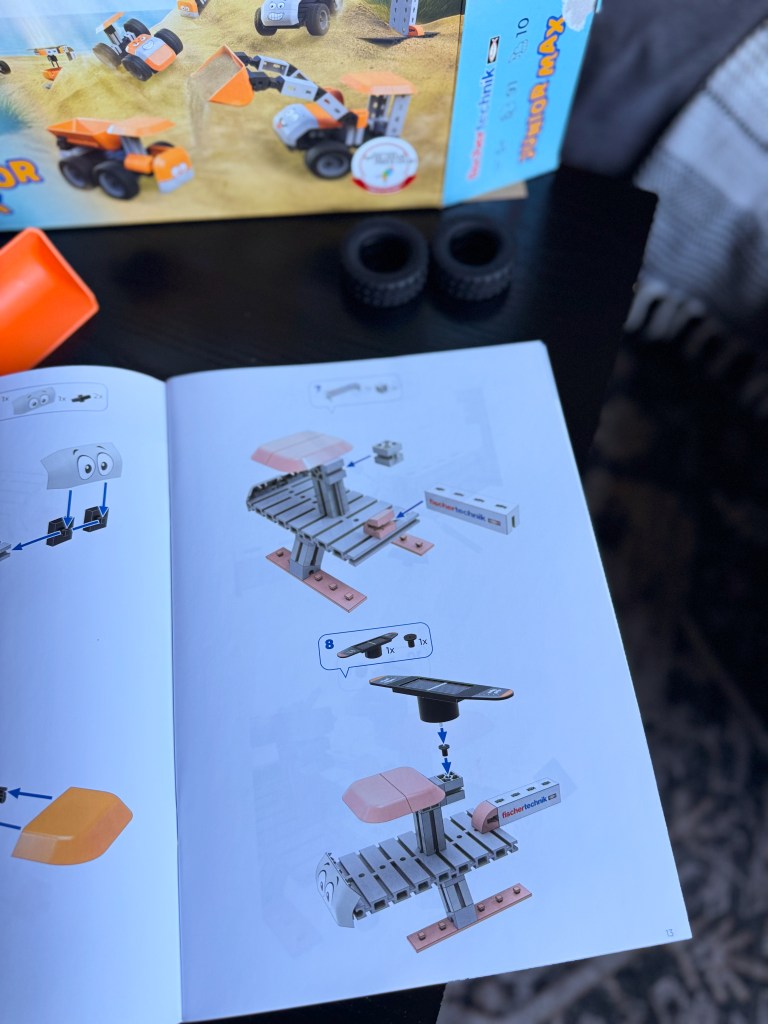
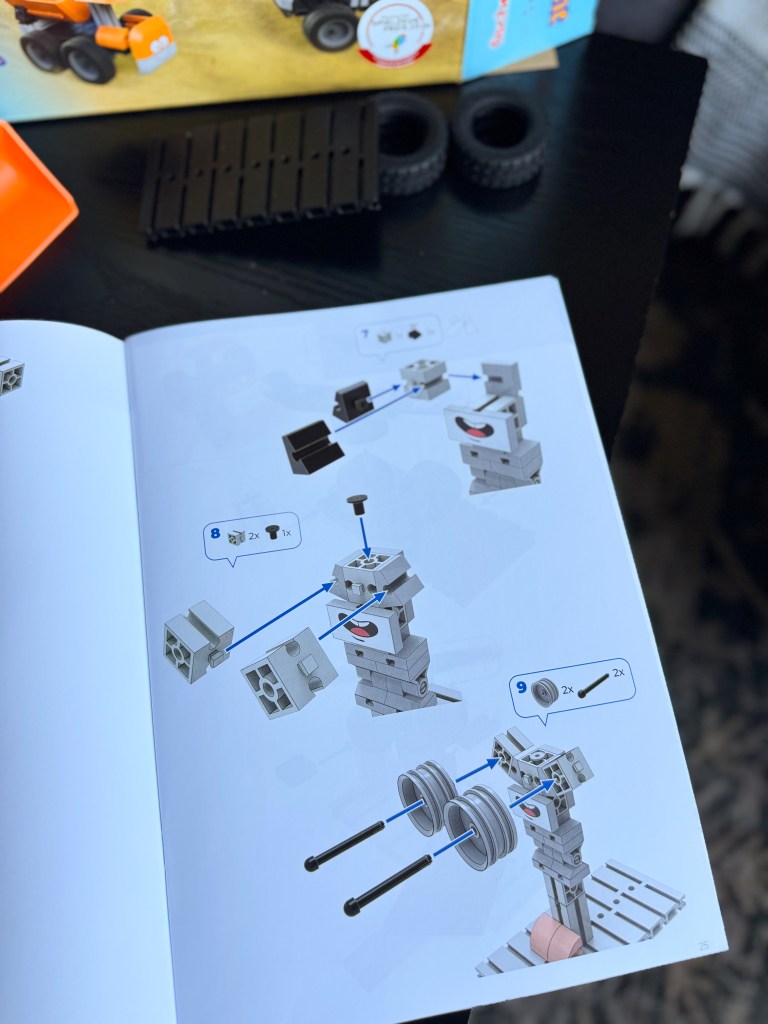
Our Experience With Fischertechnik Junior Max
As a homeschooling mom, I’m always looking for ways to incorporate activities that develop important skills while still allowing my children to enjoy being children.
That’s one of the reasons I appreciate Timberdoodle’s approach to homeschooling.
Their curriculum includes opportunities for learning through hands-on exploration, and Fischertechnik Junior Max is a great example.
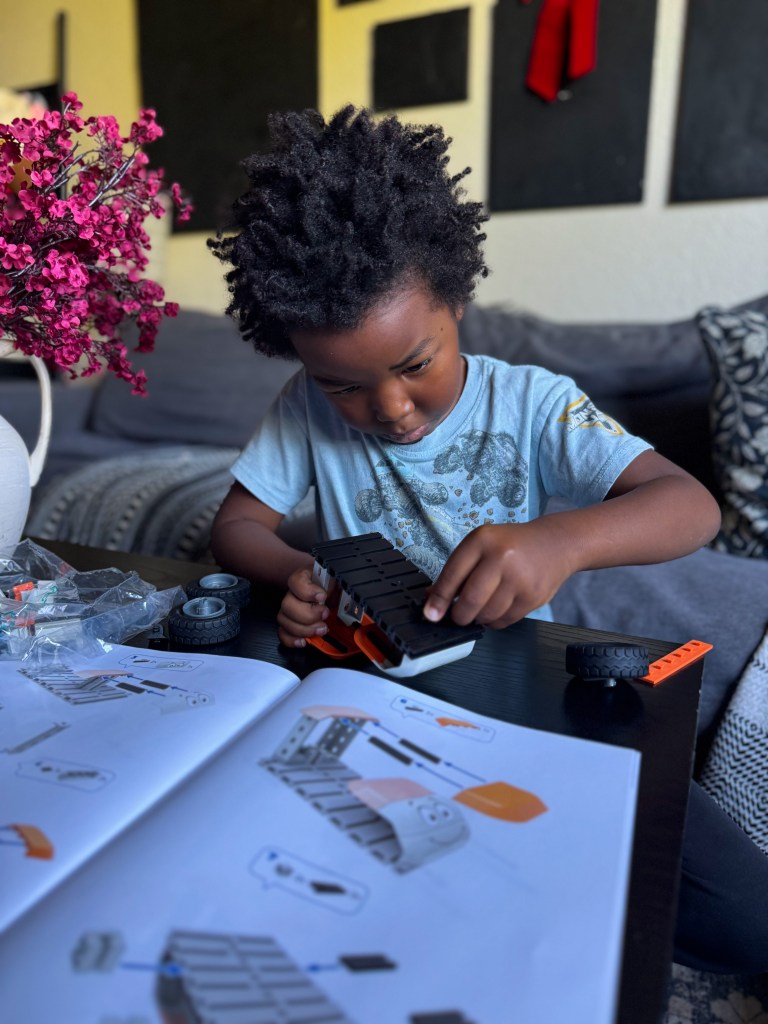
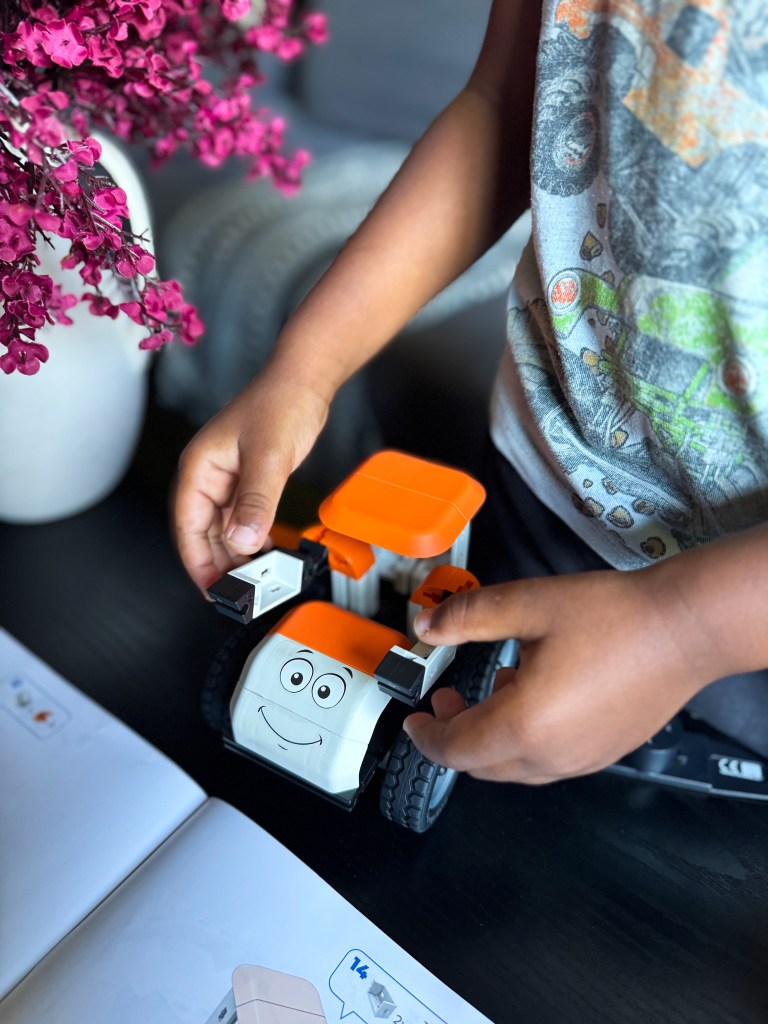
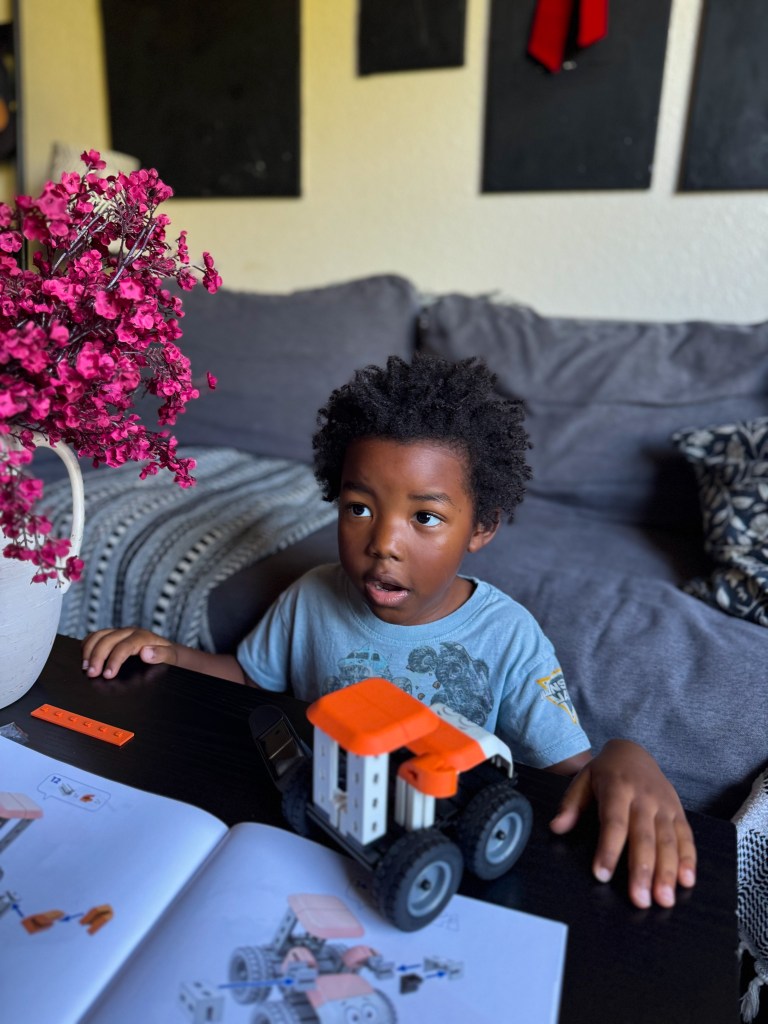
For our first project, we worked with the construction vehicle design featuring a front loader.
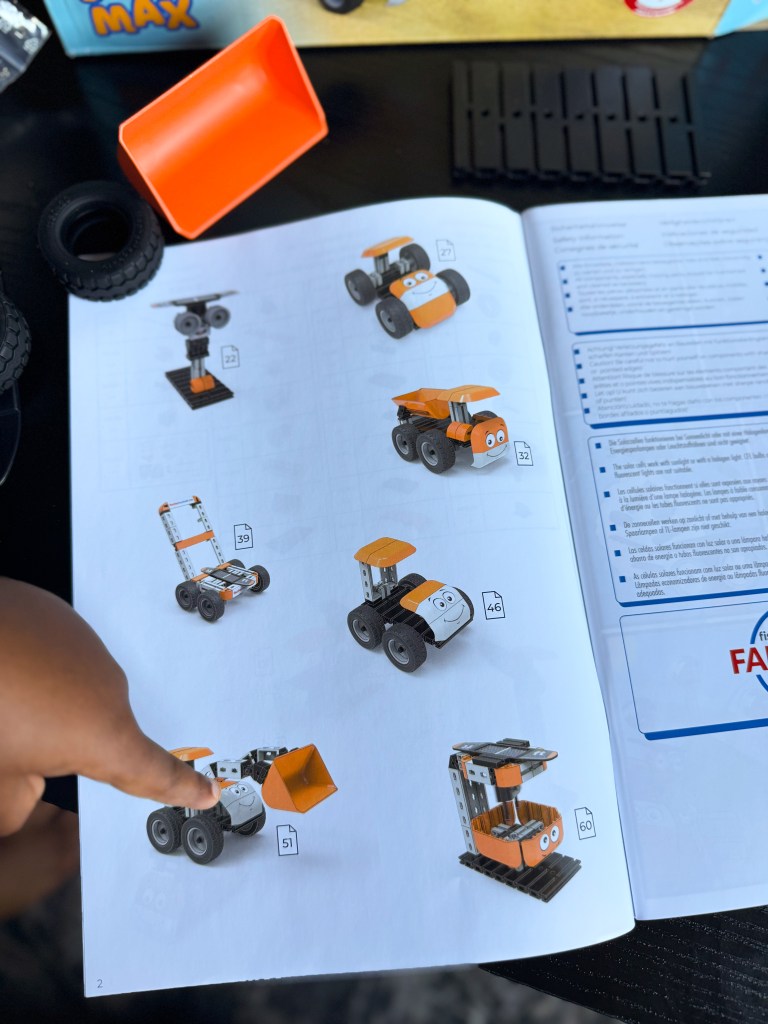
From examining the building pieces to studying the illustrated directions and putting the vehicle together, there were learning opportunities throughout the entire activity.
And this is where I think parents can sometimes underestimate the educational value of building toys.
When you look at a child assembling a toy truck, you might simply see a child playing.
But there’s so much more happening!
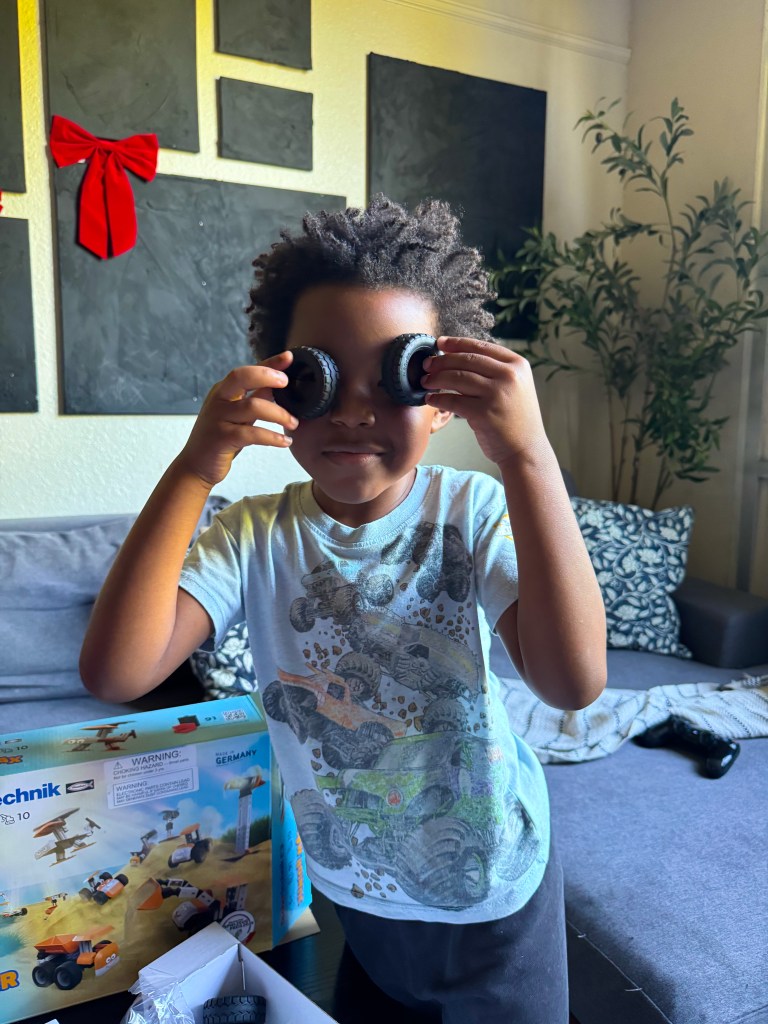

They’re studying diagrams, identifying pieces, figuring out where components belong, and working through the steps necessary to turn individual parts into a completed project.
Even something as simple as attaching a wheel requires careful positioning, hand-eye coordination, and an understanding of how the pieces connect.
These are meaningful opportunities to practice skills that extend far beyond the activity itself.
And there’s something so satisfying about seeing a construction project come together, especially when children can actually play with their finished creation afterward.
What Skills Does Fischertechnik Junior Max Teach?
One of the biggest reasons I appreciate this building kit is that it introduces several important developmental and academic skills in a way that feels natural.
Rather than teaching these concepts through separate lessons, children have opportunities to practice them while creating something they’re genuinely interested in.
1. Early Engineering and STEM Skills
STEM stands for science, technology, engineering, and mathematics.
While kindergarteners certainly don’t need complicated engineering lessons, they can begin exploring basic engineering principles through age-appropriate activities.
With Fischertechnik Junior Max, children get to see how separate components work together to form a larger structure.
As they connect the wheels, axles, and other pieces, they’re introduced to basic mechanical relationships.
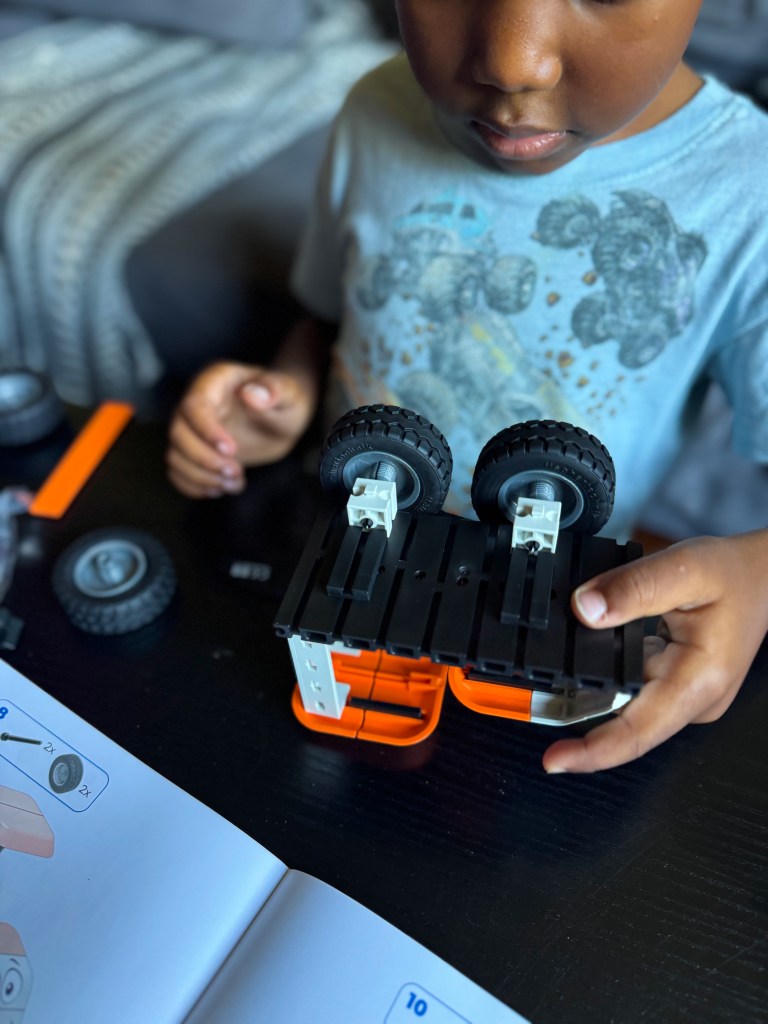
They can explore questions such as:
- What makes the wheels turn?
- Why does the vehicle need an axle?
- How do the pieces connect?
- What happens when we change the position of a component?
- How does the loader move?
These simple questions encourage children to observe, experiment, and begin thinking like engineers.
2. Fine Motor Skills and Hand-Eye Coordination
Fine motor development is incredibly important during the early elementary years.
Children use these skills for everyday activities such as writing, buttoning clothing, cutting with scissors, and manipulating small objects.
Fischertechnik Junior Max gives children opportunities to strengthen these skills through purposeful building.
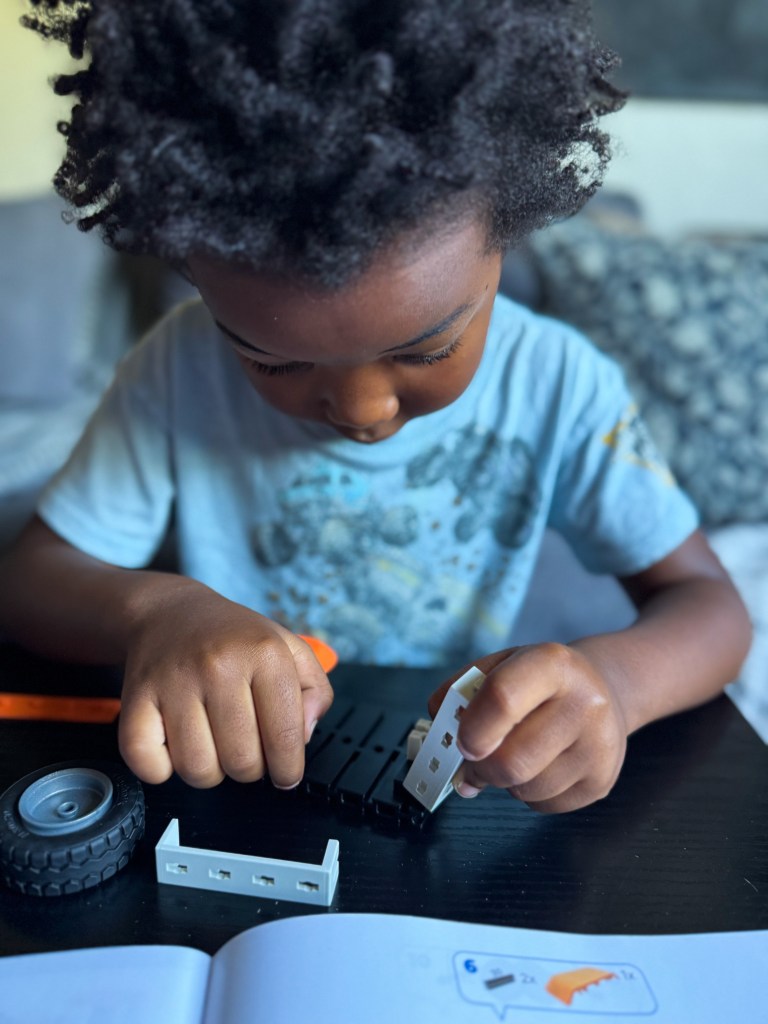
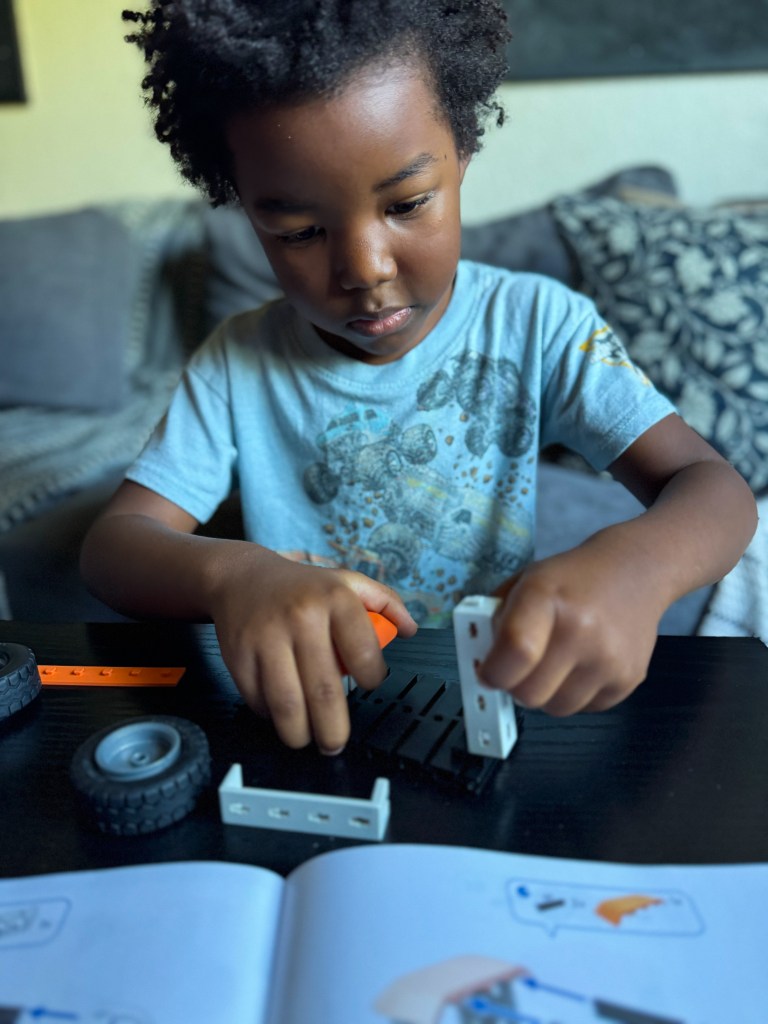
As they pick up pieces, line up connectors, slide components together, and attach wheels, they’re practicing controlled movements with their fingers and hands.
The activity also encourages bilateral coordination, or using both hands together to complete a task.
One hand might stabilize the construction while the other attaches a new component.
It’s a great example of how fine motor practice doesn’t always have to look like a traditional educational activity.
3. Problem-Solving and Critical Thinking
Building something from individual pieces requires children to think through a sequence of steps.
And naturally, not every piece is going to fit correctly on the first attempt!
This creates opportunities for children to stop, examine what they’re doing, compare their work with the instructions, and make adjustments.
I love activities that encourage children to think through challenges instead of immediately giving them the solution.
If a piece isn’t connecting correctly, we can ask questions such as, “Does it look like the picture?” or “What do you think we should try differently?”
These small moments encourage children to develop problem-solving strategies they can use in other learning situations.
4. Following Directions and Visual Sequencing
Another valuable feature of Fischertechnik Junior Max is its illustrated instruction booklet.
Instead of relying on lengthy written directions, the booklet uses detailed pictures to demonstrate the building process.
This is especially helpful for younger children who are still developing their reading skills.
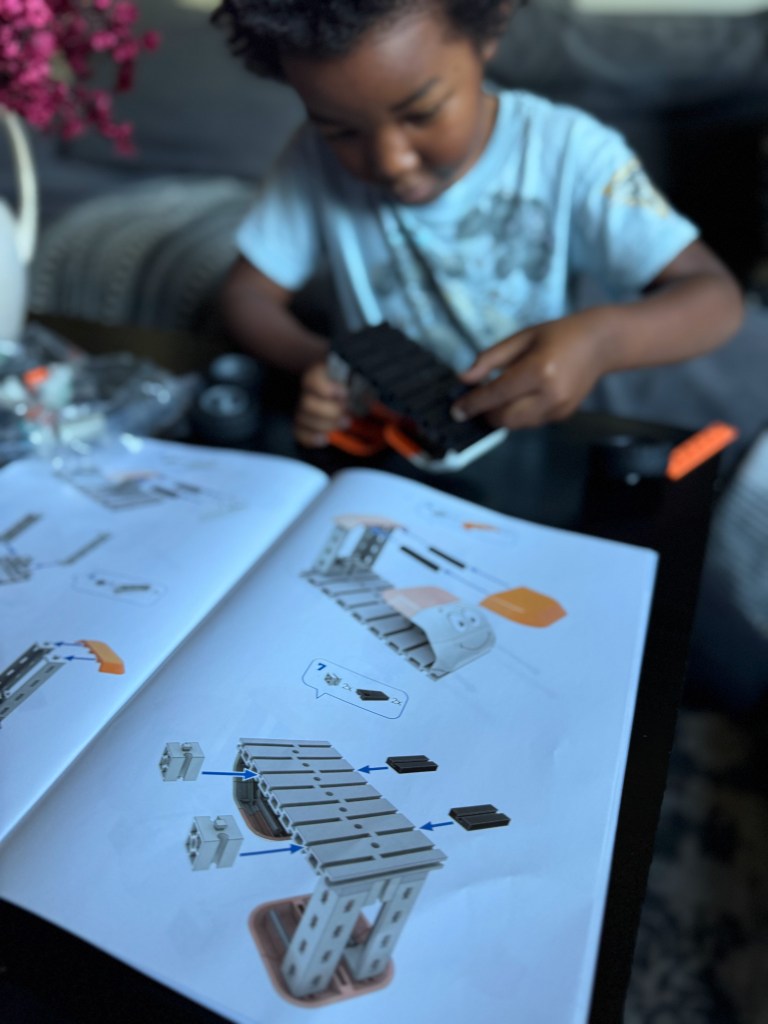
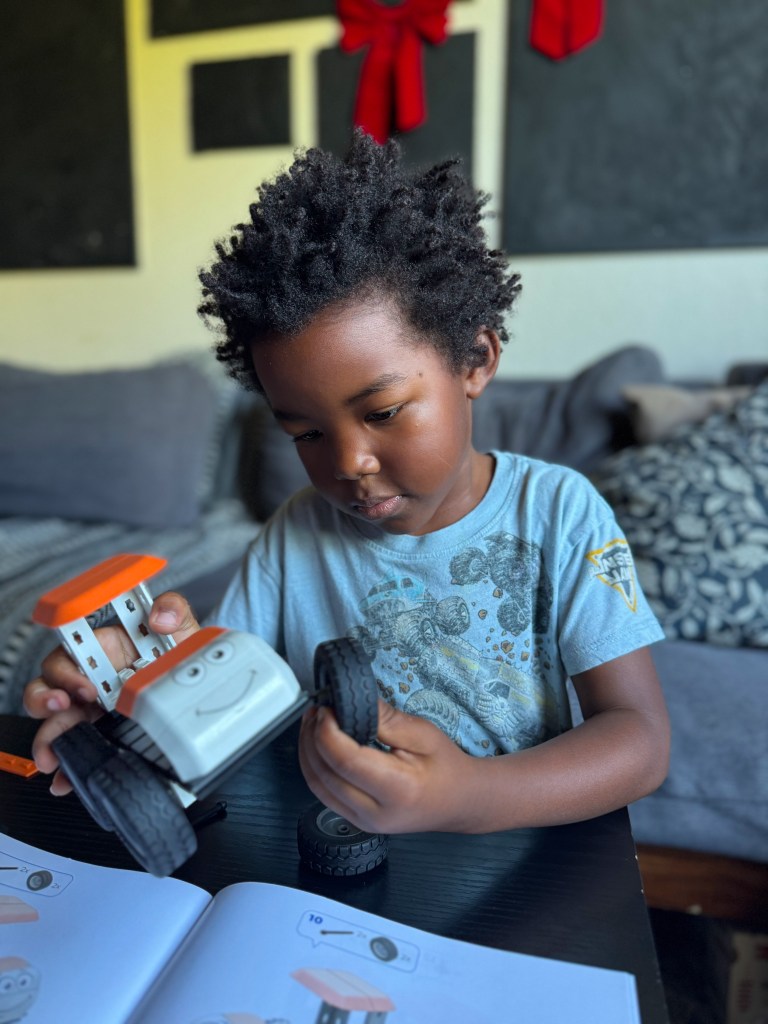
Children can study the pictures, identify the pieces they need, and follow each step in order.
This encourages visual discrimination, sequencing, attention to detail, and the ability to interpret diagrams.
And those skills are useful well beyond building toys!
5. Spatial Awareness and Logical Thinking
Spatial reasoning is the ability to understand how objects relate to one another in space.
It’s an important foundational skill for mathematics, geometry, engineering, and everyday problem-solving.
With Fischertechnik Junior Max, children must determine how pieces should be positioned, which direction they face, and how they fit into the overall design.
They begin making connections between two-dimensional instructions and three-dimensional objects.
This type of learning can be especially valuable for children who enjoy constructing, designing, and understanding how things work.
6. Concentration, Patience, and Persistence
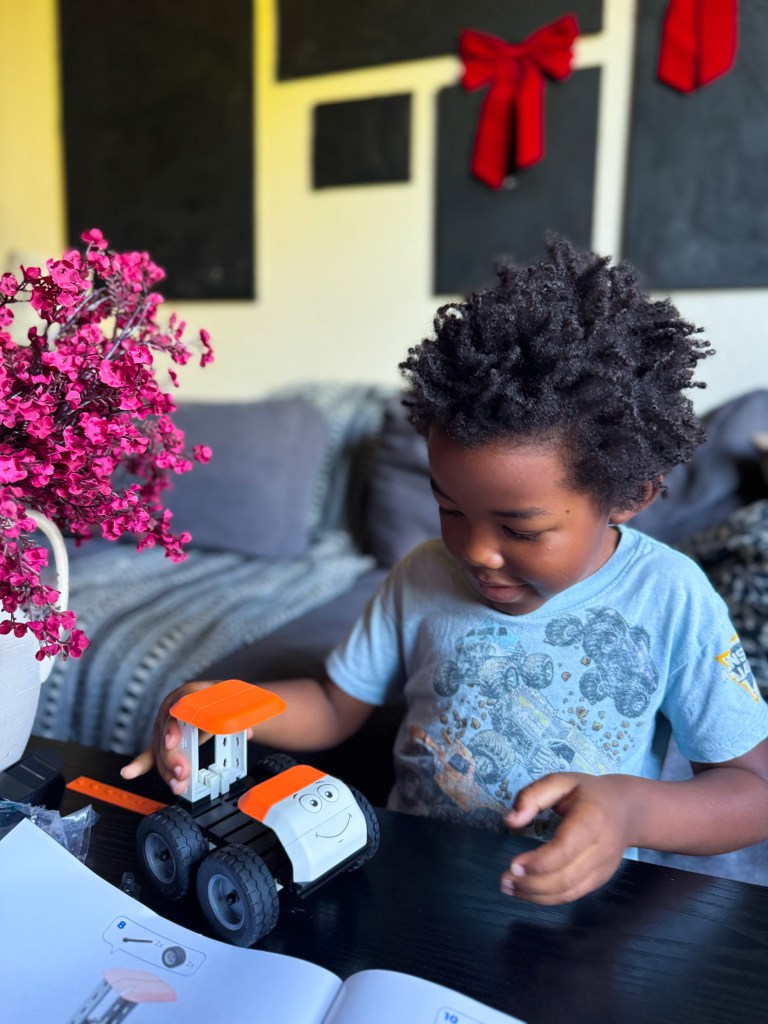
One thing I appreciate about construction activities is that they give children a reason to concentrate.
Completing a project requires attention to detail, patience, and a willingness to work through multiple steps.
And while some children may need assistance along the way, the process creates opportunities to build confidence and persistence.
Instead of rushing toward the finished product, children can begin learning to appreciate the steps involved in getting there.
These are wonderful habits to encourage during the kindergarten years.
7. Creativity and Imaginative Play
The learning doesn’t have to end when the building is complete.
In fact, that’s one of my favorite things about this kit!
Once children finish their model, they can incorporate it into their everyday imaginative play.
A construction vehicle can become part of a pretend building site, a miniature town, or an entirely new adventure.
Children can also take their creations apart and explore other designs using the same building pieces.
I love educational toys that offer opportunities for both guided learning and creative exploration.
Why Fischertechnik Junior Max Is Great for Hands-On Learners
Every child learns differently, and one of the things I appreciate most about homeschooling is having the flexibility to recognize and support those differences.
Some children enjoy completing worksheets and sitting through structured lessons.
Others thrive when they’re allowed to move, build, explore, and experiment.
For hands-on learners, construction activities can be an excellent way to introduce educational concepts without making learning feel overly formal.
Fischertechnik Junior Max allows children to physically interact with what they’re learning.
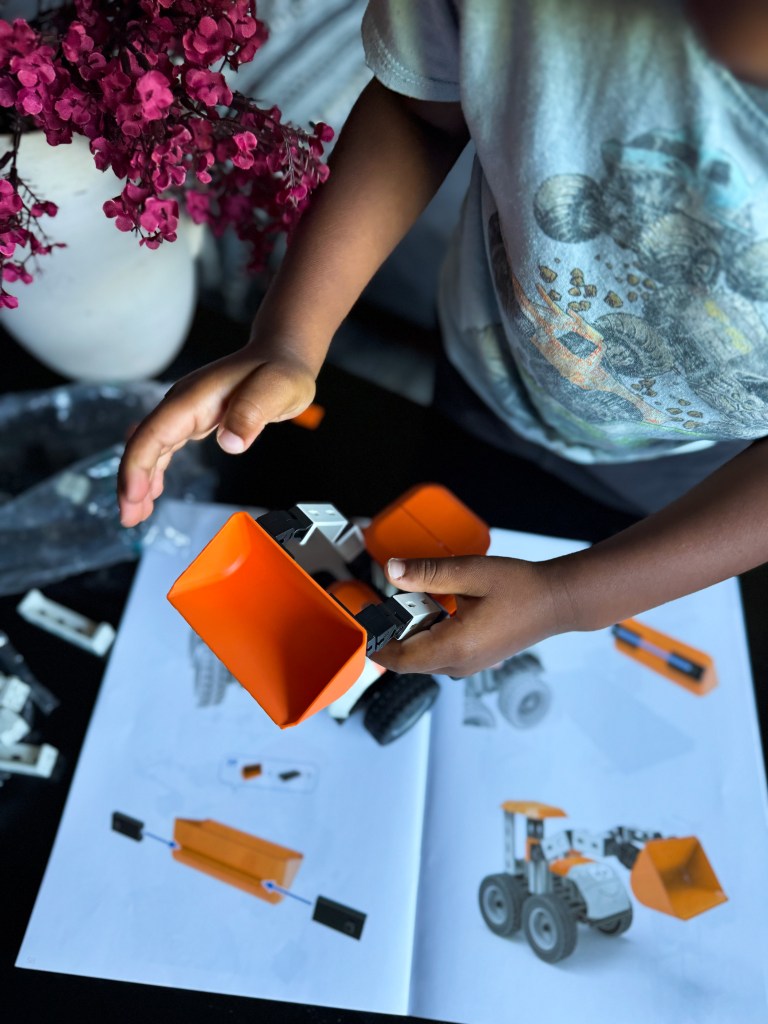
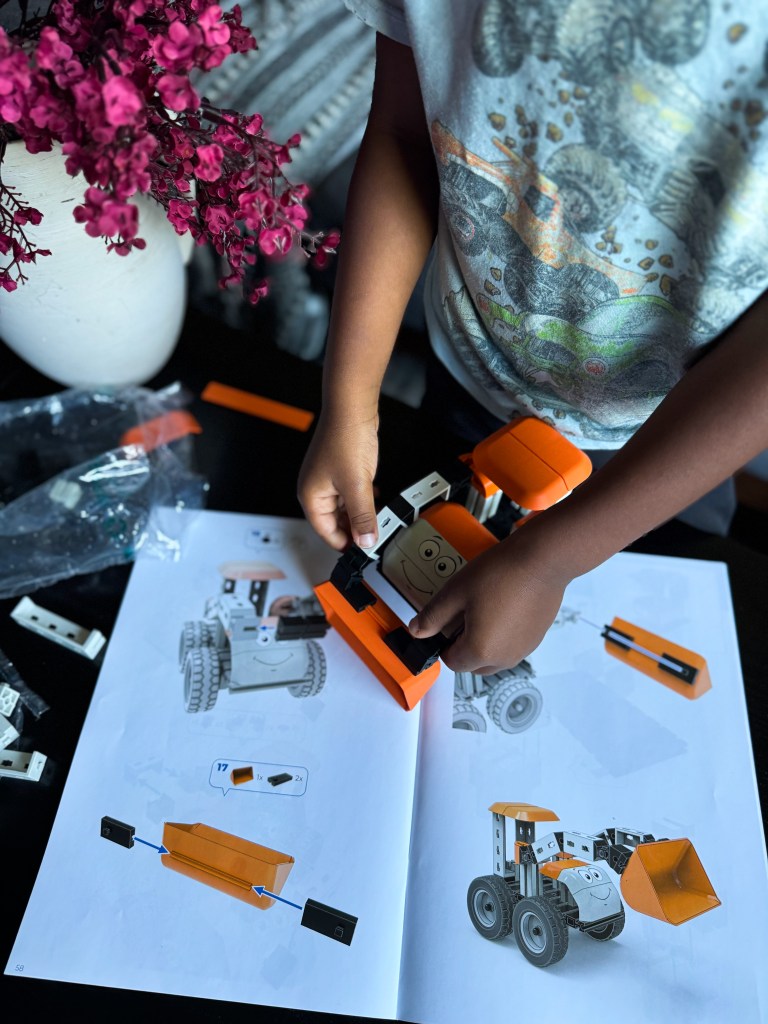
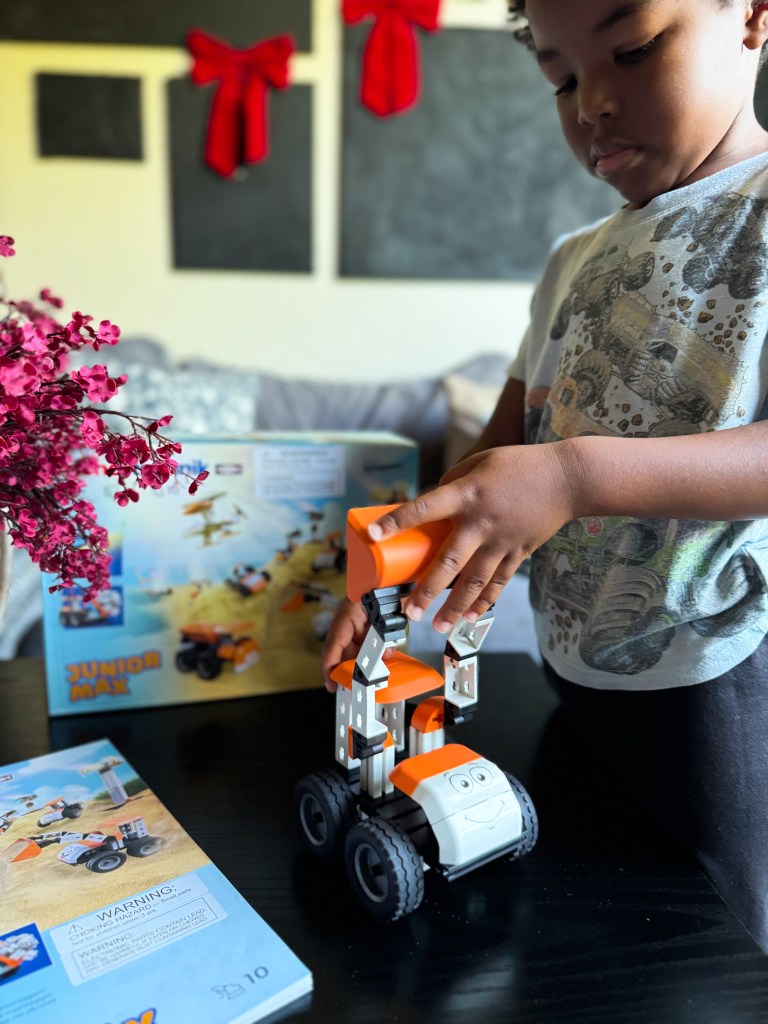
Instead of simply looking at pictures of mechanical systems, they can assemble their own.
Instead of hearing an explanation about how wheels and axles work, they can see those components in action.
That connection between hands-on exploration and real-world concepts is what makes STEM building kits so valuable during the early elementary years.
And as a homeschooling mom, I appreciate having activities that encourage meaningful learning while keeping things enjoyable.
Is Fischertechnik Junior Max Good for Kindergarteners?
Absolutely! I think this can be a wonderful addition to a kindergarten homeschool curriculum, particularly for children who enjoy building toys, vehicles, and mechanical activities.
The kit is recommended for ages 5 and older, making it appropriate for many kindergarten-aged learners.
However, I would approach it as a hands-on learning experience rather than expecting every child to complete each model independently.
Some children may be comfortable following the illustrated directions with minimal assistance, while others may need a parent to help them interpret the diagrams or connect certain pieces.
And that’s perfectly fine!
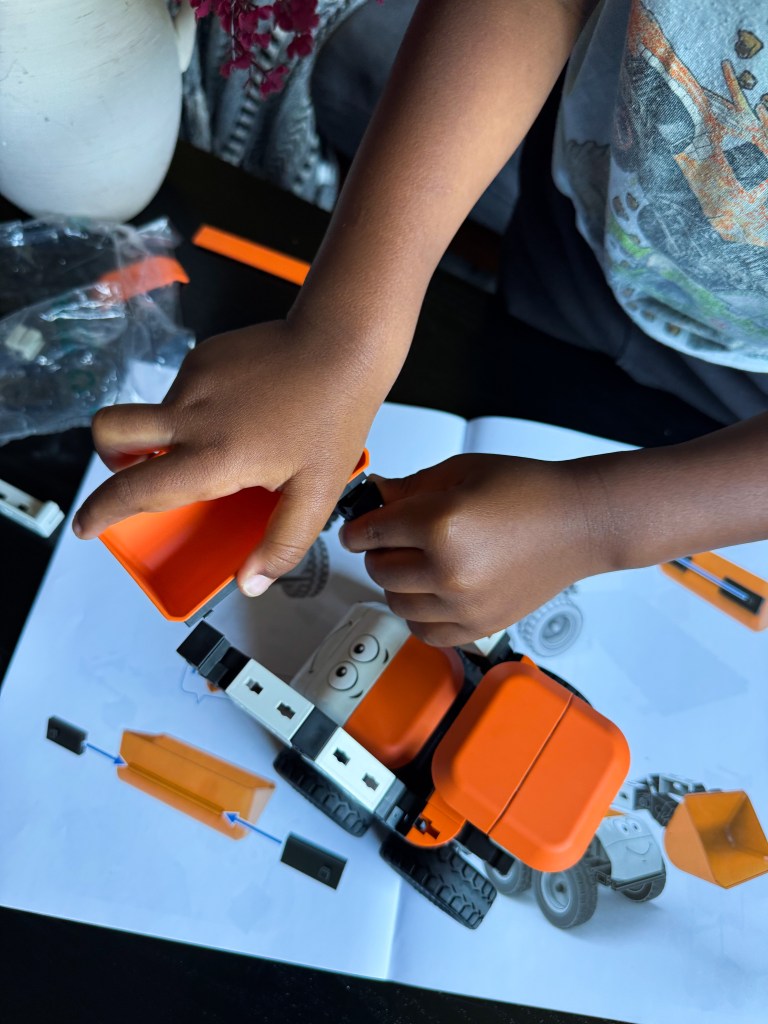
Working together gives parents opportunities to model problem-solving strategies, introduce new vocabulary, and encourage children through more challenging steps.
The goal isn’t necessarily to finish the project as quickly as possible.
It’s to enjoy the building process and all the learning that comes along with it.
Why I Love That Timberdoodle Includes STEM Activities
One of my favorite things about the Timberdoodle Kindergarten Curriculum Kit is that it recognizes learning involves so much more than reading, writing, and arithmetic.
While those academic subjects are incredibly important, children also benefit from opportunities to develop creativity, coordination, critical thinking, and problem-solving skills.
Hands-on activities like Fischertechnik Junior Max help create a more well-rounded homeschool experience.
I also appreciate that projects like this provide a refreshing change of pace during our homeschool day.
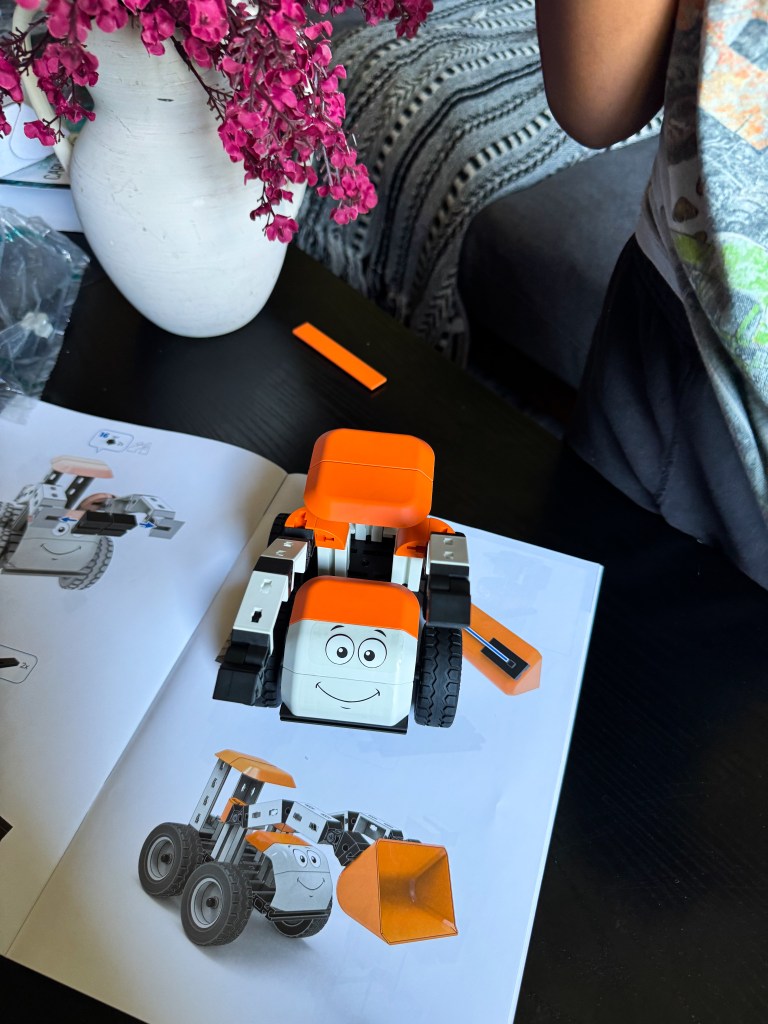
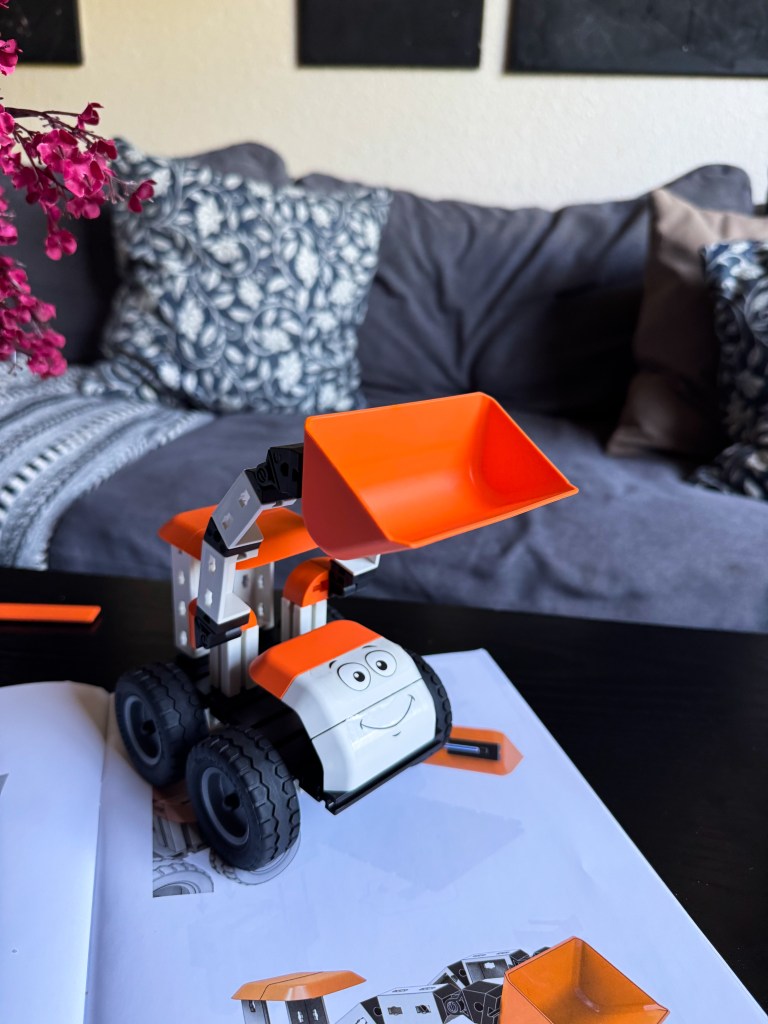
Sometimes, children need an opportunity to step away from traditional lessons and engage their minds in a different way.
And when that activity is also helping them develop foundational STEM skills, it’s a win in my book!
What I Would Consider Before Buying
Although I’m very pleased with Fischertechnik Junior Max, there are a few things worth considering before purchasing.
First, this is a multi-piece construction kit. You’ll want to have a designated space for building and a container to keep the components organized when they’re not in use.
Second, some projects may require adult assistance. The illustrated instructions are helpful, but younger children may need guidance with certain steps or connections.
Third, it’s designed for ages 5 and older. Because the kit contains small parts, it isn’t suitable for children under 3. Families with younger siblings should be mindful of where the pieces are stored and used.
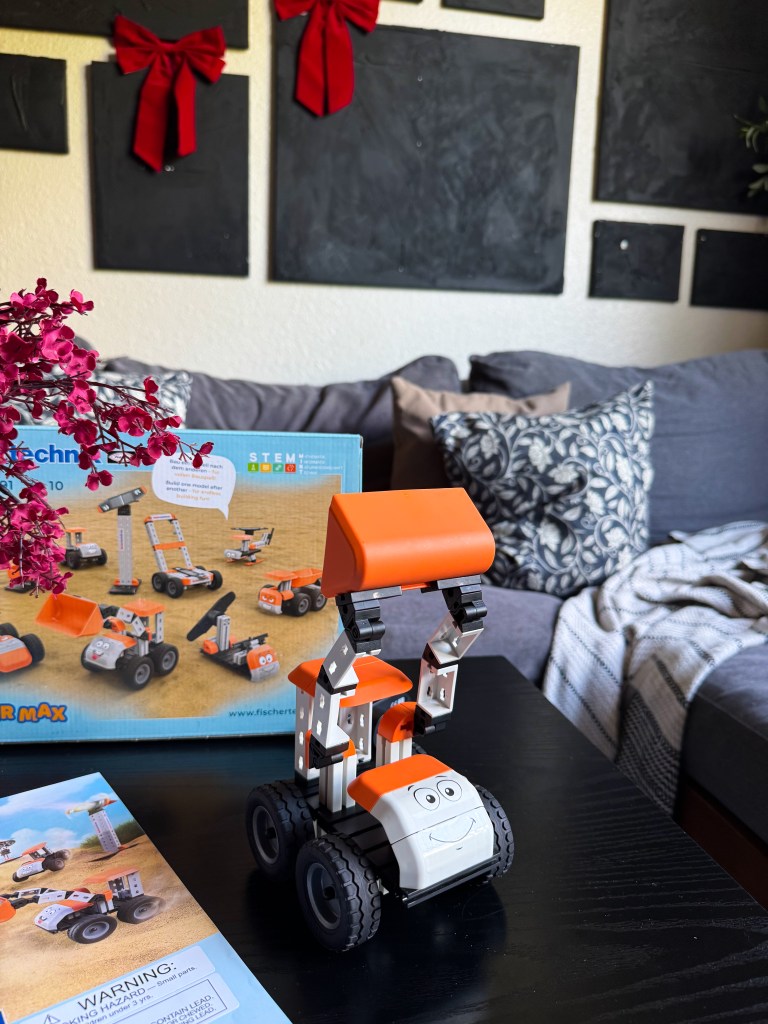
Finally, this is the type of activity I would encourage parents to revisit rather than treating it as a one-time project.
Building one model is only the beginning of what children can explore with the pieces.
Is Fischertechnik Junior Max Worth It?
For our homeschool, I’m genuinely pleased that Fischertechnik Junior Max was included in our Timberdoodle Kindergarten Curriculum Kit.
I love educational resources that allow children to develop multiple skills at once without making every activity feel like schoolwork.
This kit provides opportunities for early engineering, problem-solving, fine motor development, visual sequencing, concentration, and imaginative play.
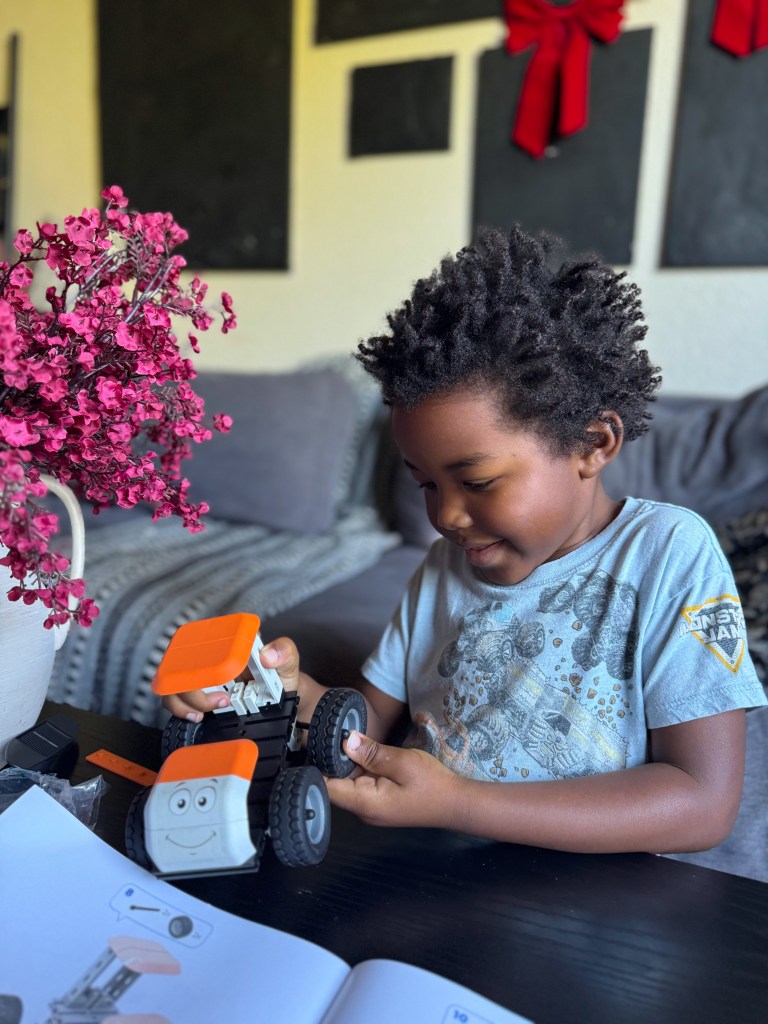
It’s also a wonderful reminder that learning can happen in the most ordinary moments.
Sometimes, a child assembling a construction vehicle is doing far more than simply playing with a toy.
They’re experimenting, making connections, testing ideas, and learning how things work.
And those are experiences I want to continue encouraging throughout our homeschooling journey.
If you’re searching for STEM toys for kindergarteners, hands-on engineering activities, or educational building kits for kids, Fischertechnik Junior Max is definitely worth considering.
You can learn more about the Fischertechnik Junior Max building kit at Timberdoodle.
And if you’re putting together a kindergarten homeschool curriculum, I highly recommend exploring Timberdoodle’s curriculum kits for more hands-on learning opportunities.
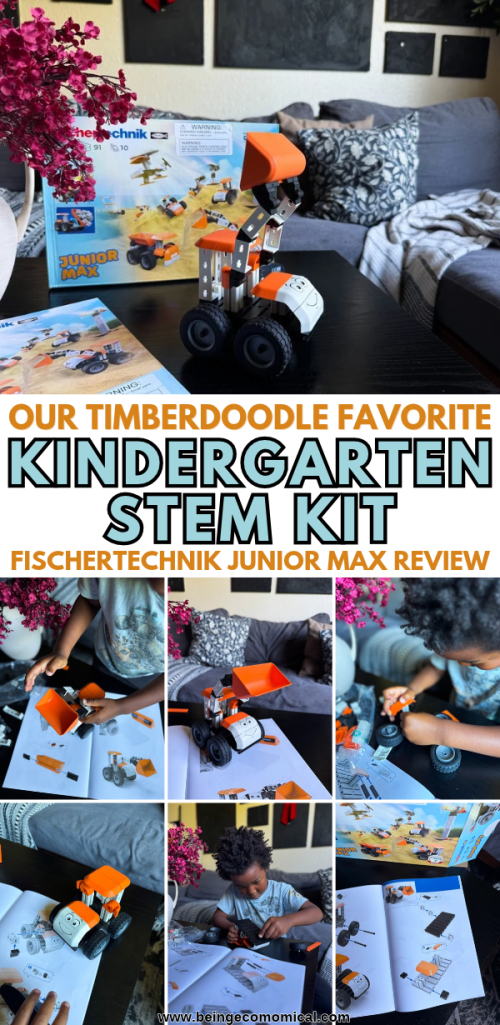
Pin this for later…
-
Sea Turtle Soapstone Carving Kit Review: A Fun, Hands-On Art Activity for Kids
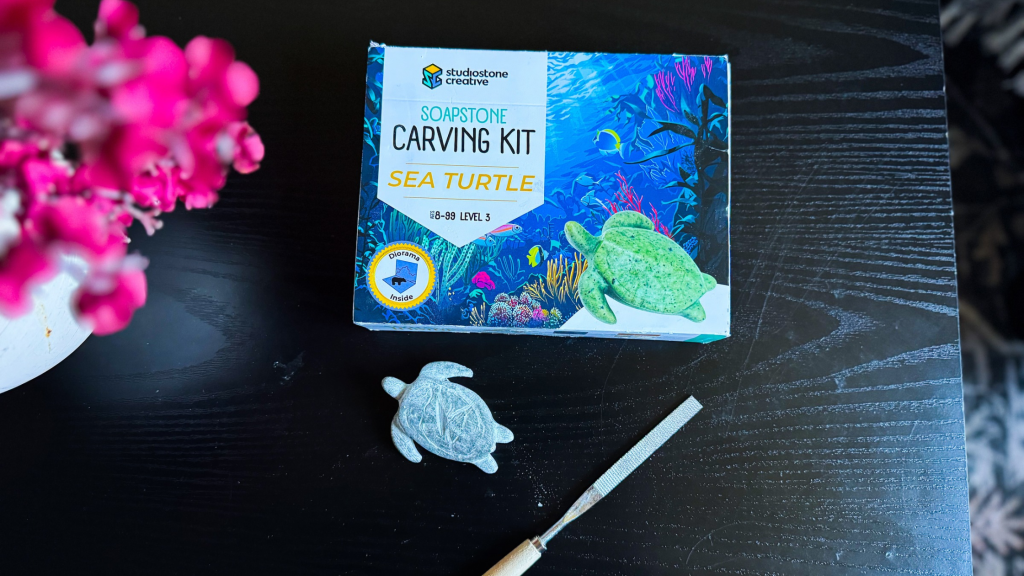
If you’re looking for a fun, hands-on art activity for kids that encourages creativity, patience, and concentration, the Sea Turtle Soapstone Carving Kit from Timberdoodle is worth checking out! This unique carving kit allows kids to work with real soapstone, using carving tools and sandpaper to transform a rough turtle-shaped stone into their very own sculpture.
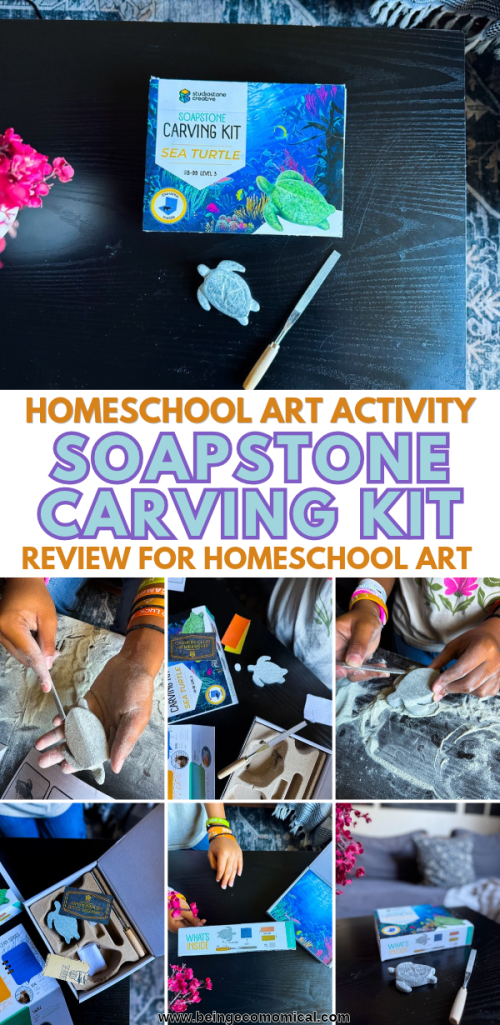
As a homeschooling mom, I’m always looking for activities that keep my kids engaged while helping them develop important skills. And when I find something that can double as an educational art project AND a boredom buster? Even better!
My daughter, who is quite the artist, absolutely loved this activity! She’s always enjoyed expressing herself creatively, so getting the opportunity to experiment with a completely different art medium was right up her alley.
But what I especially appreciated about this project was how much focus and concentration it required. Unlike some crafts that kids can complete relatively quickly, soapstone carving encourages them to slow down, pay attention to details, and work carefully toward a finished creation.
And that’s exactly the kind of hands-on learning I love incorporating into our homeschool!
What Is the Sea Turtle Soapstone Carving Kit?
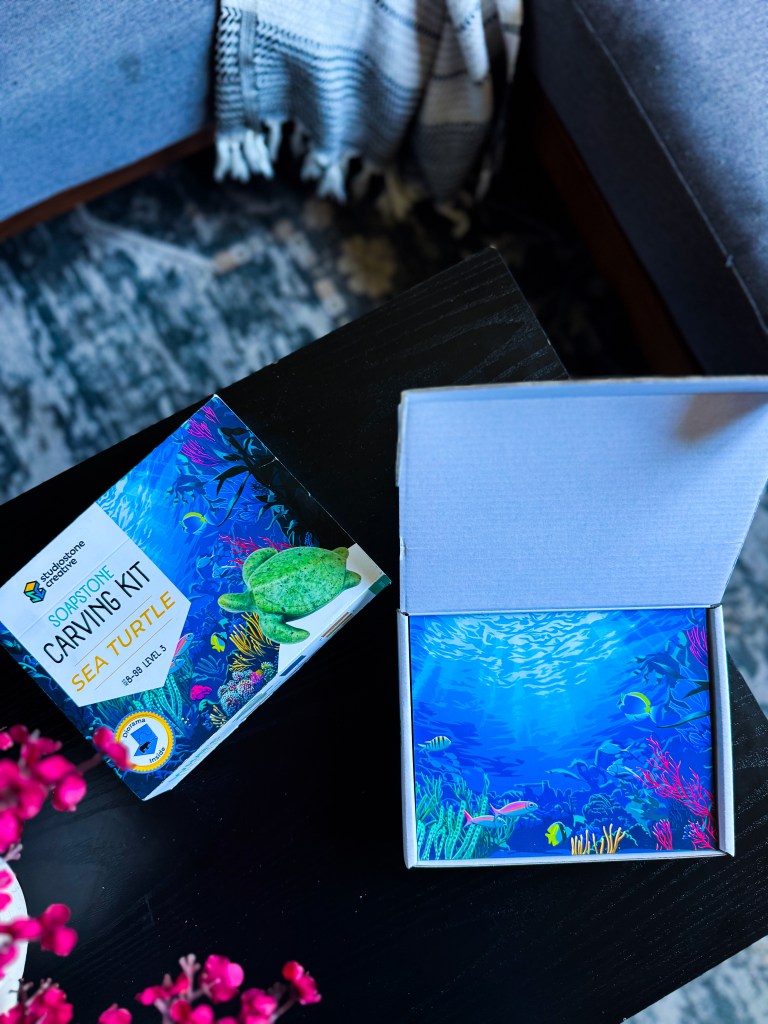
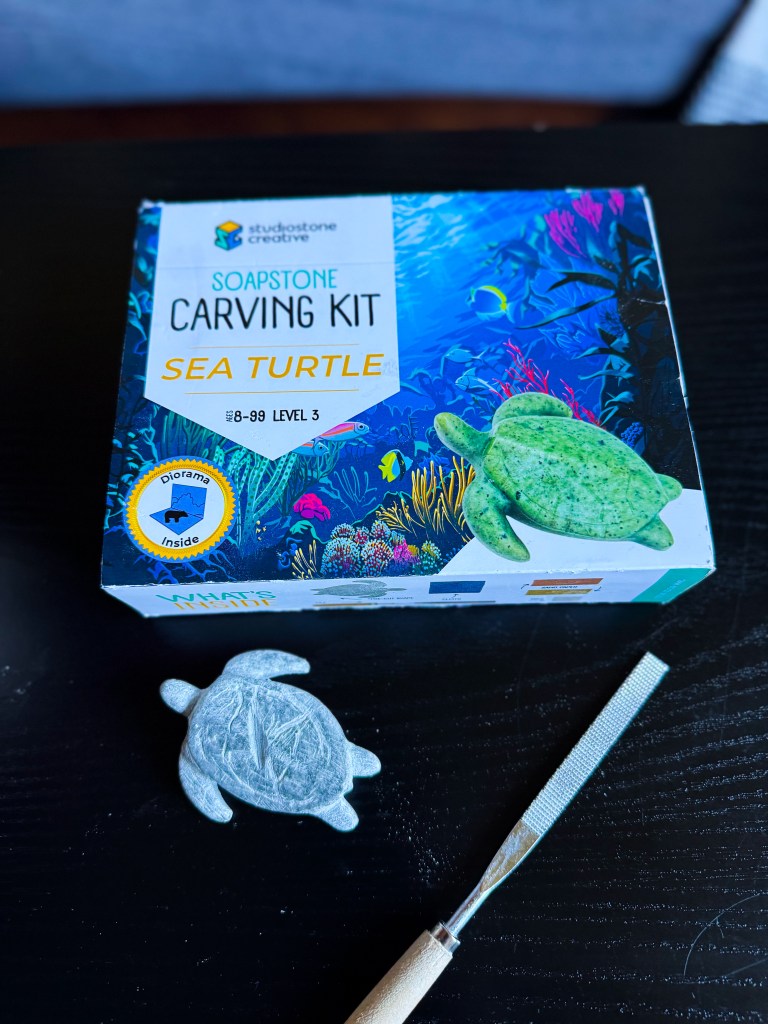
The Sea Turtle Soapstone Carving Kit is a hands-on sculpting activity from StudioStone Creative, available through Timberdoodle.
Designed for children in third grade and up (ages 8+), this kit introduces kids to the art of carving using genuine soapstone.
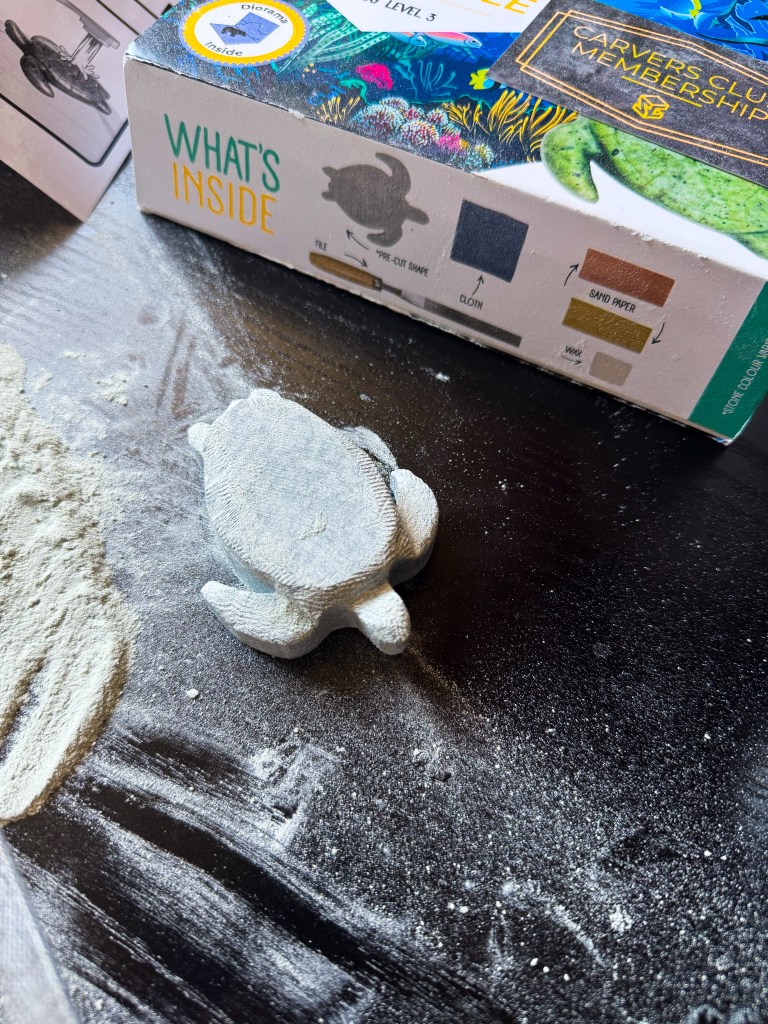
Rather than starting with a completely unshaped block of stone, children receive a pre-cut sea turtle shape that they can gradually refine using the included tools.
The goal is to file, shape, sand, and polish the soapstone until it becomes a smooth sea turtle sculpture.
It’s a creative project that combines art with practical hands-on skills, making it a fun addition to a homeschool art curriculum or a screen-free activity for older elementary students.
Shop the Sea Turtle Soapstone Carving Kit at Timberdoodle.
What’s Included in the Sea Turtle Soapstone Carving Kit?
One of the things I appreciate about hands-on activity kits is having the supplies gathered together before we begin.
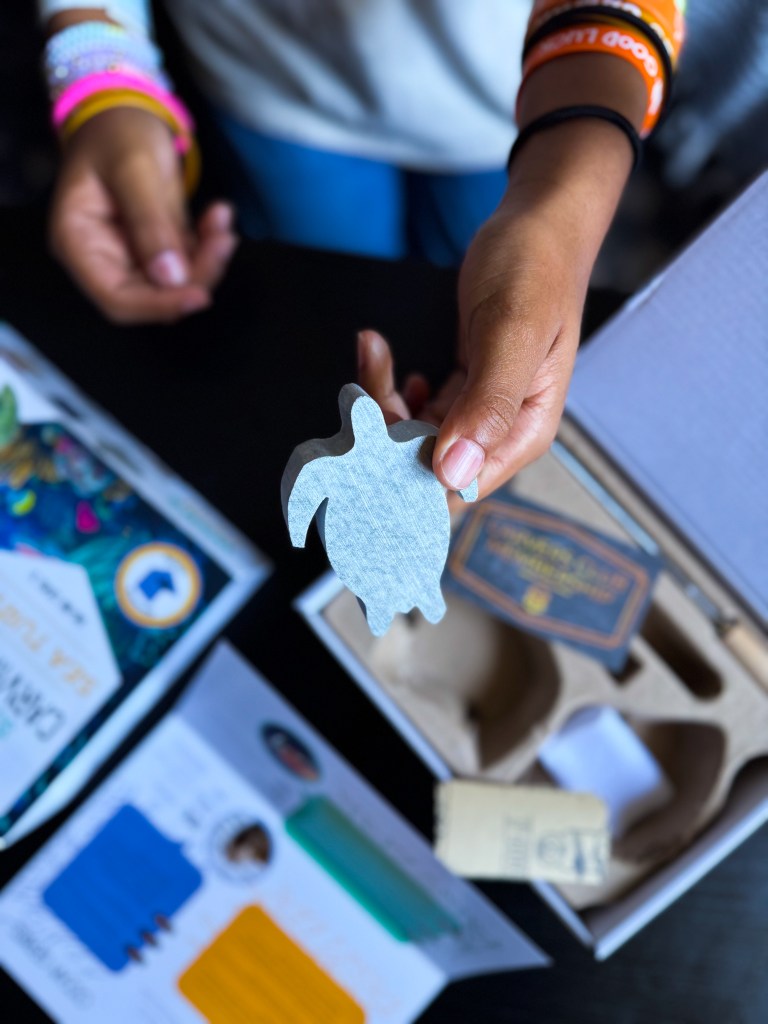
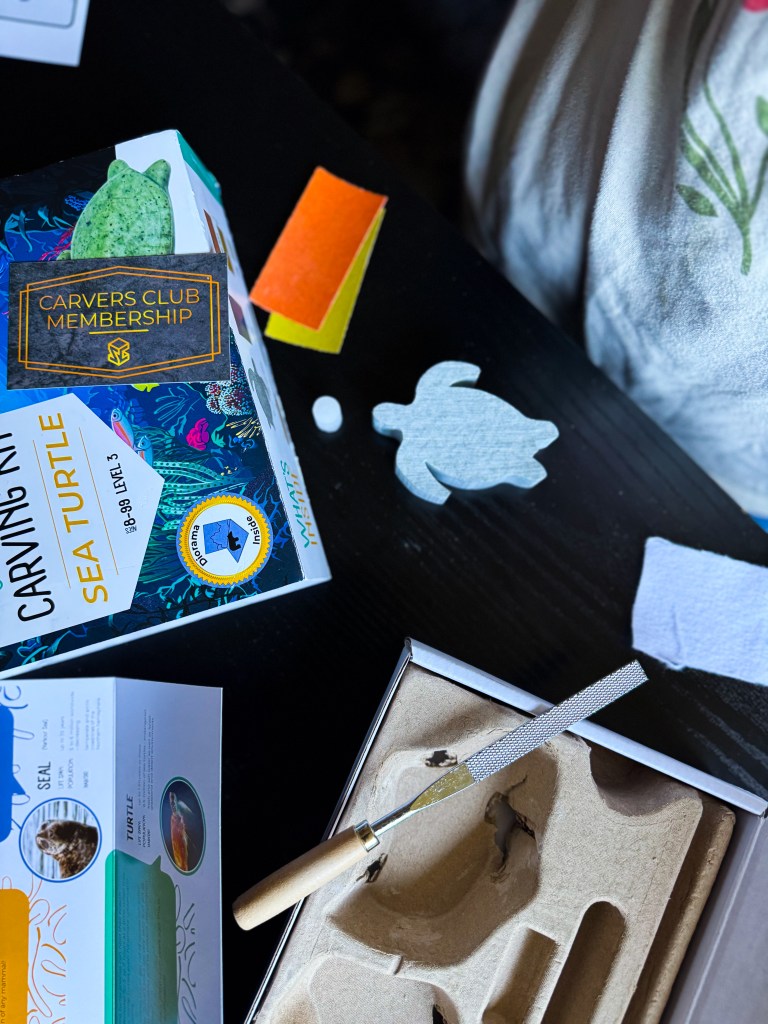
The Sea Turtle Soapstone Carving Kit includes:
- A pre-cut sea turtle soapstone shape
- A carving file for shaping and refining the stone
- Sandpaper for smoothing the surface
- Polishing materials for finishing the sculpture
- A cloth
- Step-by-step instructions
- Ocean-themed educational materials and diorama artwork
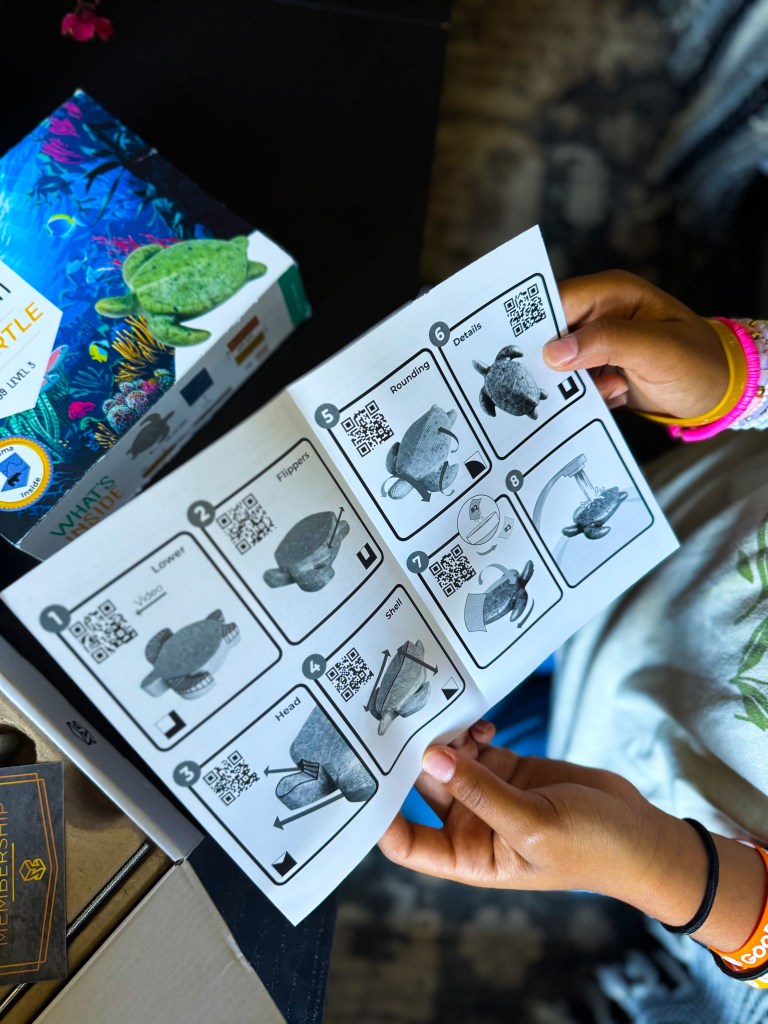
The kit also provides visual instructions to help kids understand the different stages of carving.
I especially liked that the instruction sheet breaks the process into manageable steps. Children can work through different parts of the turtle, from shaping the flippers and head to smoothing the shell and adding finer details.
For homeschoolers who enjoy independent projects, having those visual instructions is especially helpful.
Related Posts:
- Woolbuddy Needle Felting Starter Kit Review
- Simply Draw With Bob Parsons Art Curriculum Review
- My Year of Art Review
Our Experience With the Sea Turtle Soapstone Carving Kit
My daughter is naturally creative, so I had a feeling she would enjoy this project.
And I was right!
What makes this activity different from traditional drawing, painting, or coloring is that children are working with an actual piece of stone.
They aren’t simply decorating something that’s already finished. They’re using their hands and tools to gradually shape the material into something new.
The process requires children to think about how much material they’re removing, how to hold their tools, and how the different parts of the turtle should look.
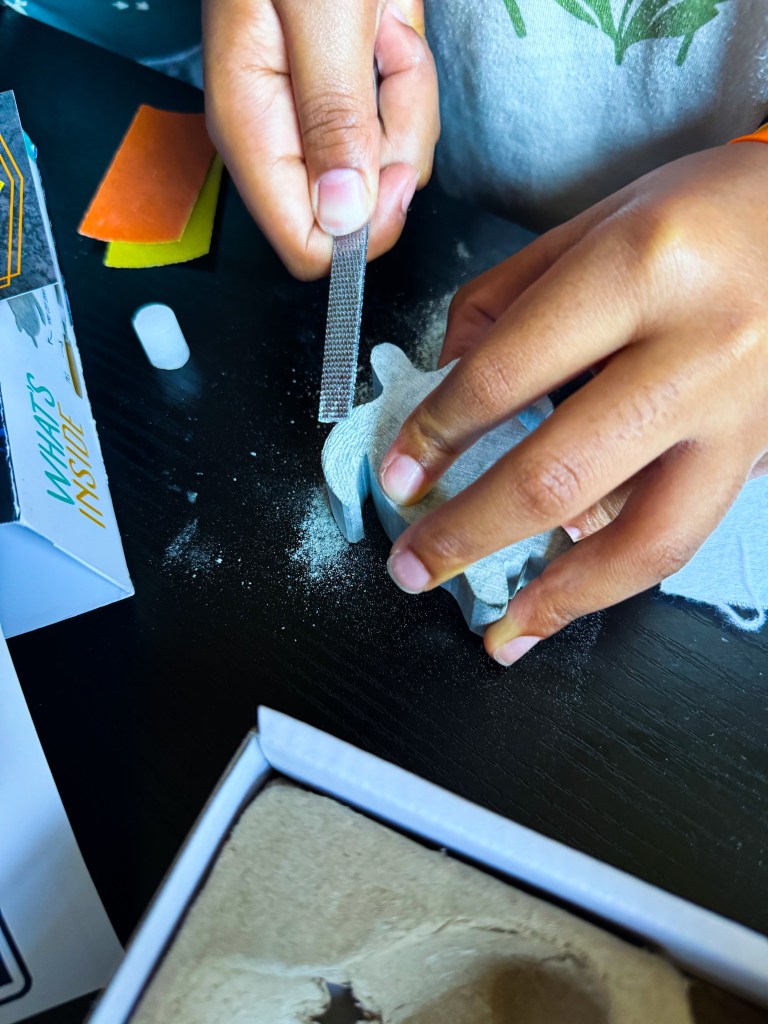
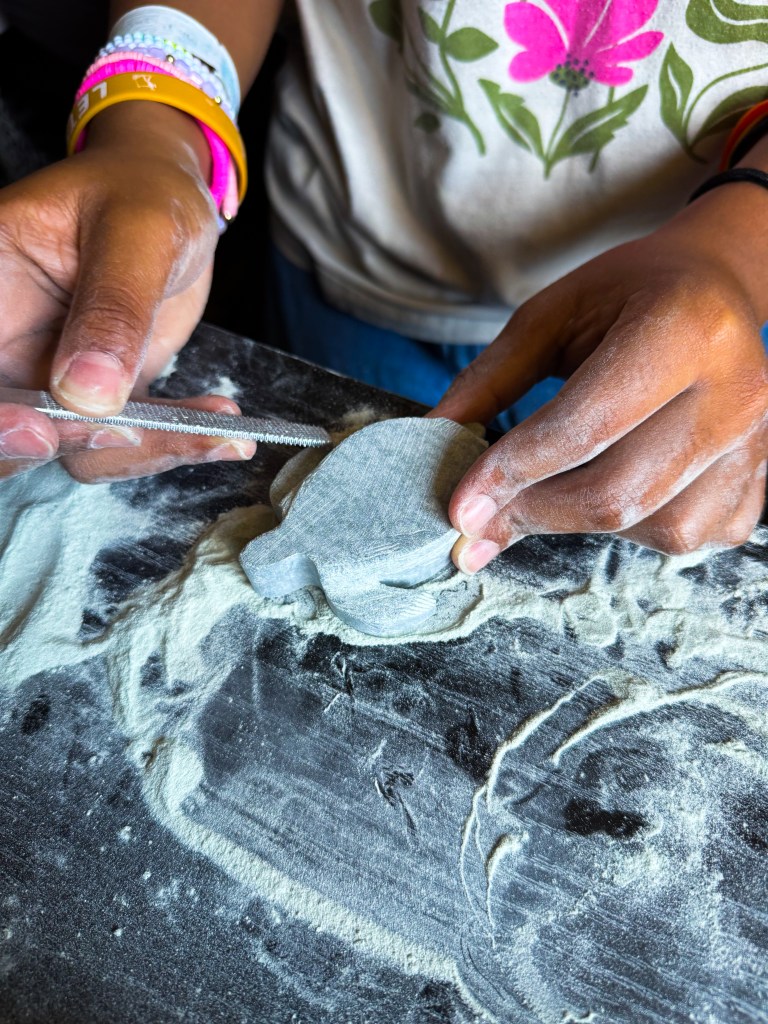
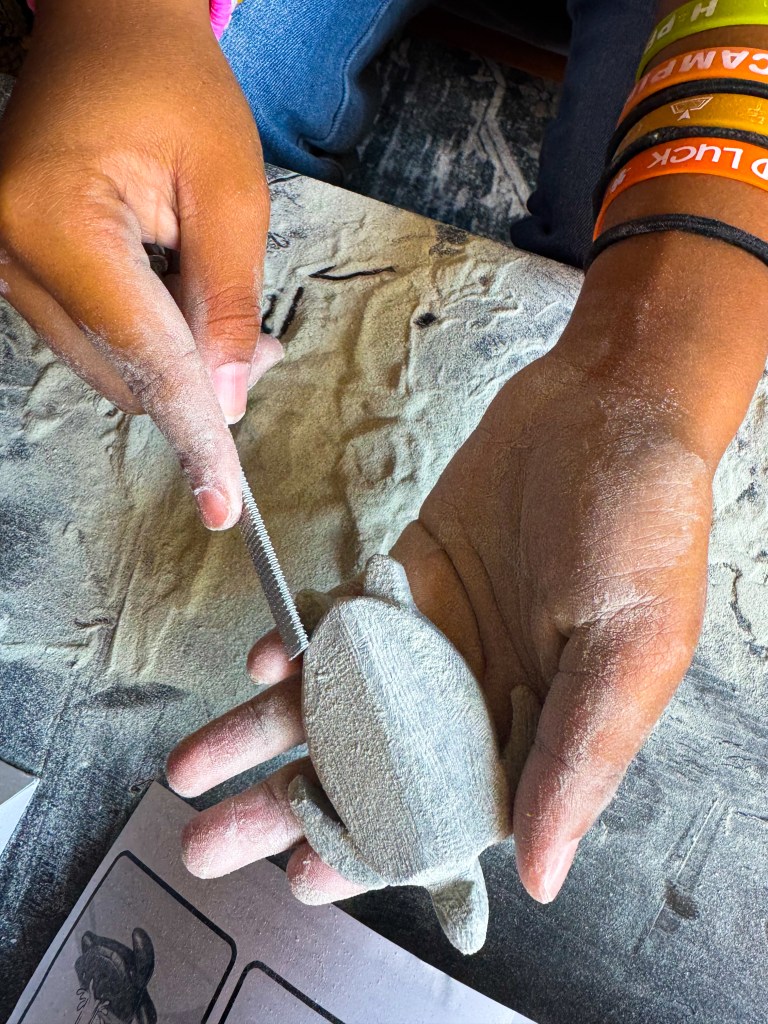
My daughter spent time carefully filing the soapstone, shaping the edges, and working on the details.
It definitely wasn’t an activity she could rush through!
Each movement required attention, and she had to concentrate on what she was doing to achieve the shape she wanted.
As a homeschooling mom, I loved seeing her so involved in the process.
Sometimes the best learning happens when kids are completely absorbed in something they genuinely enjoy.
And this was one of those activities.
Why Soapstone Carving Is a Great Hands-On Learning Activity
One of the reasons I enjoy incorporating arts and crafts into our homeschool is that creative activities can help children develop skills beyond the finished artwork.
The Sea Turtle Soapstone Carving Kit is a perfect example.
1. Develops Fine Motor Skills
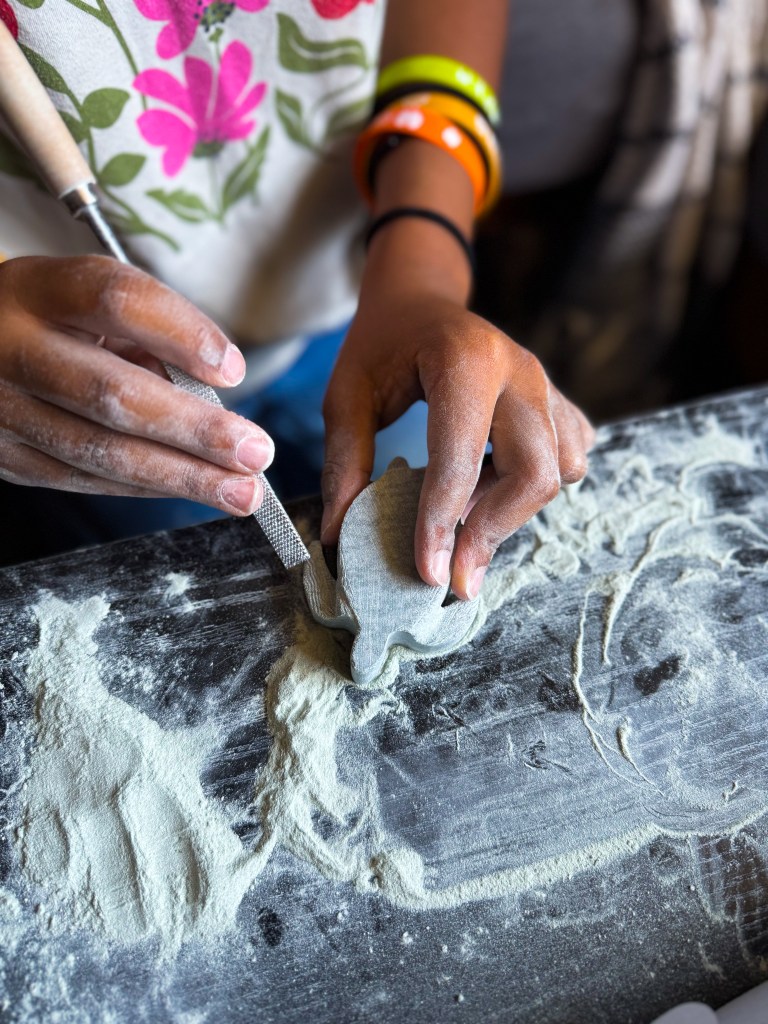
Using the carving file requires children to make controlled movements with their hands and fingers.
As they shape the stone, they practice adjusting their grip, applying pressure, and carefully guiding their tools.
These movements help strengthen fine motor coordination, which is useful for everyday activities such as handwriting, drawing, building, and using small tools.
2. Encourages Focus and Concentration
This was one of the biggest benefits I noticed during our experience!
Soapstone carving requires sustained attention because children have to focus on the area they’re shaping while keeping the overall sculpture in mind.
My daughter couldn’t simply rush through the project and expect the results she wanted.
She had to concentrate on her movements and pay attention to how the stone was changing.
For children who enjoy detailed projects, this type of activity provides an opportunity to practice focusing on one task for an extended period.
3. Teaches Patience and Perseverance
Some art projects offer almost instant results.
Soapstone carving isn’t one of them!
Every stroke gradually changes the stone, meaning kids have to be patient as their creation takes shape.
This is a wonderful opportunity to reinforce the importance of working toward a goal, even when progress happens slowly.
Children also learn that they can take breaks, return to their project, and continue improving their work.
4. Strengthens Hand-Eye Coordination
Carving involves coordinating what children see with how they move their hands.
They must watch the file carefully while adjusting its position and pressure to shape different parts of the turtle.
This creates an opportunity to practice hand-eye coordination through a practical, creative activity.
5. Encourages Problem-Solving
As children carve, they’re constantly making little decisions.
Should they remove more material from one area? Does the turtle’s shell need additional smoothing? How can they make the flippers look more defined?
They have to observe their progress, decide what needs improvement, and adjust their technique.
These are small but meaningful opportunities to practice problem-solving.
6. Introduces Three-Dimensional Art
Unlike drawing on paper, carving requires children to think about their artwork from multiple angles.
They must consider the shape, texture, depth, and overall appearance of their sculpture.
For kids who already love art, like my daughter, this is a fun way to introduce another form of artistic expression.
It also provides a hands-on introduction to sculpting and working with natural materials.
A Fun, Screen-Free Boredom Buster for Older Kids
If you’ve ever heard your kids announce that they’re bored approximately five minutes after finishing another activity, you already know how helpful it is to have engaging projects on hand!
That’s another reason I like the Sea Turtle Soapstone Carving Kit.
It’s more involved than a traditional coloring or craft activity, which makes it an interesting option for older kids who want something different to do.
The carving process requires attention and effort, and there’s a sense of accomplishment as the turtle begins to take shape.
I also like that kids don’t necessarily have to finish everything in one sitting.
They can work on one section, take a break, and return to the project later.
This makes it a great option for:
- Rainy day activities
- Screen-free afternoons
- Homeschool art lessons
- Creative weekend projects
- Indoor boredom busters
- Ocean-themed unit studies
- Activities for artistic kids who enjoy a challenge
And because they’re making something they can keep afterward, there’s a rewarding finished project to look forward to.
Is the Sea Turtle Soapstone Carving Kit Messy?
Yes!
And this is definitely something parents should know before getting started.
As my daughter filed and shaped the soapstone, the process created quite a bit of fine stone dust.
You can actually see just how much accumulated during our carving session in the photos!
I would absolutely recommend preparing your workspace before beginning.
Use a protected work surface, follow the manufacturer’s safety directions, and keep the activity in a well-ventilated area with appropriate adult supervision. Take precautions to avoid breathing stone dust, and use the recommended dust-control methods rather than brushing or sweeping it into the air.
Because children are working with real carving tools, adults should also make sure the tools are being handled properly.
This isn’t necessarily an activity I would set up on an uncovered dining room table and walk away from!
But with the proper preparation, it’s a rewarding hands-on art project.
How to Incorporate Soapstone Carving Into Your Homeschool
While the Sea Turtle Soapstone Carving Kit works well as a standalone art project, there are several ways to expand the learning experience.

Art: Introduce sculpture as a form of three-dimensional art. Talk about texture, shape, and the differences between carving, painting, and drawing.
Science: Explore what soapstone is, how rocks and minerals form, and why some types of stone are easier to carve than others.
Marine Biology: Since children are creating a sea turtle, use the activity as an opportunity to learn about different sea turtle species, their habitats, diets, and life cycles.
Environmental Science: Discuss ocean conservation and the challenges sea turtles face, including plastic pollution, habitat loss, and fishing-related threats.
Writing: After completing the sculpture, encourage your child to write a short paragraph about the carving process, the challenges they encountered, and what they learned.
I love activities like this because they can easily connect multiple subjects without making the experience feel like another formal lesson.
And sometimes that’s exactly what we need in our homeschool!
Who Would Enjoy the Sea Turtle Soapstone Carving Kit?
I think this carving kit is particularly well suited for older elementary students who enjoy working with their hands.
It’s a great option for children who love drawing, painting, building, sculpting, or experimenting with different art materials.
It’s also worth considering for kids who enjoy activities that involve concentration and careful attention to detail.
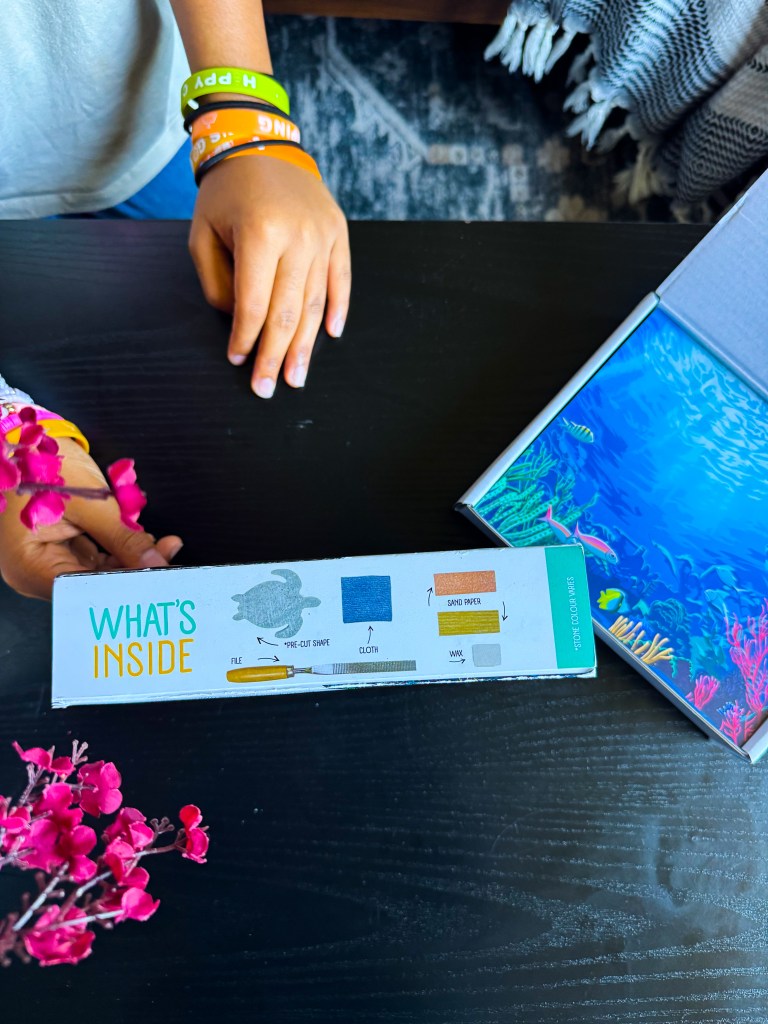
Because the kit is designed for third grade and up, it may be especially appealing to families searching for more challenging art projects beyond traditional children’s crafts.
However, I would recommend considering your child’s patience, comfort with tools, and ability to follow safety instructions before getting started.
Some children may need more guidance throughout the carving process than others.
Is the Sea Turtle Soapstone Carving Kit Worth It?
For our family, this was a fun addition to our hands-on homeschool activities.
My daughter loved having the opportunity to explore another art medium, and I appreciated how much concentration and effort went into the carving process.
What I especially like about the kit is that it encourages children to slow down.
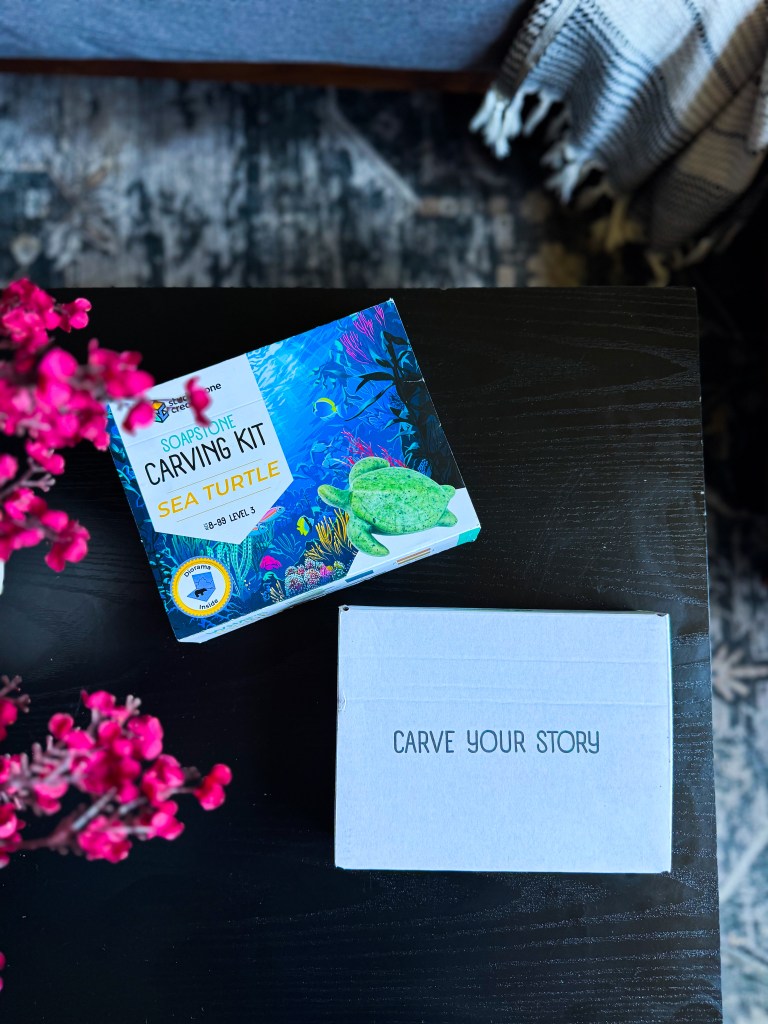
In a world where so many activities offer instant results, there’s something valuable about allowing kids to work carefully toward creating something with their own hands.
They get to experience the process of shaping, refining, and improving their work rather than simply following a few quick craft instructions.
And for creative children, that can be incredibly rewarding!
Of course, parents should be prepared for the mess and plan to supervise the activity appropriately. But I think the combination of creativity, hands-on learning, and skill development makes this an interesting art project for older kids.
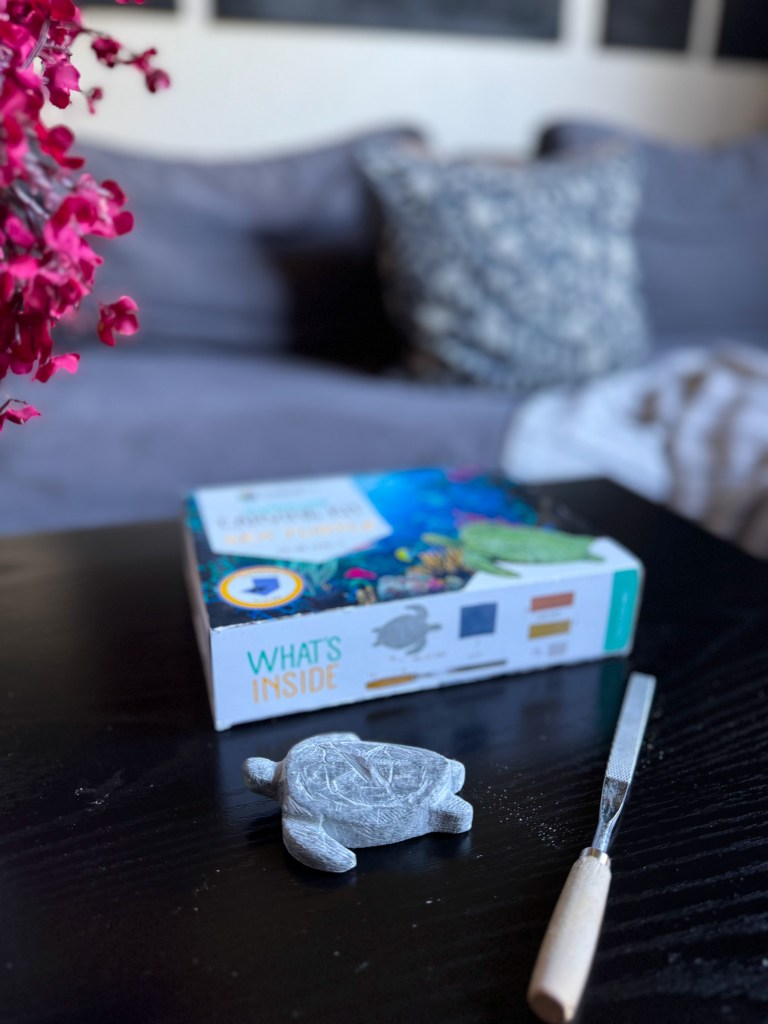
Final Thoughts on the Sea Turtle Soapstone Carving Kit
If you’re looking for hands-on art activities for kids, creative homeschool projects, or screen-free boredom busters for older elementary students, the Sea Turtle Soapstone Carving Kit is definitely worth exploring.
It’s an opportunity for children to experiment with real materials, learn a new artistic technique, and practice patience and concentration while creating something of their own.
And as the mom of a daughter who absolutely loves art, I especially enjoyed watching her take on the challenge!
Sometimes all it takes is introducing a new material or technique to spark a child’s creativity in a completely different way.
Interested in trying it with your kids?
You can find the Sea Turtle Soapstone Carving Kit at Timberdoodle and explore more hands-on learning activities for your homeschool.
Disclosure: This product was provided by Timberdoodle for review. All opinions are my own.
-
Flapjack’s Pancake Cabin: A Must-Try Breakfast in Pigeon Forge, TN

When planning a family trip to Pigeon Forge, Tennessee, finding great places to eat is just as important as deciding which attractions to visit. Between the mountain adventures, family-friendly activities, and all the exciting things to do in Pigeon Forge with kids, you’re going to need a good breakfast to start your day!

During our family trip to Pigeon Forge, we stopped by Flapjack’s Pancake Cabin, a cozy, cabin-style breakfast restaurant serving everything from homemade pancakes to classic Southern breakfast favorites.
And let me tell you, this is exactly the kind of restaurant I love finding when we’re traveling with the kids!
From the rustic wooden booths and stone fireplace to the pancakes piled high with delicious toppings, Flapjack’s offers a welcoming breakfast experience that feels right at home in the Smoky Mountains.


If you’re searching for the best breakfast in Pigeon Forge or trying to decide where to eat with kids, here’s why Flapjack’s Pancake Cabin deserves a spot on your itinerary.
Related Posts:
- Jellystone Park Pigeon Forge: A Fun Homeschool-Friendly Stay Near Dollywood
- Where To Stay In Pigeon Forge With Kids: Home2 Suites by Hilton Pigeon Forge
A Little History Behind Flapjack’s Pancake Cabin
One of my favorite things about traveling is discovering the stories behind the places we visit. And Flapjack’s Pancake Cabin has a story that fits perfectly with its cozy mountain atmosphere.
According to the restaurant’s history, the inspiration for Flapjack’s began when Brent discovered an old log cabin homestead while hiking through the woods in the Smoky Mountains.
The discovery brought back memories of his grandmother’s cooking and the hospitality that made gathering around her table so special.
Inspired by those childhood memories, he set out to create a breakfast restaurant where families and travelers could enjoy delicious, made-from-scratch meals in a warm, welcoming cabin setting.

What started as one pancake cabin eventually grew into several locations throughout the Smoky Mountains.
Over the years, Flapjack’s has welcomed millions of guests and received recognition for its pancakes, including mentions in Southern Living and recognition from Delish.
I love that the restaurant’s story is rooted in family traditions, because that’s exactly what the experience feels like.
It’s a place where you can slow down, gather around the table, and enjoy breakfast together before heading out to explore Pigeon Forge.


The Cozy Cabin Atmosphere at Flapjack’s Pancake Cabin
Before we even sat down to eat, I was already taking pictures!
The restaurant has such a charming mountain cabin atmosphere. Inside, you’ll find log-style wooden walls, exposed beams, rustic furnishings, vintage signs, and comfortable wooden booths with red seats.

There is even a beautiful stone fireplace that really brings the cozy mountain lodge theme together.

Everywhere you look, there’s something interesting to see.
From old-fashioned Coca-Cola signs and antique-inspired decorations to fishing memorabilia and rustic chandeliers, the restaurant is filled with little details that give it so much personality.
And one of my favorite details actually came courtesy of an employee!
Knowing I was visiting on assignment, they made sure to point out a sign hanging on the wall called the Ten Commandments of Grits.
I couldn’t help but laugh!

The sign playfully lays out the rules for eating Southern grits, including some very strong opinions about what does and does not belong in your bowl.
If you’re from the South, you already know people take their grits seriously!
It’s such a small detail, but it’s one of those things that makes a restaurant memorable.

Even the entrance carries the cabin theme, with carved black bears and rustic wooden accents welcoming visitors.
For families visiting the Smoky Mountains, the atmosphere makes breakfast feel like another part of the vacation instead of just a quick stop for food.

What We Ate at Flapjack’s Pancake Cabin
Of course, we couldn’t visit a restaurant called Flapjack’s Pancake Cabin without ordering pancakes!
One of the things I appreciated about the menu was the variety. Whether you’re craving a simple stack of buttermilk pancakes, something sweet and indulgent, or a traditional Southern breakfast, there’s plenty to choose from.
Our table was filled with pancakes, grits, crispy hash browns, fresh orange juice, and a few sweet breakfast treats.
Fluffy Pancakes and Breakfast Favorites
The pancakes were definitely the stars of our breakfast spread.
We had a traditional stack of golden pancakes, along with a fun bear-shaped pancake plate decorated with chocolate drizzle.
How cute is that for the kids?!

The bear-shaped pancakes are especially fitting for a Smoky Mountain vacation, and I love when restaurants make breakfast a little more exciting for younger children.
We also had a beautiful stack of pancakes layered with strawberries, sweet cream, and a generous dollop of whipped topping.
The presentation alone made them worth photographing!
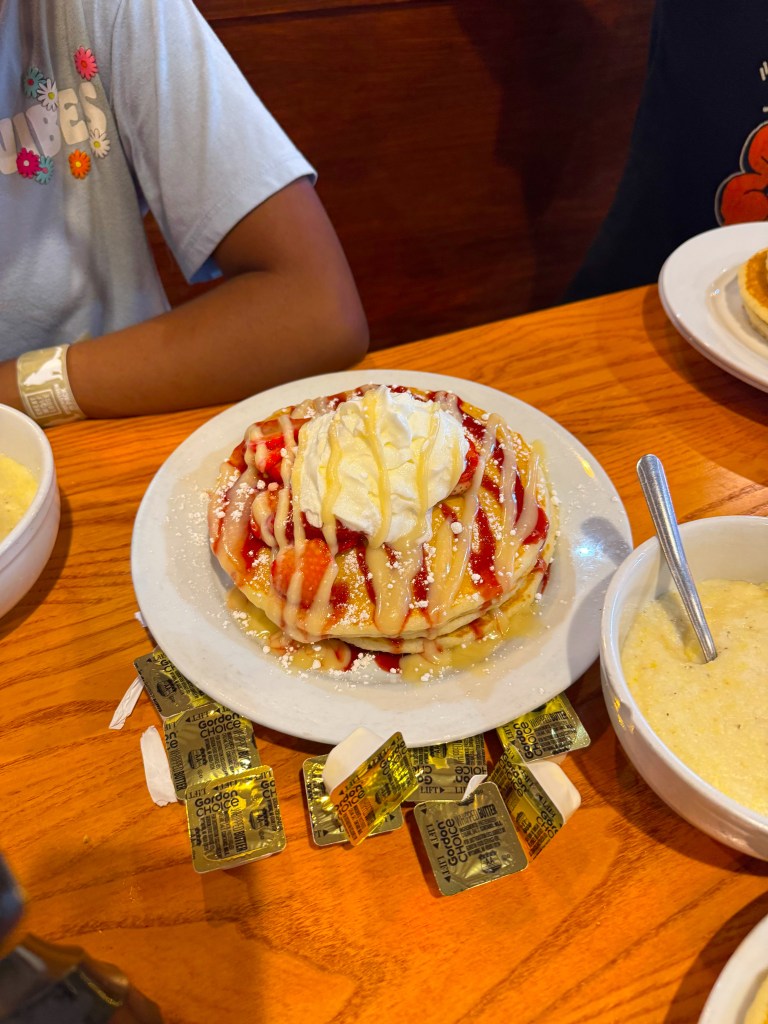
Flapjack’s menu features several specialty pancake varieties, including Strawberries & Cream Pancakes, Sticky Bun Pancakes, and other sweet breakfast combinations.
If you love a breakfast that feels a little like dessert, you’ll definitely want to explore the specialty pancake section.
Southern Grits and Crispy Hash Browns
While pancakes might be what Flapjack’s is best known for, the Southern breakfast sides deserve some attention too.
We had bowls of creamy grits and plates of golden hash browns alongside our pancakes.
These are the kinds of familiar breakfast foods that make a Southern-style breakfast feel complete.

I also love that there are plenty of options for family members who may not necessarily want a sweet breakfast.
Sometimes you just want a traditional plate of breakfast potatoes, grits, and your favorite savory sides!
Flapjack Fritters
Now, let’s talk about those delicious-looking little bites served in a skillet!
Flapjack’s offers Flapjack Fritters, cinnamon-sugar-coated treats served with made-from-scratch cream cheese icing for dipping.

They’re served as a shareable dish, making them a fun addition to the table when everyone wants a little something sweet.
And if you’re anything like our family, having something everyone can share is always a good idea!
Coffee and Fresh Orange Juice
No cozy breakfast experience is complete without something to sip on!
Our table had coffee served in a Flapjack’s-branded mug and orange juice in mason jars.

Between the warm wooden surroundings, breakfast plates, and morning drinks, everything had that relaxed mountain vacation feeling.
It’s the kind of breakfast setting that encourages you to enjoy the morning instead of rushing straight into the day’s activities.
What Else Is on the Flapjack’s Pancake Cabin Menu?
If you’re wondering what to eat at Flapjack’s Pancake Cabin, you’ll find much more than traditional pancakes.
Some of the menu options include:
- Sticky Bun Pancakes: Cinnamon-swirled pancakes with pecans and cream cheese icing.
- Strawberries & Cream Pancakes: Buttermilk pancakes layered with strawberries and cream cheese icing, finished with strawberry puree and whipped topping.
- Reese’s Peanut Butter Pancakes: Chocolate chip pancakes with Reese’s candy pieces, peanut butter sauce, and whipped cream.
- Chicken & Waffles: Hand-breaded chicken served over a Belgian waffle with a signature spicy honey sauce.
- Elkmont Egg Platters: Traditional breakfast combinations with eggs and a choice of sides.
- Breakfast Skillets: Hearty skillet meals featuring combinations of potatoes, eggs, cheese, and savory toppings.
- Flapjack Fritters: Cinnamon-sugar fritters with cream cheese icing.
There are also omelets, breakfast sides, and other hearty options.
You can browse the official Flapjack’s Pancake Cabin menu before visiting to see the latest selections and pricing.
Is Flapjack’s Pancake Cabin Kid-Friendly?
Absolutely one of the reasons I’d recommend considering Flapjack’s for a family breakfast in Pigeon Forge is the overall atmosphere and variety of food options.
As a mom of four, I know that choosing restaurants while traveling with children can sometimes be a little tricky.
One child might want pancakes, another might prefer something simple, and someone else might want an entirely different breakfast.
Flapjack’s makes it easier to find familiar breakfast favorites for different preferences.
The restaurant also offers a children’s menu for ages 12 and younger, with options such as Jr. Bear Pancakes, chocolate chip pancakes, French toast, and traditional breakfast combinations.
And let’s not forget the cabin itself!
The carved bears outside, vintage decorations, and rustic mountain atmosphere offer plenty of interesting things for kids to notice.


I especially appreciate restaurants that give us a chance to sit down together and enjoy a family meal while we’re traveling.
Some of our favorite vacation memories happen around the table, in between all the big attractions and planned activities.
A Great Breakfast Stop Before Exploring Pigeon Forge
If you’re putting together a list of things to do in Pigeon Forge with kids, I highly recommend planning your meals around your daily activities.
There’s so much to experience in the area, from theme parks and interactive museums to outdoor adventures and family entertainment.
Starting the morning with a filling breakfast can make the rest of your day a little easier, especially when you’re traveling with younger children.
Flapjack’s Pigeon Forge location is along the Parkway, making it a convenient restaurant to consider when planning activities in the area.

A few family-friendly attractions you might add to your itinerary include:
- Dollywood: A popular theme park featuring rides, live entertainment, and seasonal events.
- The Island in Pigeon Forge: A lively entertainment destination with family-friendly rides, shops, restaurants, and beautiful evening lights.
- WonderWorks: An interactive indoor attraction with hands-on science and educational exhibits.
- Blake Jones Racing Center: A fun option for families interested in go-karting and other activities.
We experienced several of these attractions during our own Pigeon Forge family trip, and I love how easy it is to combine learning, entertainment, and new experiences when we’re traveling.
As a homeschooling family, these outings are also opportunities for the kids to explore new environments, ask questions, and learn outside of our regular routine.
And after a good breakfast? We’re ready for whatever adventures the day brings!
Where Is Flapjack’s Pancake Cabin in Pigeon Forge?
If you’re planning to visit the same Pigeon Forge location we enjoyed, here are the details to help you plan your breakfast stop.
Flapjack’s Pancake Cabin — Pigeon Forge
Address: 2734 Parkway, Pigeon Forge, TN 37863
Phone: (865) 908-6115
Website: https://flapjacks.com/
Breakfast hours: The restaurant lists an 8:00 AM opening and 1:00 PM closing on weekdays. Check the official website for current weekend and holiday hours.
Flapjack’s also has several other locations throughout the Smoky Mountains, including Gatlinburg and Sevierville.
I recommend checking the restaurant’s website before visiting, especially during busy vacation seasons.
You can also check the restaurant’s online waitlist information to help plan your morning.

Tips for Visiting Flapjack’s Pancake Cabin With Kids
If you’re visiting Pigeon Forge with your family, here are a few tips I’d keep in mind when planning breakfast at Flapjack’s.
Plan breakfast before your main attraction. Since Flapjack’s is a breakfast-focused restaurant, it makes sense to visit before heading to your planned activities for the day.
Browse the menu ahead of time. This can be especially helpful if you’re traveling with several children who all have different preferences.
Take a few pictures! Between the carved bears, rustic décor, stone fireplace, and beautiful breakfast plates, there are plenty of fun photo opportunities.
Look for the Ten Commandments of Grits. I couldn’t leave this one off the list! Make sure to look for the sign while you’re there.
Check the location before leaving your hotel. There are multiple Flapjack’s restaurants throughout the Smoky Mountains, so confirm which location works best for your itinerary.
Is Flapjack’s Pancake Cabin Worth Visiting in Pigeon Forge?
If you’re looking for a family-friendly breakfast restaurant in Pigeon Forge, Flapjack’s Pancake Cabin is definitely one to put on your list.
What makes this restaurant stand out is the combination of classic Southern breakfast foods, specialty pancakes, and the charming cabin atmosphere.
It fits right into the Smoky Mountain experience.
I also appreciated the little personal touches during our visit, especially the employee who took the time to point out some of the restaurant’s unique décor.
It’s those small moments that often stay with me long after a family trip ends.
Between the pancakes, cozy booths, rustic fireplace, and fun decorations, Flapjack’s offers more than a simple breakfast stop.
It’s an opportunity to gather around the table and create another memory during your Pigeon Forge vacation.
And for me, that’s one of the best parts of traveling with my children.

More Things to Do in Pigeon Forge With Kids
Planning a family vacation to Pigeon Forge or the Great Smoky Mountains?
Be sure to explore more of our family travel adventures for inspiration on where to stay, what to eat, and which attractions to visit.
From exciting theme parks to educational experiences and family-friendly hotels, there’s plenty to explore in Pigeon Forge with kids of all ages.
RELATED POST: Jellystone Park Pigeon Forge: A Fun Homeschool-Friendly Stay Near Dollywood
You can also find more of our travel experiences, homeschool adventures, and family-friendly recommendations right here on Being Ecomomical.
Whether you’re planning your first visit to the Smoky Mountains or returning for another family vacation, I hope this review helps you find another memorable place to add to your itinerary.
And if you decide to stop by Flapjack’s Pancake Cabin, don’t forget to look for the Ten Commandments of Grits!
Have you visited Flapjack’s Pancake Cabin in Pigeon Forge? I’d love to hear which breakfast dish you tried!
-
Gakken BIG Preschool Workbook Review: Fun Learning Activities for Ages 2–4
Finding preschool learning activities that are both educational and engaging can sometimes be challenging, especially when you’re working with younger children who would much rather be moving around than sitting at a table.
As a homeschooling mom and former classroom teacher, I appreciate learning resources that introduce important foundational skills without making early childhood education feel overly structured.
The Gakken Play Smart BIG Preschool Workbook, available through Timberdoodle, offers more than 250 activities designed for children ages 2–4.
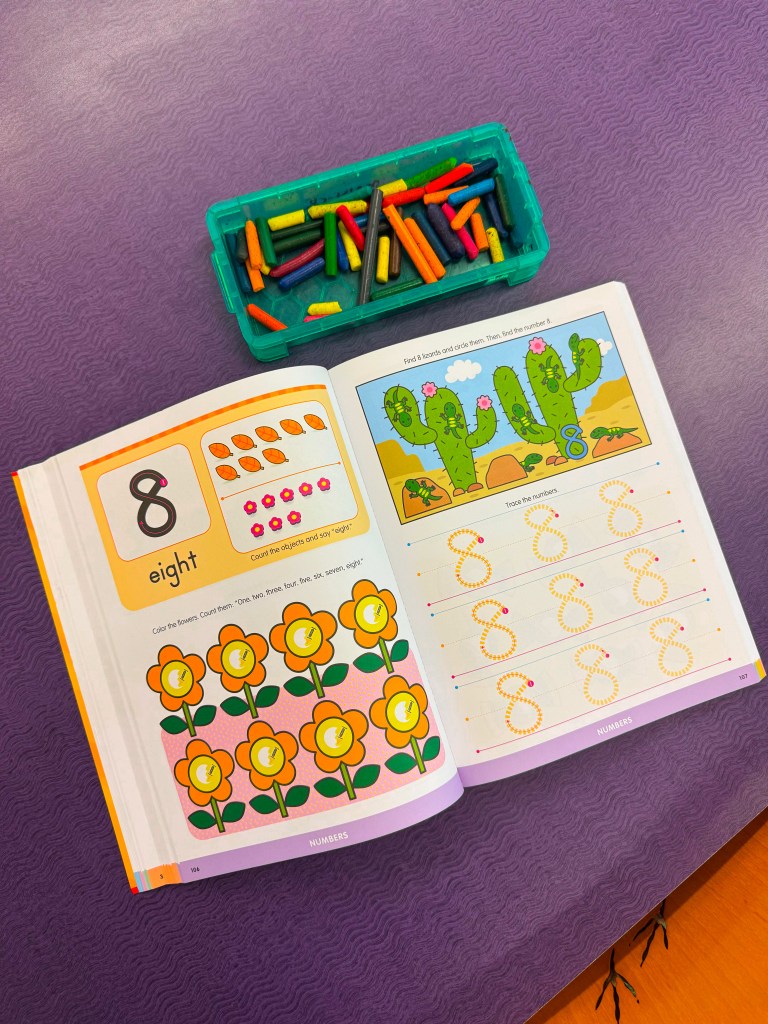
From tracing basic lines and recognizing letters to counting, identifying shapes, and completing puzzles, this colorful preschool workbook provides opportunities to practice essential early learning skills through short, age-appropriate activities.
We’ve been exploring this workbook as part of our homeschool learning, and I especially appreciate how it starts with basic prewriting exercises before gradually introducing more challenging activities.
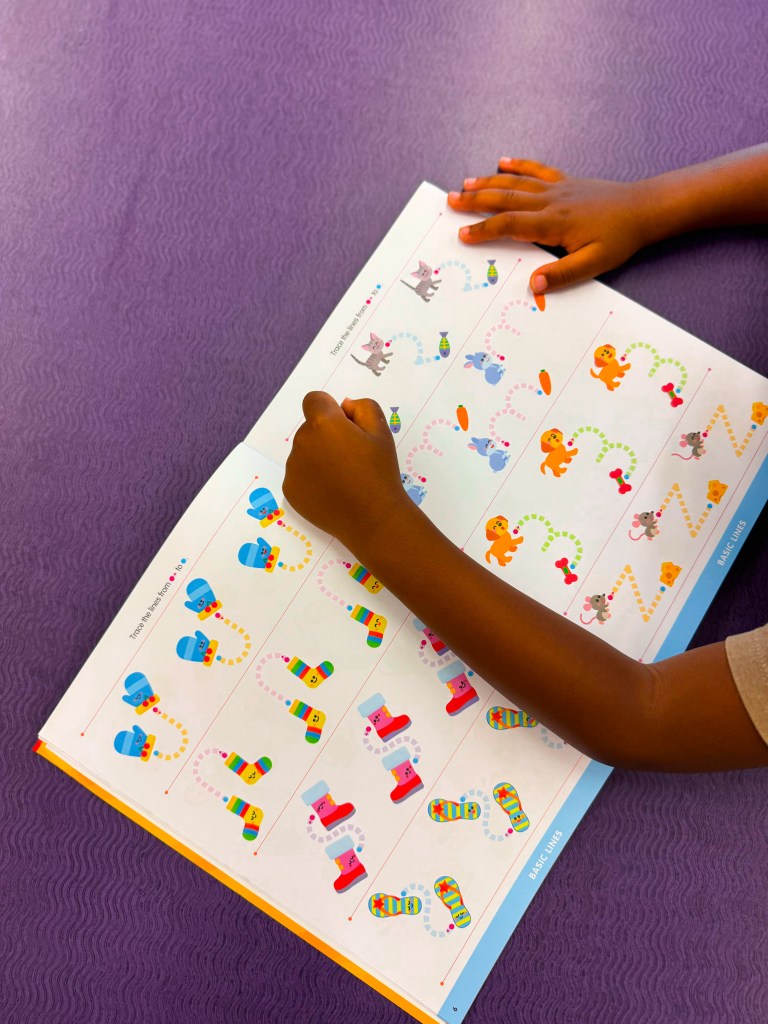
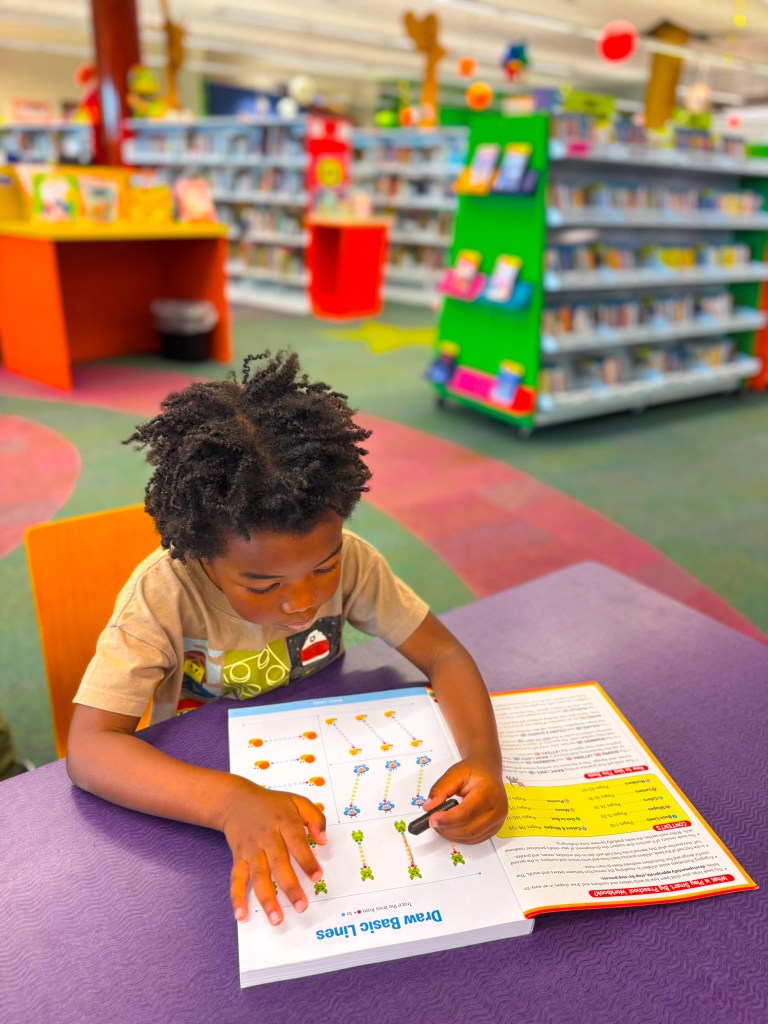
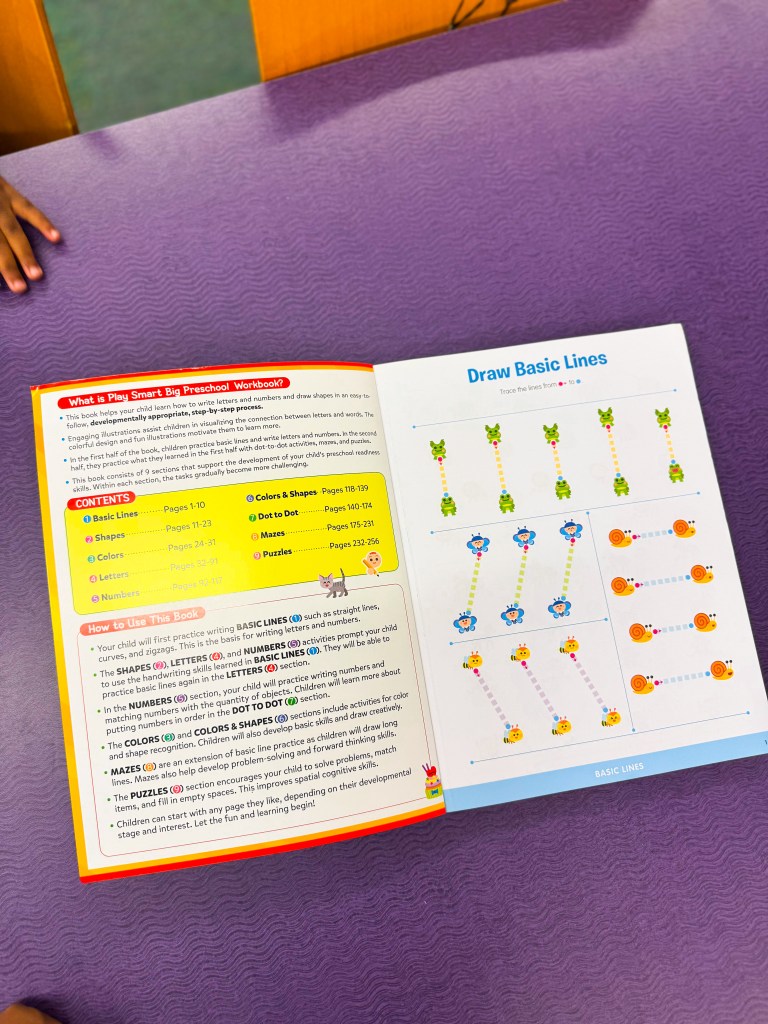
More Homeschool Posts You’ll Love:
- Timberdoodle Kindergarten Curriculum Kit Unboxing
- Gakken 500 Stickers Outdoor Adventures Sticker Book Review
- Fine Motor and Number Recognition Activity for Kindergarten
- How To Homeschool Preschool: A Simple Guide For Parents
What’s Inside the Gakken BIG Preschool Workbook?
The Gakken BIG Preschool Workbook is a large-format activity book featuring nine sections that focus on different areas of early childhood development. Rather than concentrating exclusively on handwriting or alphabet practice, it introduces a variety of preschool readiness skills.
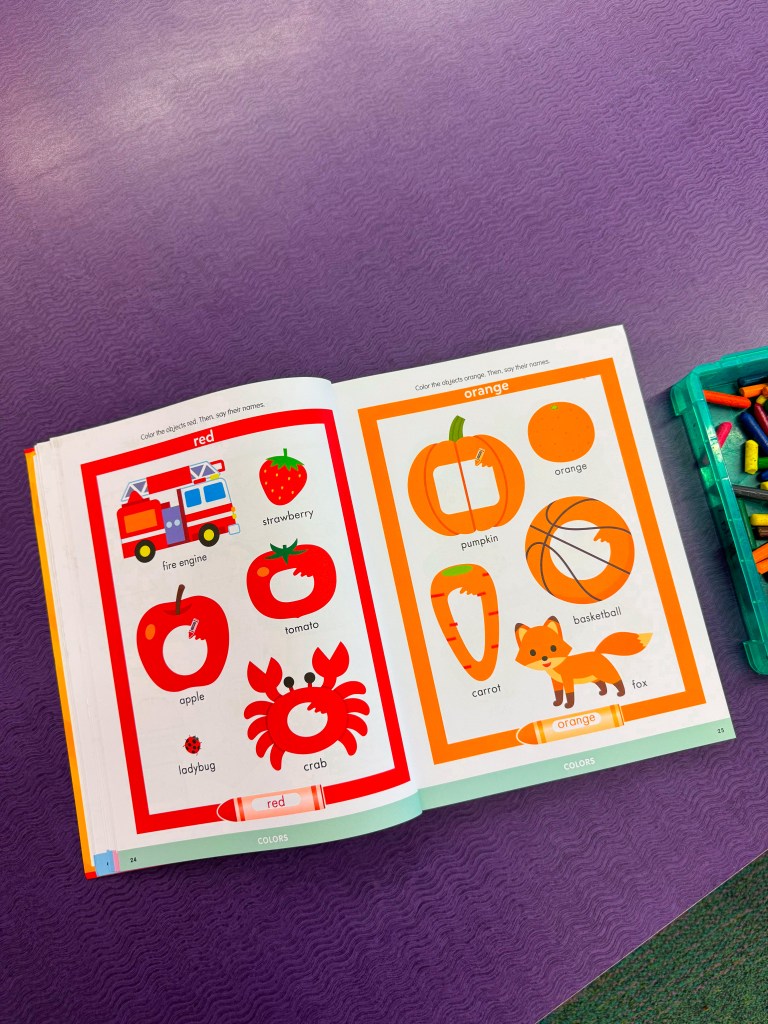
The workbook includes activities covering basic lines, shapes, colors, letters, numbers, color and shape recognition, dot-to-dot exercises, mazes, and puzzles. Each section builds on foundational skills that young children need as they begin learning to write, count, recognize patterns, and solve simple problems.
One feature I particularly appreciate is the colorful presentation. The pages feature cheerful animals, familiar objects, and playful illustrations that give younger children something interesting to look at while completing their activities.
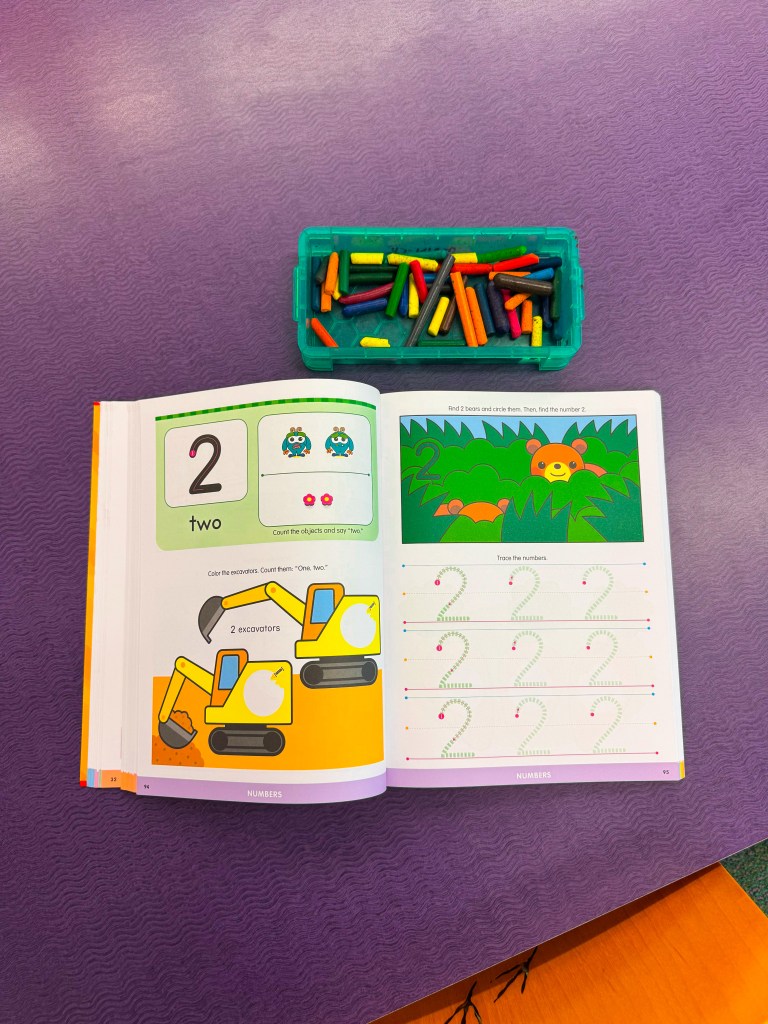
Developing Fine Motor Skills and Prewriting Readiness
One of the most valuable sections of this preschool workbook is its introduction to prewriting skills. Before children are ready to form letters and numbers independently, they benefit from opportunities to practice controlling their writing tools and making intentional marks on paper.
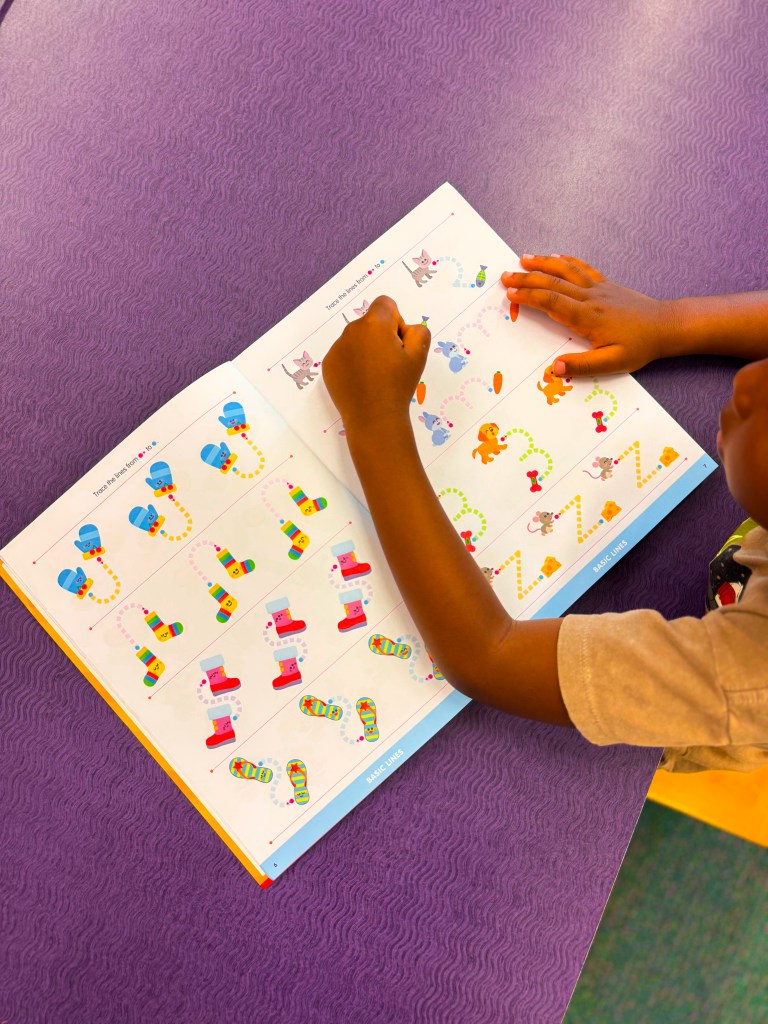
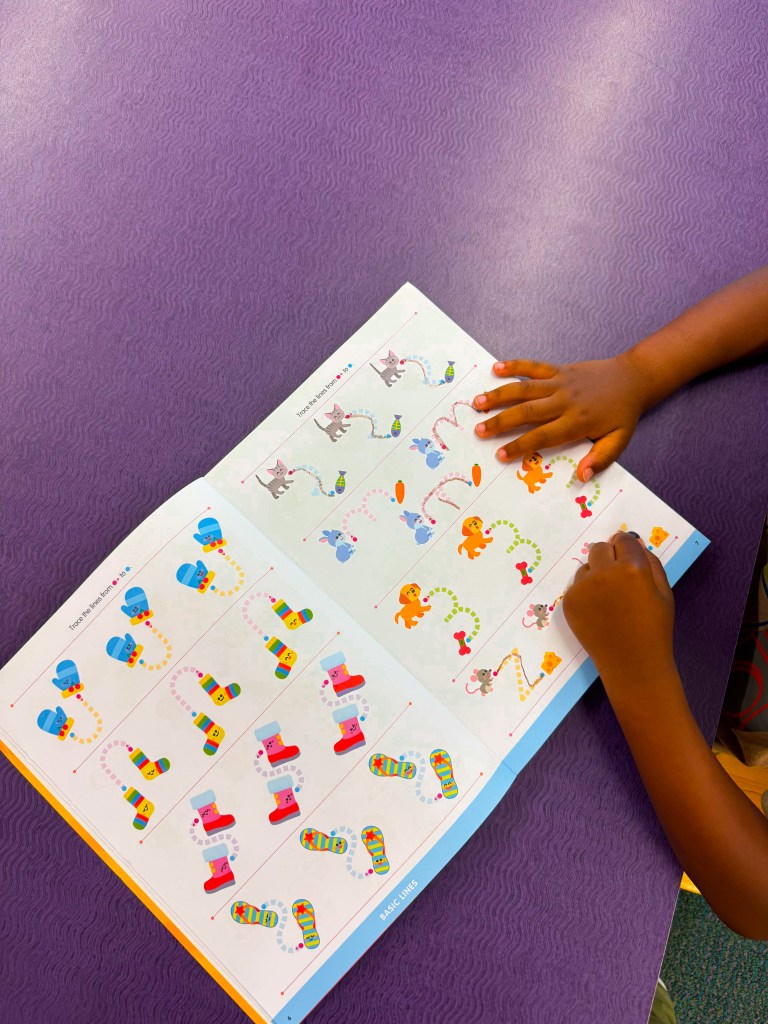
The workbook begins with simple line-tracing activities that encourage children to follow straight paths between colorful illustrations. As they progress, the activities introduce curved lines, zigzags, and other patterns that require increasingly controlled hand movements.
These exercises help children practice hand-eye coordination, pencil control, visual tracking, and the fine motor movements associated with early handwriting.
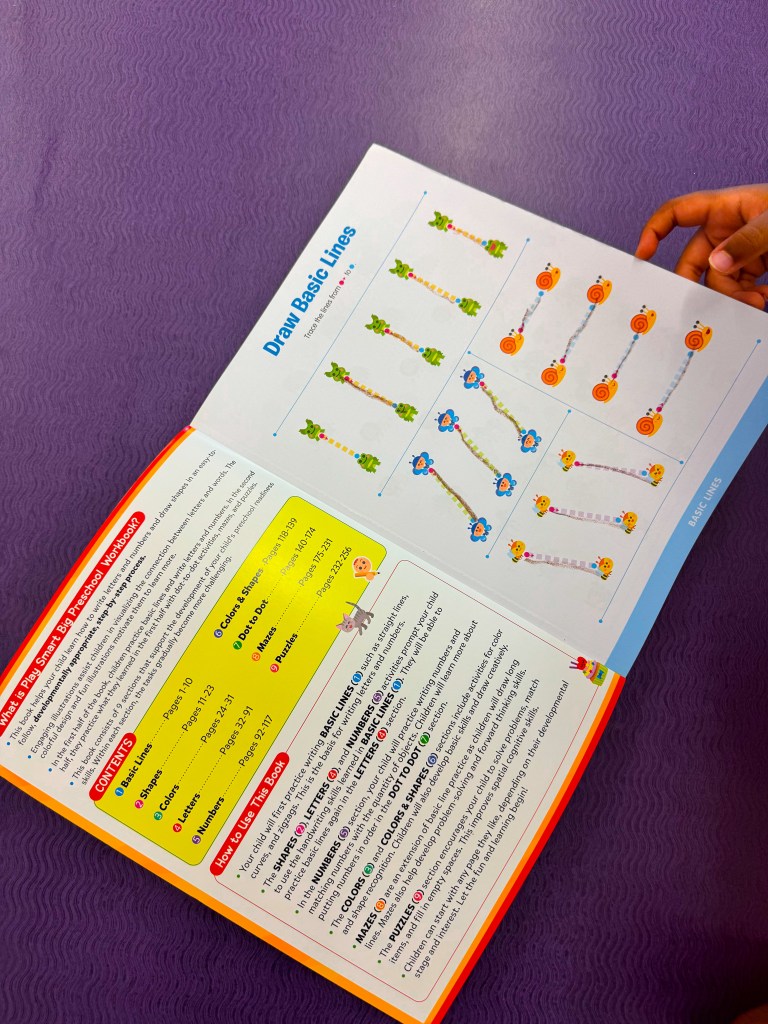
While working through these pages with my little one, I appreciated having short tracing exercises that allowed us to focus on one skill at a time. The illustrations also helped make the activities feel more playful than traditional handwriting practice.
For parents teaching preschool at home, these types of prewriting activities for toddlers and preschoolers can be a helpful introduction to using crayons and pencils before moving into formal letter formation.
Early Literacy and Alphabet Recognition
In addition to prewriting practice, the Gakken BIG Preschool Workbook introduces uppercase and lowercase letters through colorful illustrations and simple literacy activities.
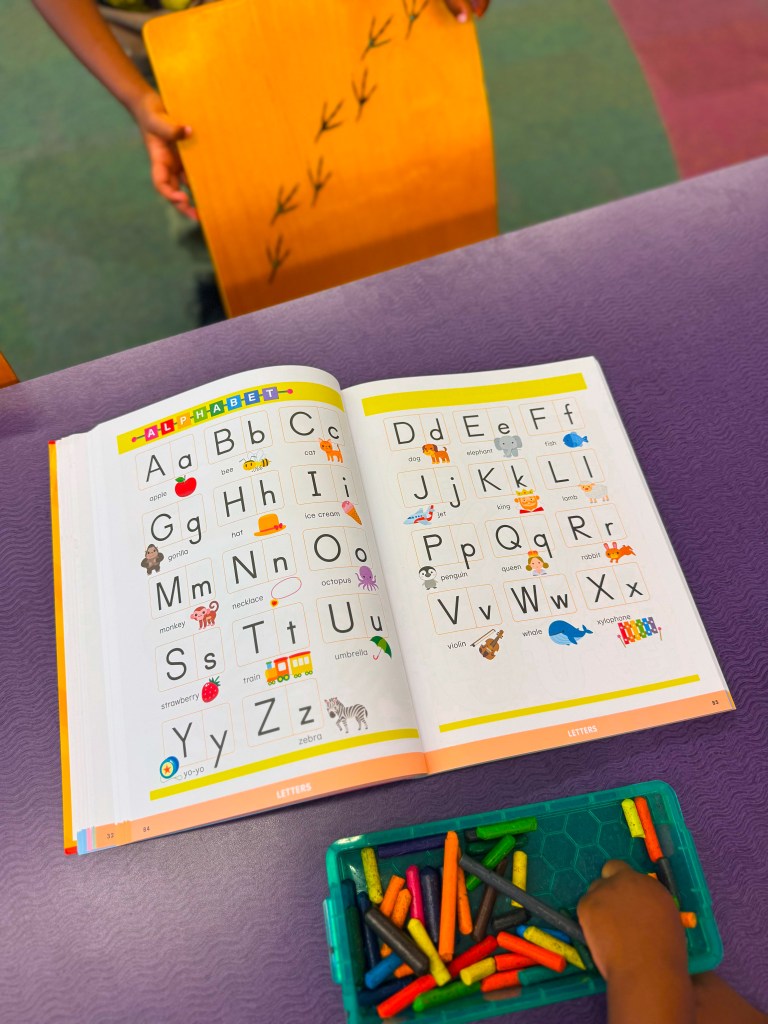
Children can explore letter shapes, connect letters with familiar objects, practice tracing, and work through alphabet-themed puzzles. Some activities also encourage children to distinguish between uppercase and lowercase letters, helping develop visual discrimination and early letter recognition.
I especially like that the alphabet activities offer more than repetitive letter tracing. For example, the workbook includes alphabet mazes that encourage children to recognize letters while navigating a path.
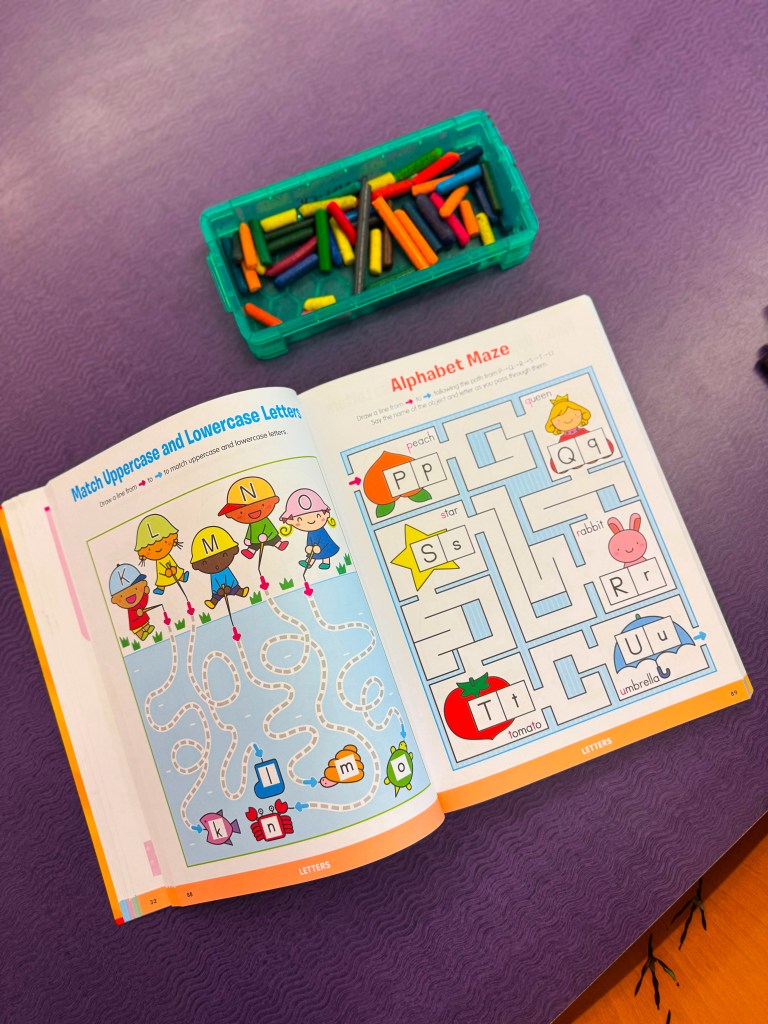
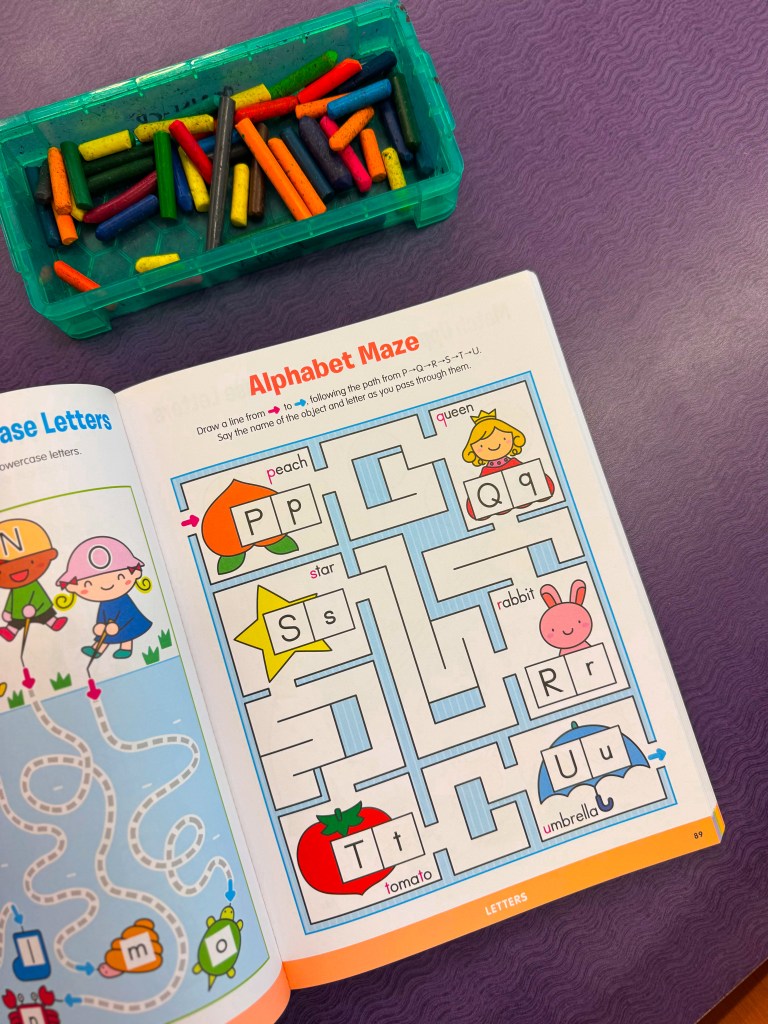
These activities introduce early literacy concepts while also developing concentration, visual tracking, and problem-solving skills.
Building Early Math Skills Through Counting and Number Activities
Early math is another important part of preschool education, and this workbook introduces number concepts in several different ways.
Children can practice recognizing numbers, counting illustrated objects, tracing numerals, and completing simple color-by-number activities. The workbook also includes activities that encourage children to connect written numbers with corresponding quantities.
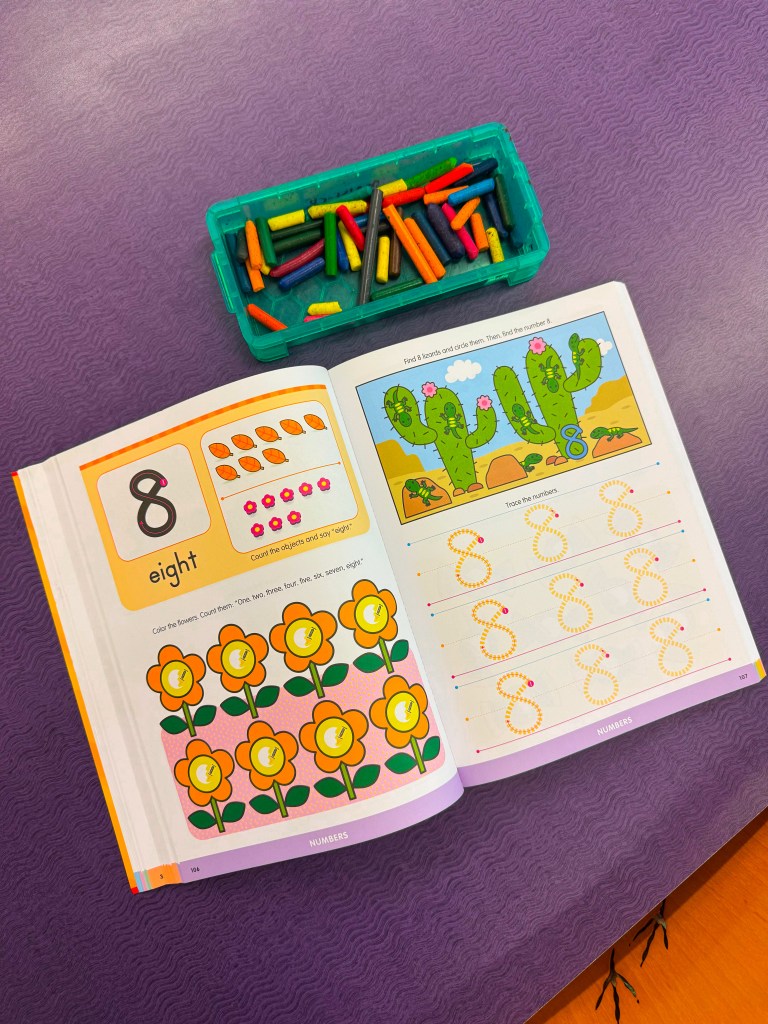
For example, one page introduces the number two using illustrated objects alongside number-tracing exercises. Other pages encourage children to count groups of objects or identify numbers while completing colorful pictures.
These preschool counting activities help reinforce number recognition, one-to-one correspondence, and early mathematical thinking.
I appreciate that the activities offer different ways to explore the same concepts. Children aren’t simply asked to memorize numbers; they’re given opportunities to recognize, trace, count, and apply what they’re learning.
Learning Colors, Shapes, and Visual Discrimination
The workbook also introduces colors and shapes through activities that combine recognition, drawing, and coloring.
Children can identify familiar objects by color, practice tracing circles and triangles, and complete illustrations using basic shapes. Some pages encourage children to recognize shapes within larger pictures, while others ask them to finish drawings or match visual patterns.
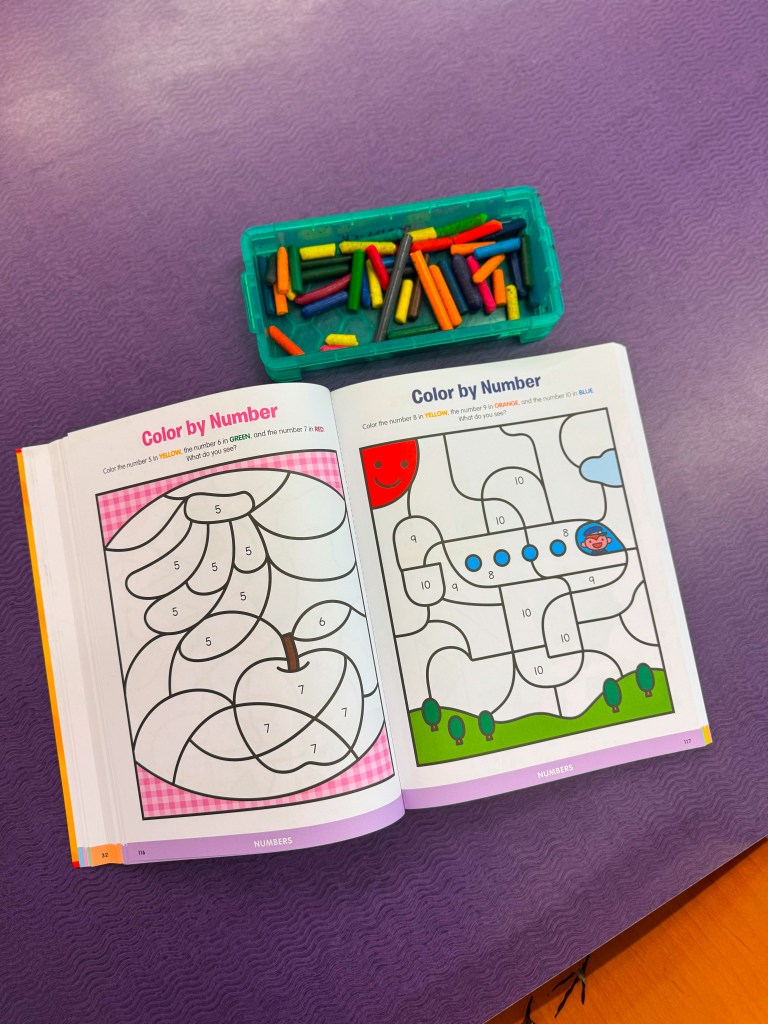
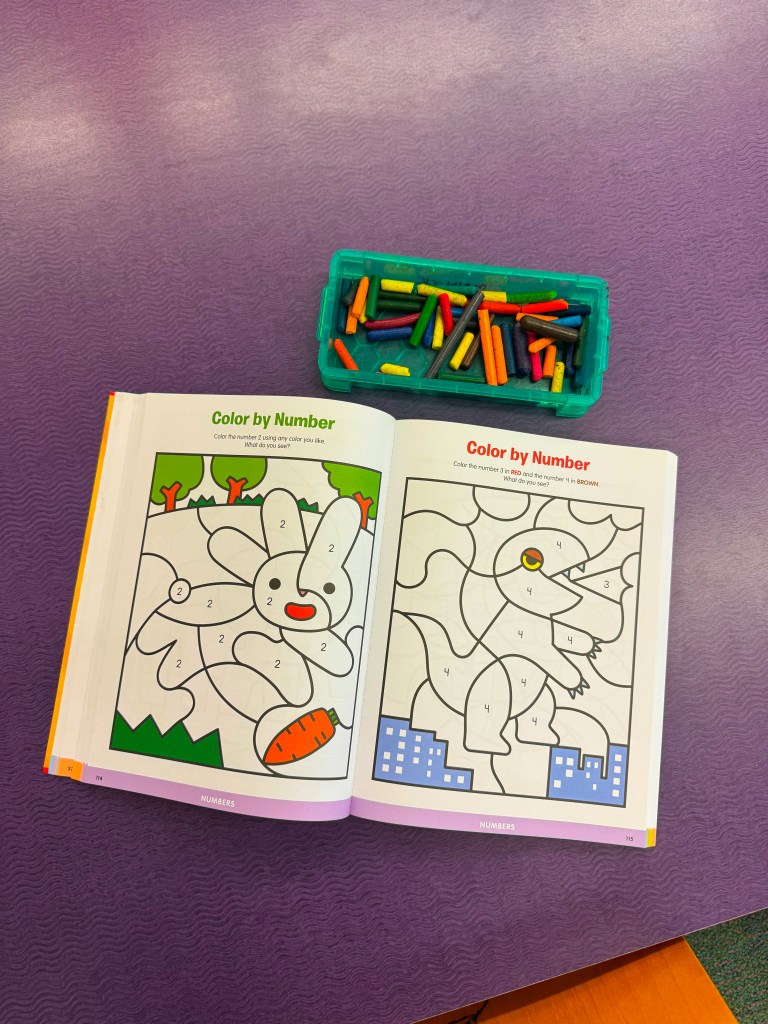
These activities support more than color and shape identification. They also encourage children to observe details, recognize similarities and differences, and coordinate their hand movements with what they see.
The color-by-number pages are another way to combine early math practice with color recognition and fine motor development.
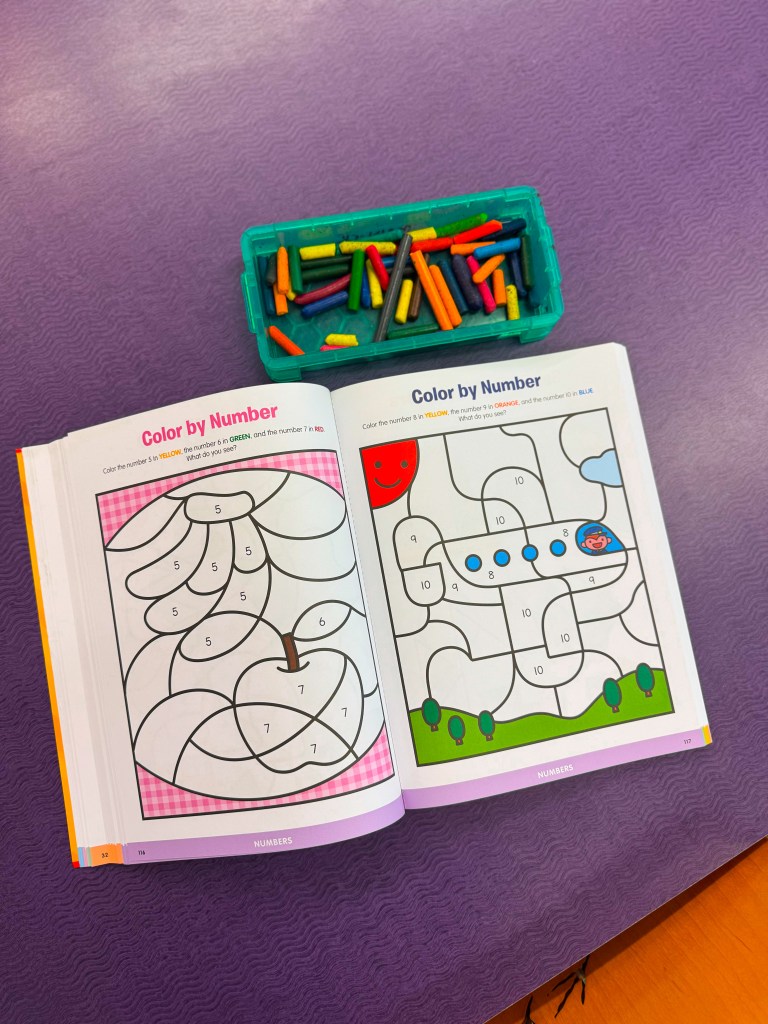
For younger preschoolers, I would approach these activities conversationally, discussing the colors and shapes together before expecting them to complete the pages independently.
Developing Problem-Solving Skills With Mazes and Puzzles
Another feature that makes the Gakken BIG Preschool Workbook useful for early learning is its collection of mazes, matching games, dot-to-dot activities, and visual puzzles.
The mazes encourage children to follow a path, recognize directions, and think through simple challenges. Dot-to-dot exercises reinforce number sequencing while providing additional pencil-control practice.
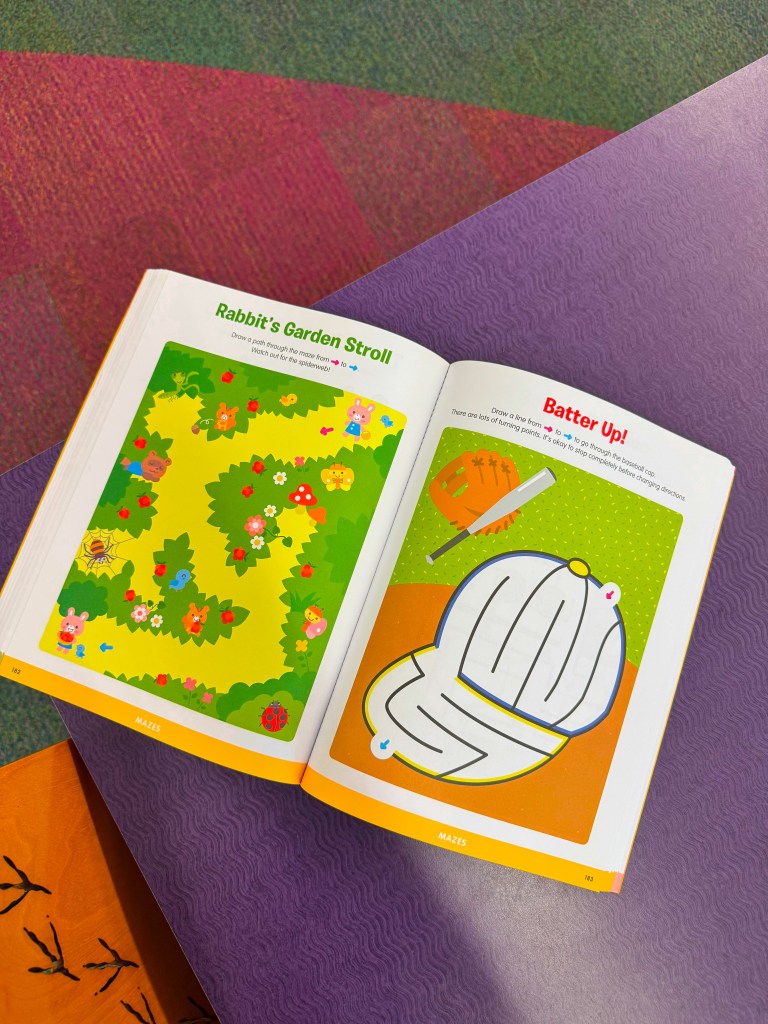
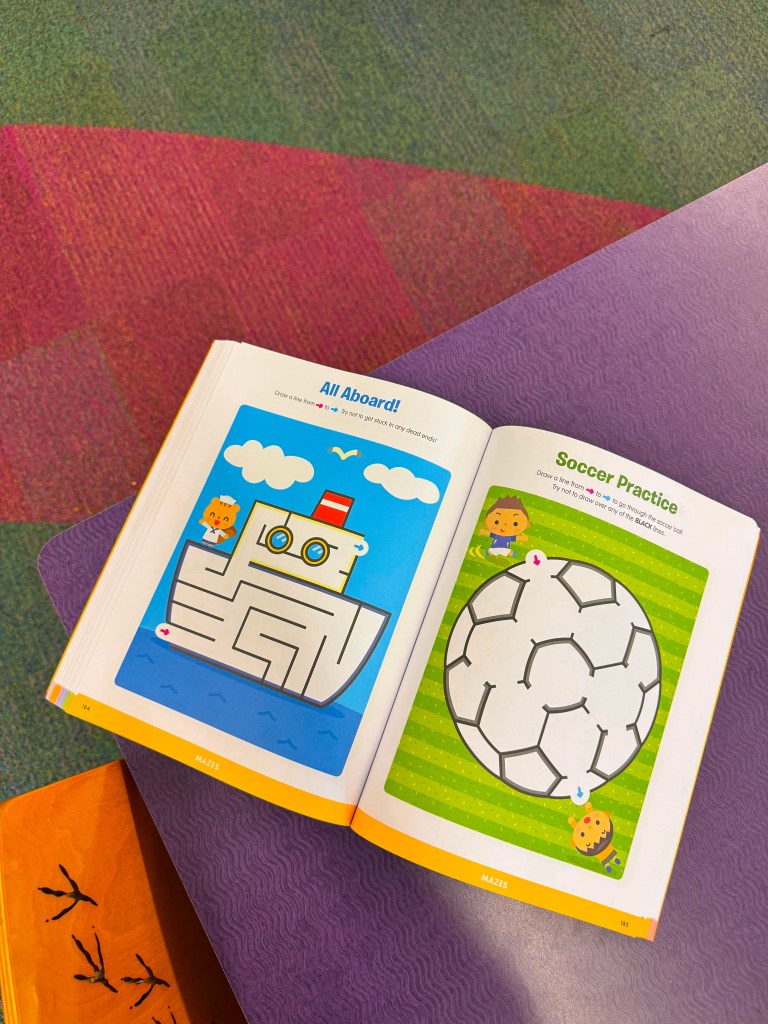
The puzzle section introduces activities such as matching animals to their shadows, identifying missing patterns, and finding objects hidden within colorful illustrations.
These exercises encourage visual discrimination, attention to detail, logical reasoning, and early problem-solving skills.
I particularly appreciate this variety because preschool learning involves much more than learning the alphabet and numbers. Activities that encourage children to compare, observe, and make decisions are valuable additions to an early childhood learning routine.
Is the Gakken BIG Preschool Workbook Good for Homeschool Preschool?
I think this workbook is a useful supplemental resource for families homeschooling preschoolers, particularly those looking for structured activities that can be completed in short sessions.
Although the workbook contains more than 250 activities, there’s no need to work through multiple pages every day. Parents can select activities based on their child’s interests, abilities, and attention span.
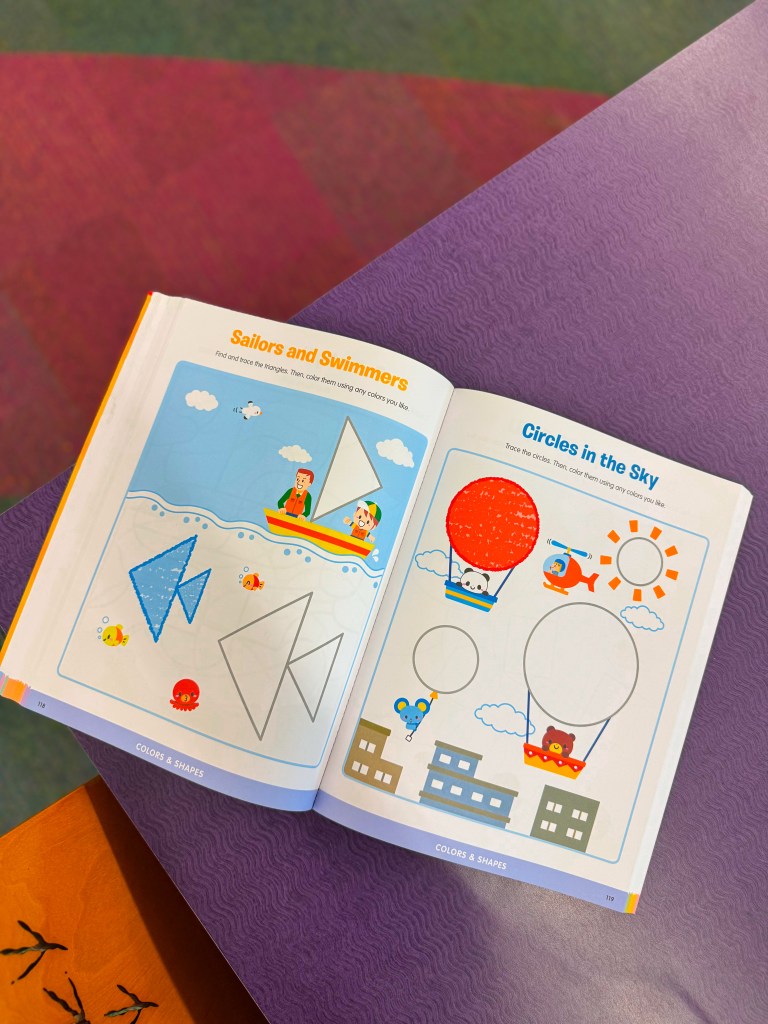
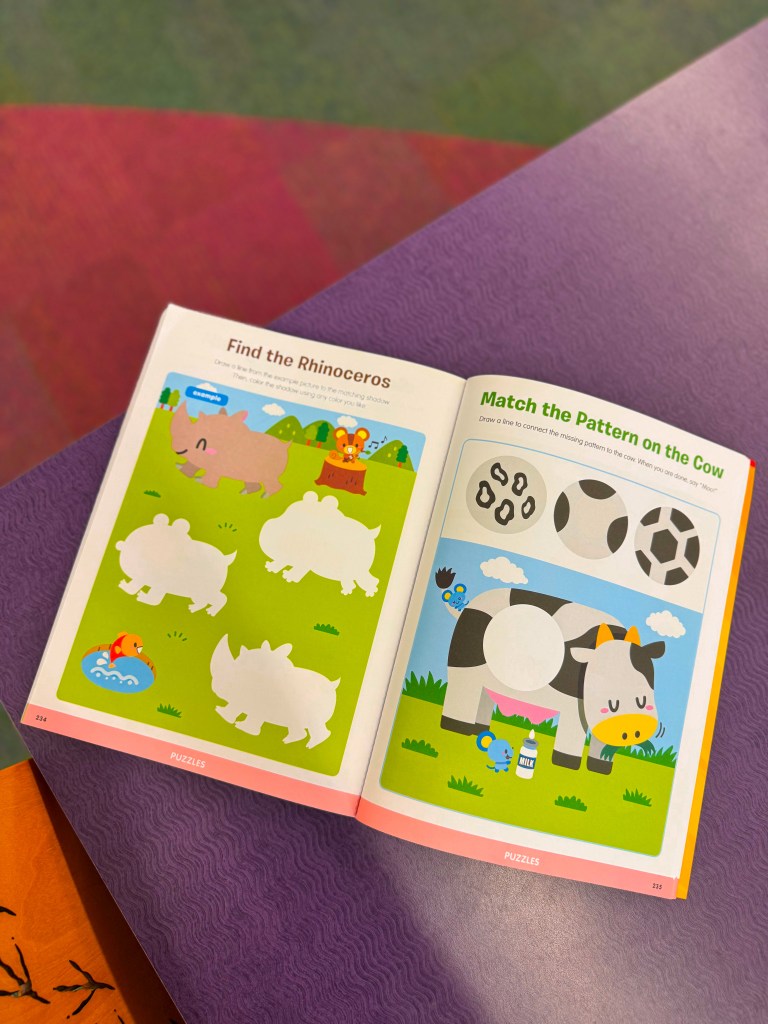
For younger children who are still developing an interest in table-based learning, I would start with the simpler tracing, coloring, and matching pages. Older preschoolers who are ready for more challenging activities can explore letter formation, number tracing, mazes, and puzzles.
It’s also important to remember that preschoolers learn through movement, imaginative play, outdoor exploration, conversation, and everyday experiences. Workbooks can support that learning, but they don’t need to replace hands-on activities.
The Gakken BIG Preschool Workbook works particularly well as an additional resource for practicing specific skills alongside a play-based or relaxed homeschool preschool routine.
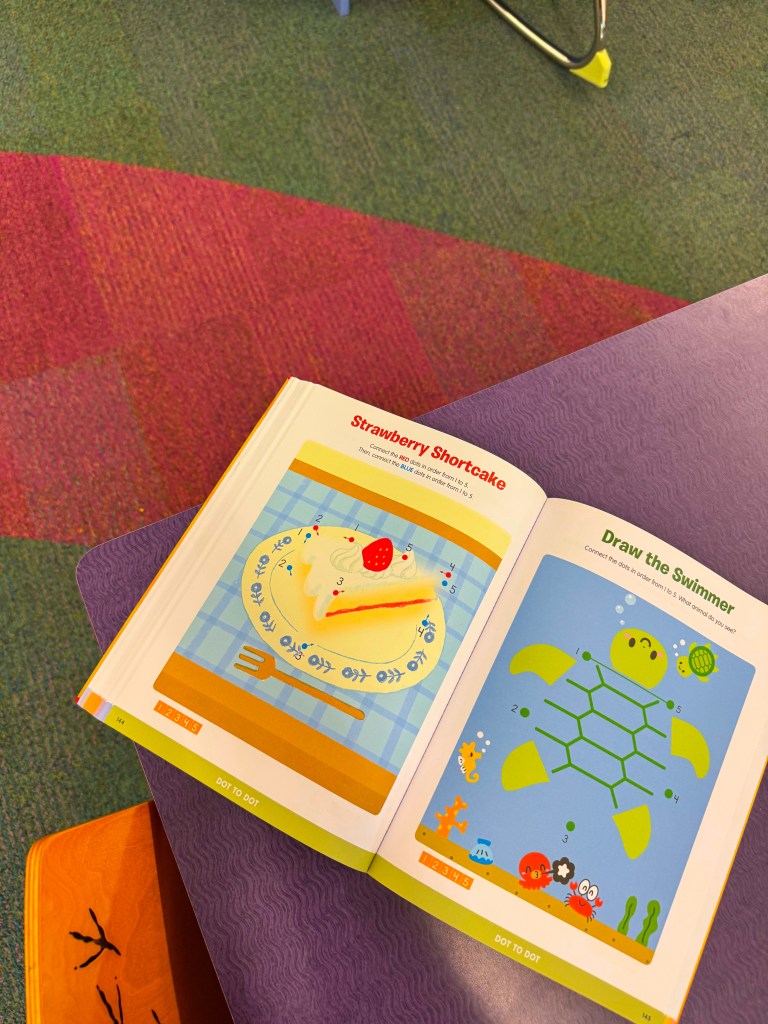
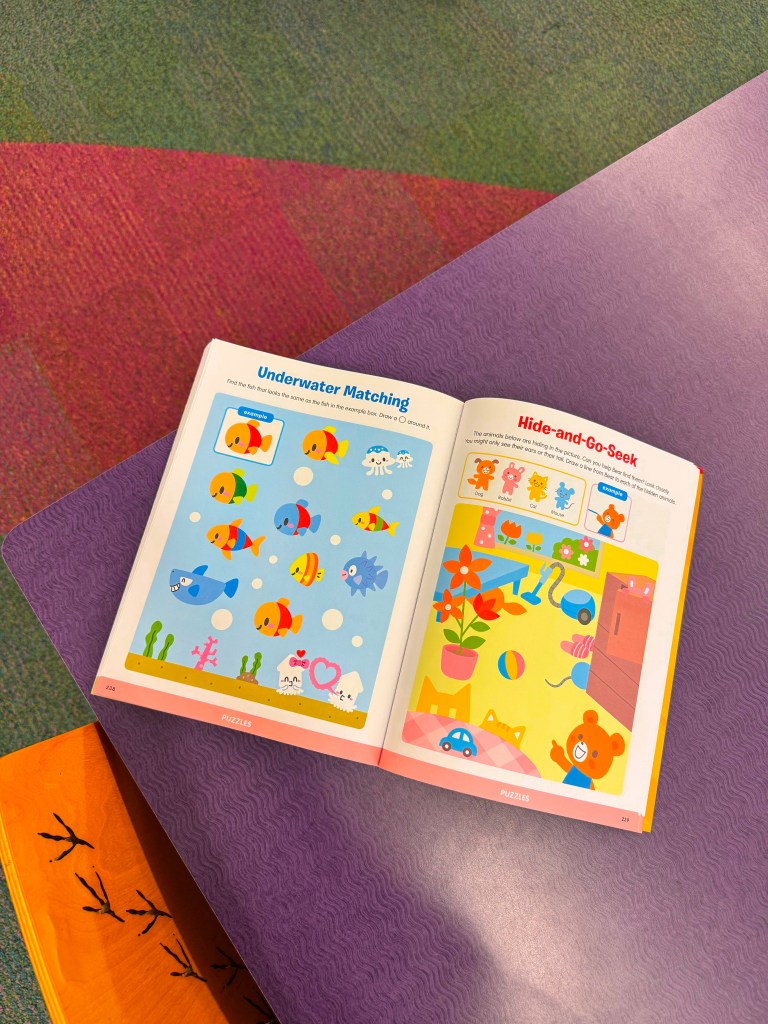
Final Thoughts on the Gakken BIG Preschool Workbook
The Gakken BIG Preschool Workbook offers a wide variety of early learning activities for children ages 2–4, making it a practical addition to a preschool learning collection.
What stands out most to me is the progression from simple prewriting exercises to more involved activities that encourage letter recognition, counting, shape identification, and independent problem-solving.
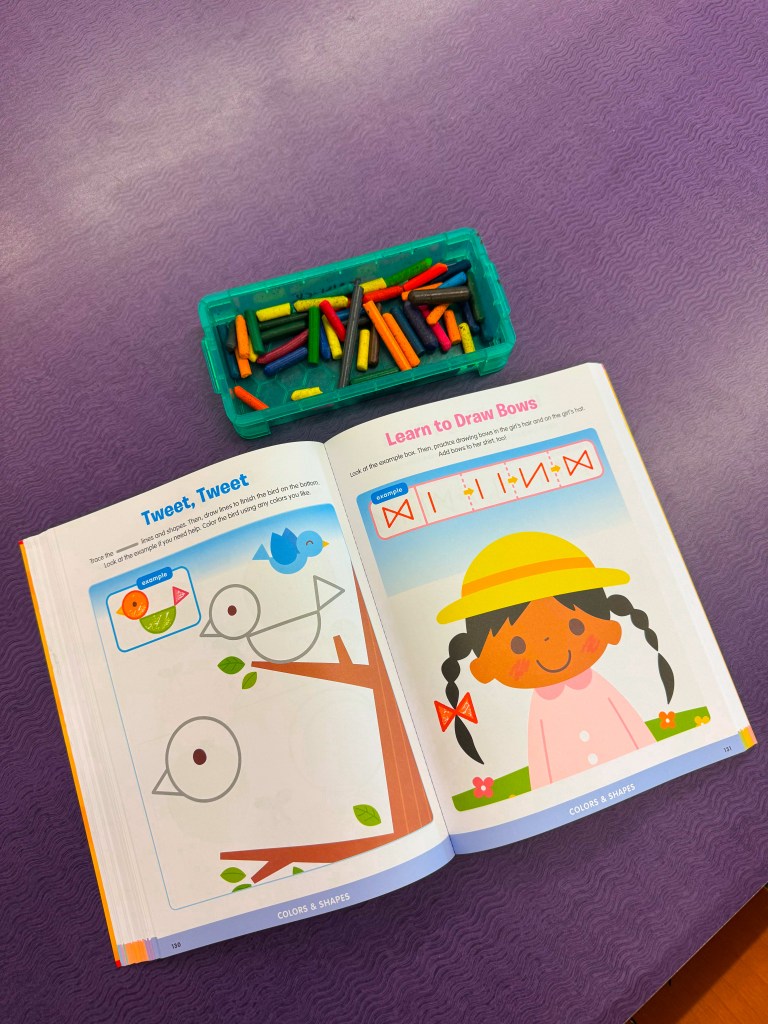
I also appreciate that the workbook introduces these skills through colorful illustrations and relatively short activities, which can be especially helpful when teaching younger children who aren’t ready for lengthy lessons.
Whether you’re homeschooling preschool, supplementing your child’s early learning at home, or looking for educational activities to keep little hands busy, this workbook provides plenty of opportunities to practice foundational skills at a developmentally appropriate pace.
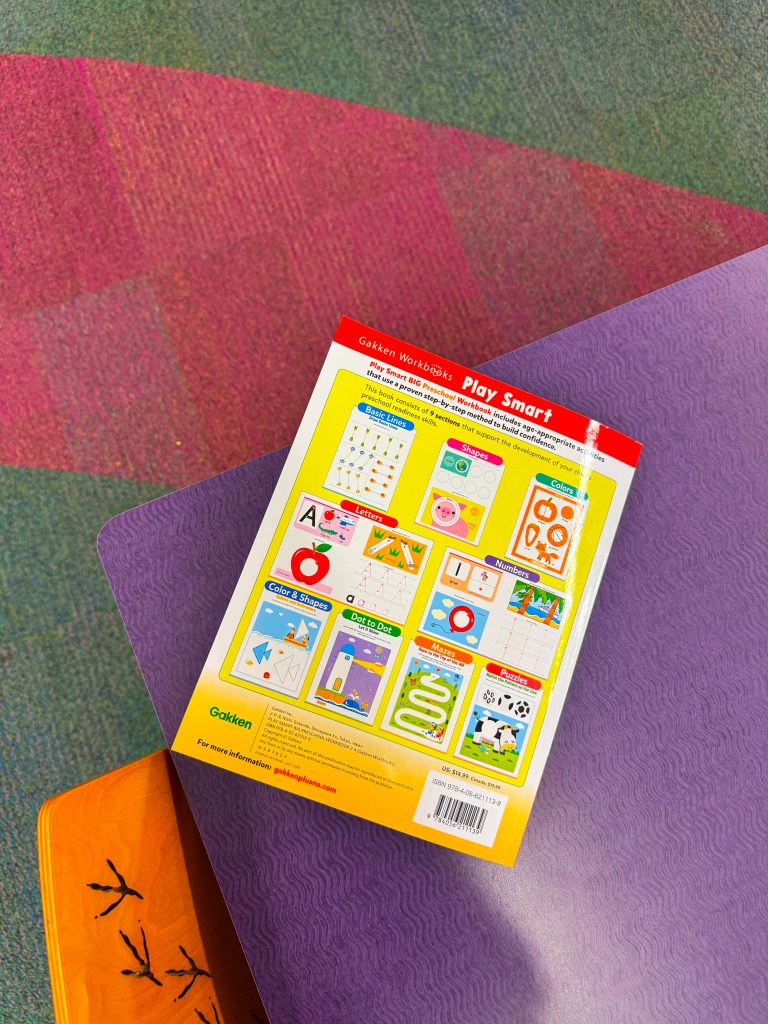
You can learn more about the Gakken BIG Preschool Workbook at Timberdoodle and explore how it might fit into your preschool learning routine.
Pin this for later…
-
Gakken 500 Stickers Outdoor Adventures Review: Learning Through Play
Sometimes the simplest activities offer the biggest learning opportunities, and that’s exactly what I discovered with the Gakken Play Smart 500 Stickers Outdoor Adventures activity book.
What looks like an ordinary sticker book is actually filled with opportunities for toddlers to practice fine motor skills, problem-solving, hand-eye coordination, and early preschool concepts, all while having fun.
As a homeschooling mom and former educator, I’m always looking for hands-on learning activities that don’t require a lot of preparation. And with a busy toddler who would much rather be moving around than sitting still, finding something that captures his attention is always a win!
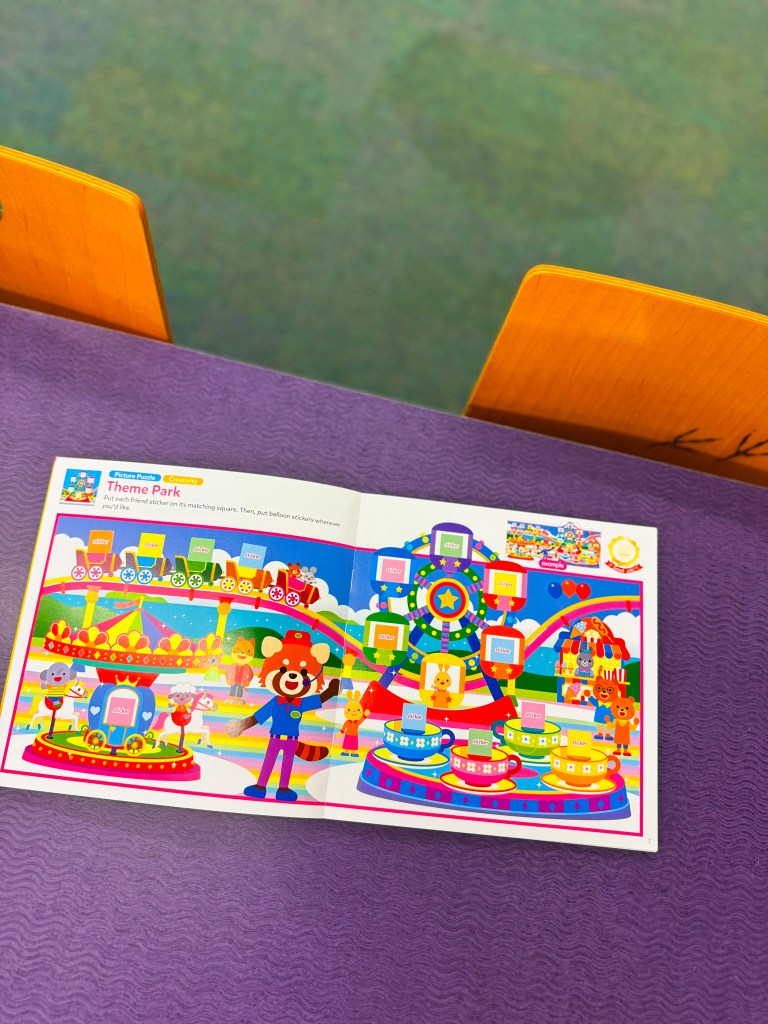
More Preschool Homeschool Reviews:
- Timberdoodle Kindergarten Curriculum Kit Unboxing
- Fine Motor and Number Recognition Activity For Kindergarten: Djeco Mosaics
- Kindergarten Open and Go Geography Curriculum
A Sticker Activity That Actually Held My Toddler’s Attention
One of the first things I noticed was how quickly my son settled into this activity. He’s usually on the move, exploring something or finding his next adventure, but once we opened the sticker book, he was completely focused.
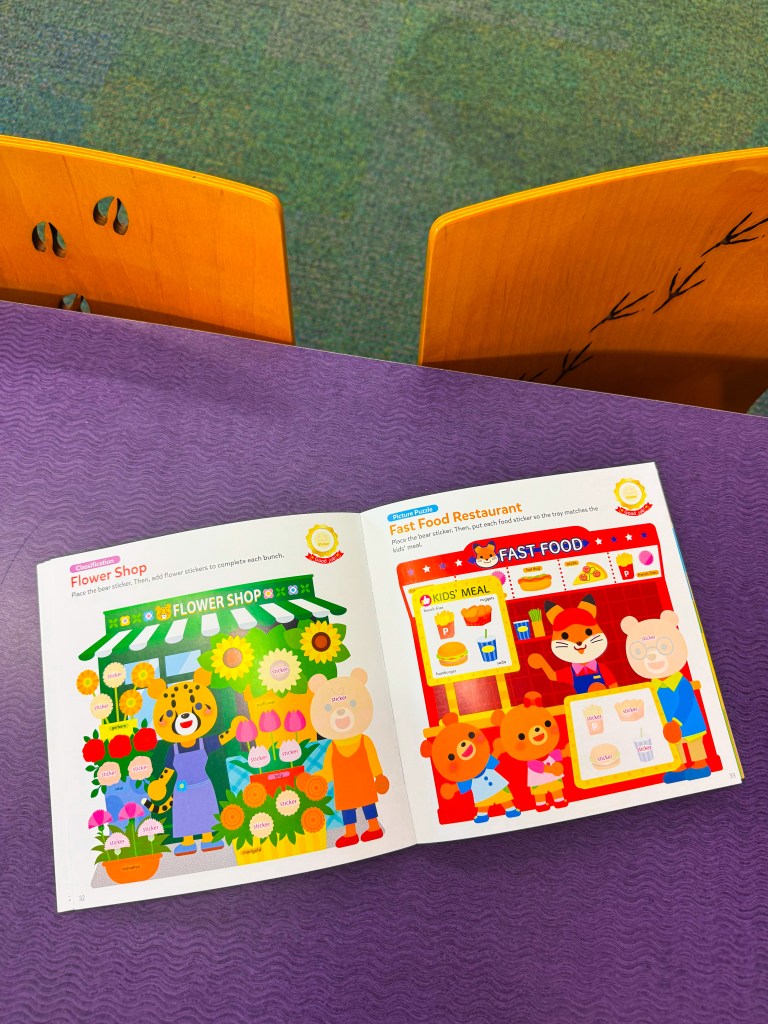
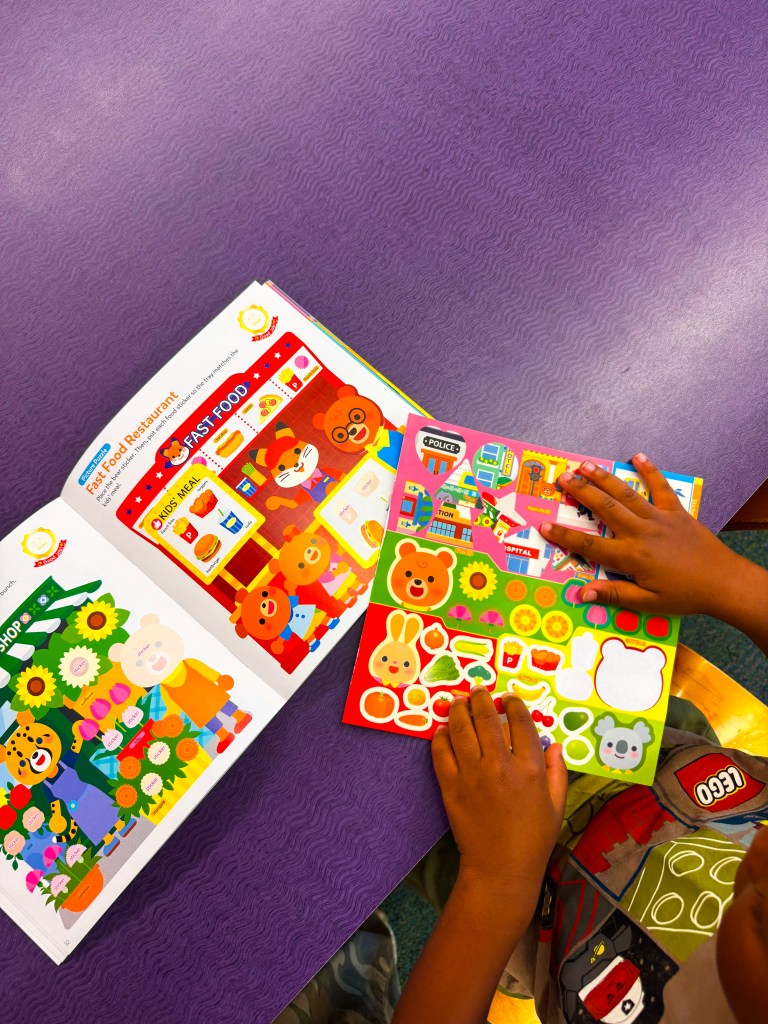
The colorful illustrations immediately caught his attention, and he was excited to recognize familiar places, foods, and experiences throughout the pages. We explored restaurant scenes, animals, outdoor adventures, and other everyday settings that he could connect to things he’d seen in real life.
I especially enjoyed watching him work through the restaurant activity. He had to look at the food pictures, find the corresponding stickers, and carefully place them in the correct spots. What seemed like a simple matching game required quite a bit of thought, coordination, and concentration.
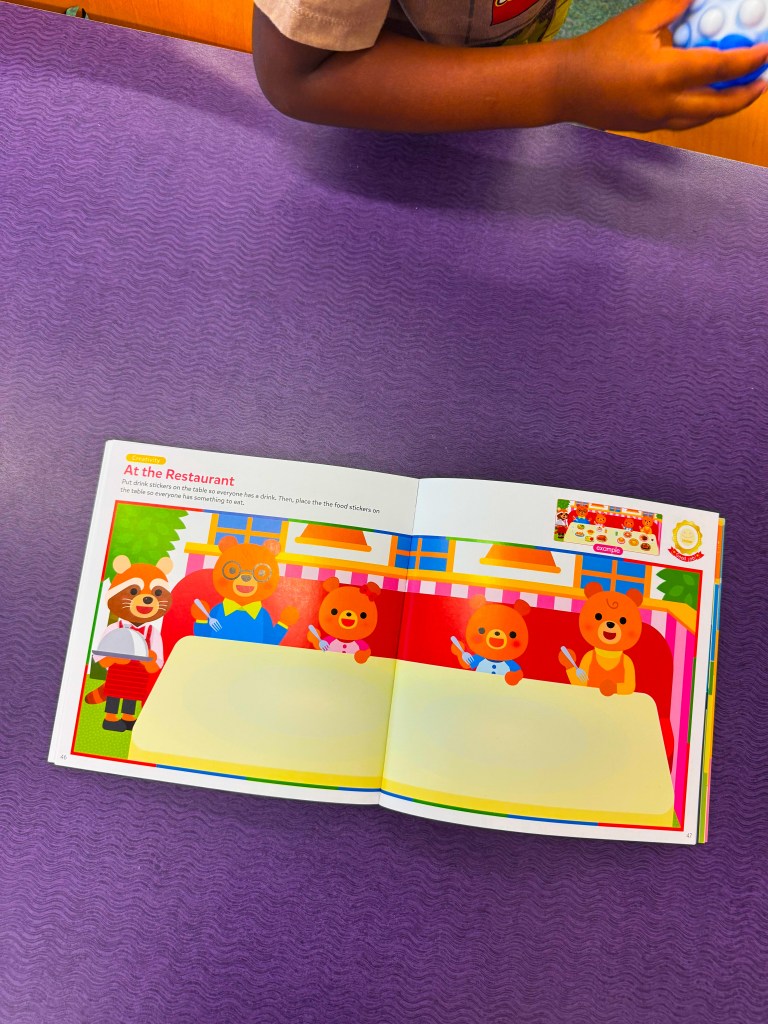
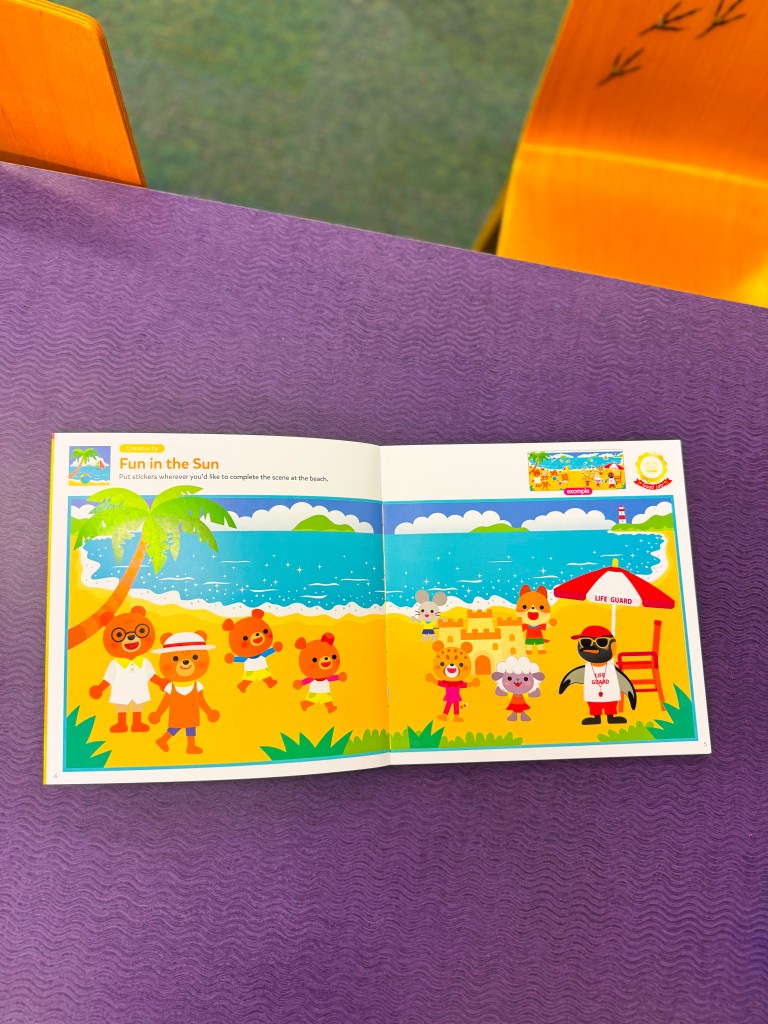
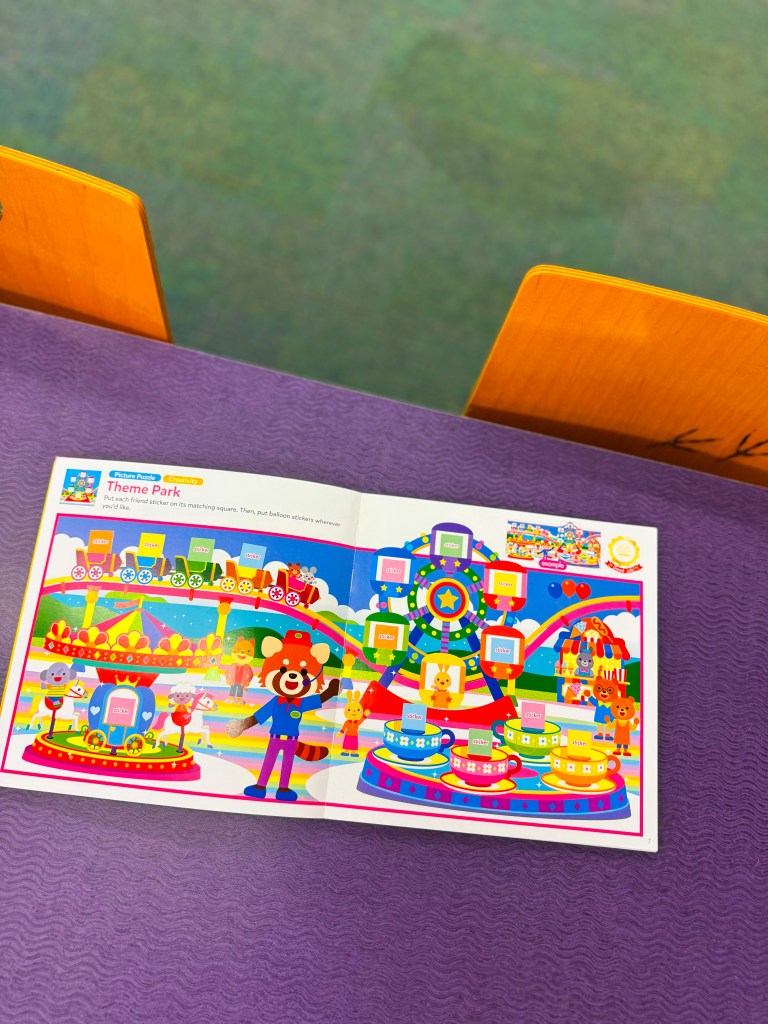
And that was my favorite part of this activity. He wasn’t just sitting quietly putting stickers on paper. He was actively learning.
Check out the sticker book on Timberdoodle’s website here.
Why Sticker Activities Are So Beneficial for Toddlers
One of the biggest takeaways for me was seeing just how much coordination was involved in something as simple as peeling and placing a sticker.
From an educator’s perspective, there are several important developmental skills being practiced during these activities.

Fine motor skills and pincer grasp: Peeling a sticker requires children to use their thumb and index finger to grasp a small edge and carefully separate it from the backing. This encourages finger strength, dexterity, and precise movements that also come into play when children begin using pencils, crayons, scissors, and other learning materials.
Bilateral coordination: I noticed how my son had to hold the sticker sheet steady with one hand while carefully peeling with the other. Using both hands together for different tasks is an important coordination skill that children practice through everyday activities like dressing, opening containers, and eventually cutting with scissors.
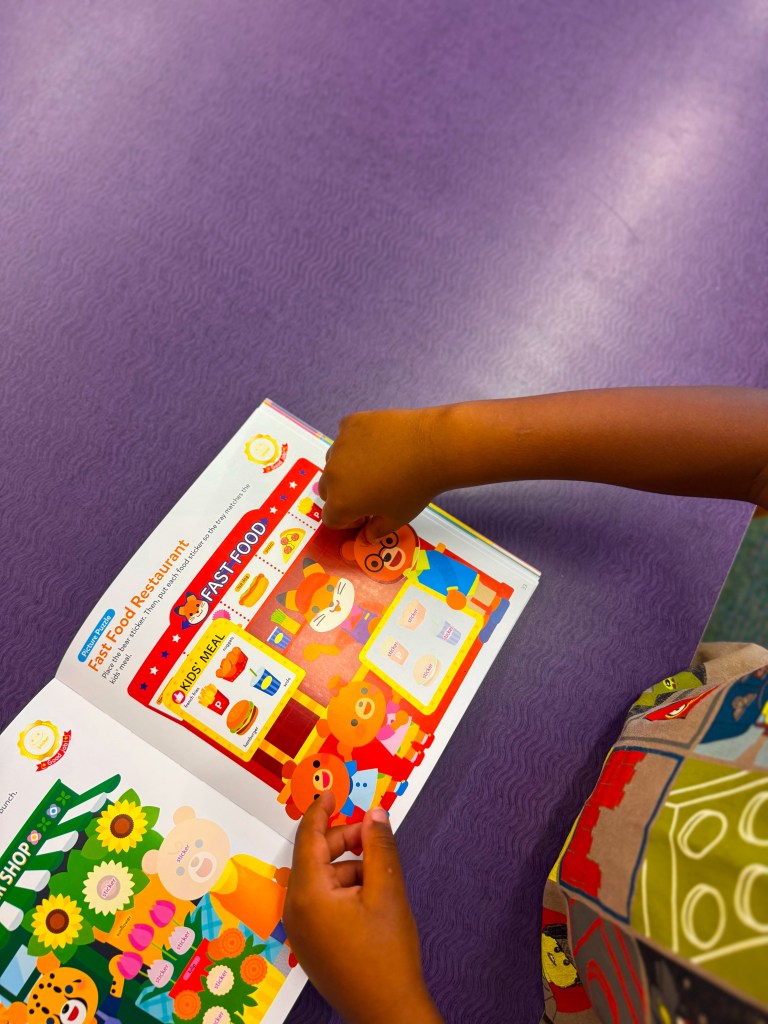
Hand-eye coordination and spatial awareness: Once he removed a sticker, he had to determine where it belonged and guide his hand to place it correctly. This required him to coordinate what he was seeing with his hand movements while figuring out how the sticker fit within the picture.
Problem-solving and visual discrimination: Matching activities encouraged him to examine pictures, recognize similarities, and make decisions about which stickers belonged in particular spaces.
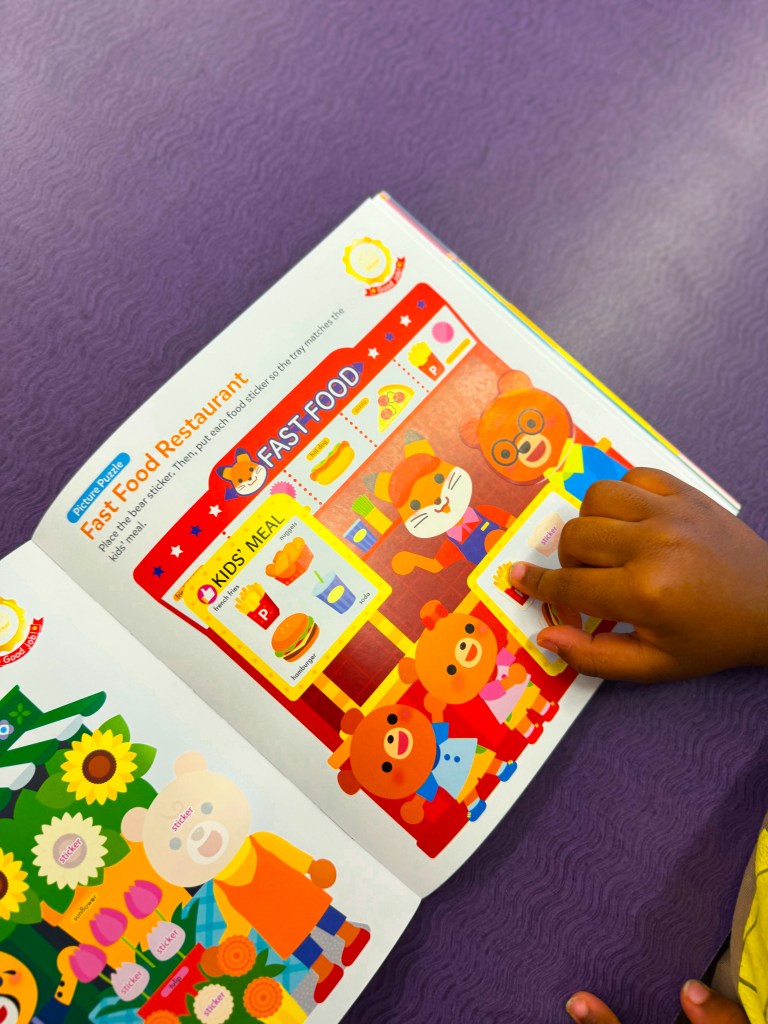
Concentration and attention: Perhaps the most noticeable benefit in our experience was how engaged he became. The activity gave him something specific to focus on, with a clear goal and an immediate result each time he successfully placed a sticker.
These are skills toddlers develop gradually through repetition and everyday play. Sticker activities offer one more enjoyable way to practice them.
What’s Inside Gakken Play Smart 500 Stickers Outdoor Adventures?
Designed for ages 2 and up, this colorful activity book includes more than 500 stickers and 64 pages featuring picture puzzles, matching games, number activities, creative scenes, and other preschool learning exercises.
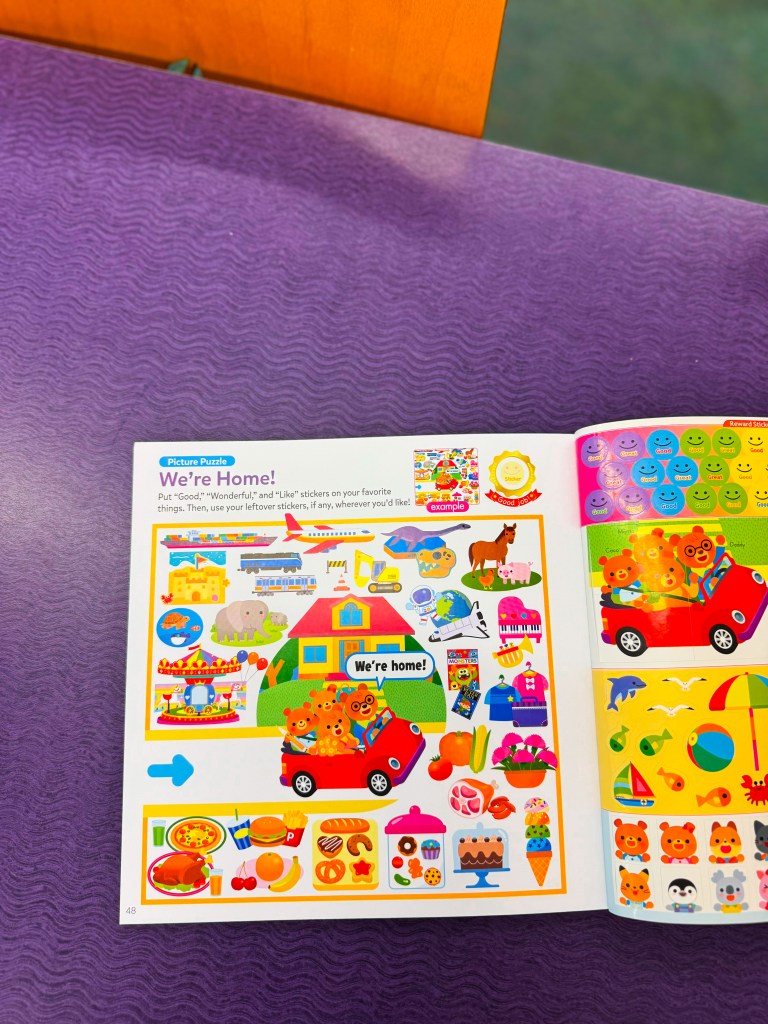
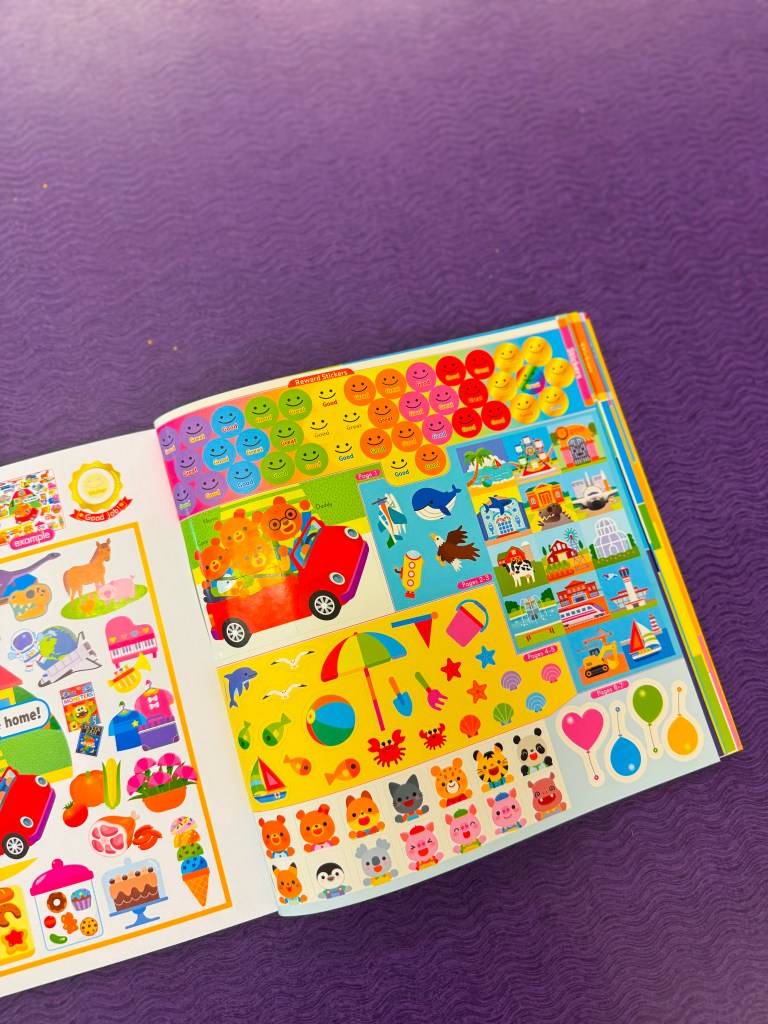
The book takes children through familiar and imaginative settings, including beaches, restaurants, amusement parks, neighborhoods, and safari adventures. Some pages ask children to match pictures or numbers, while others encourage them to create their own scenes using the included stickers.
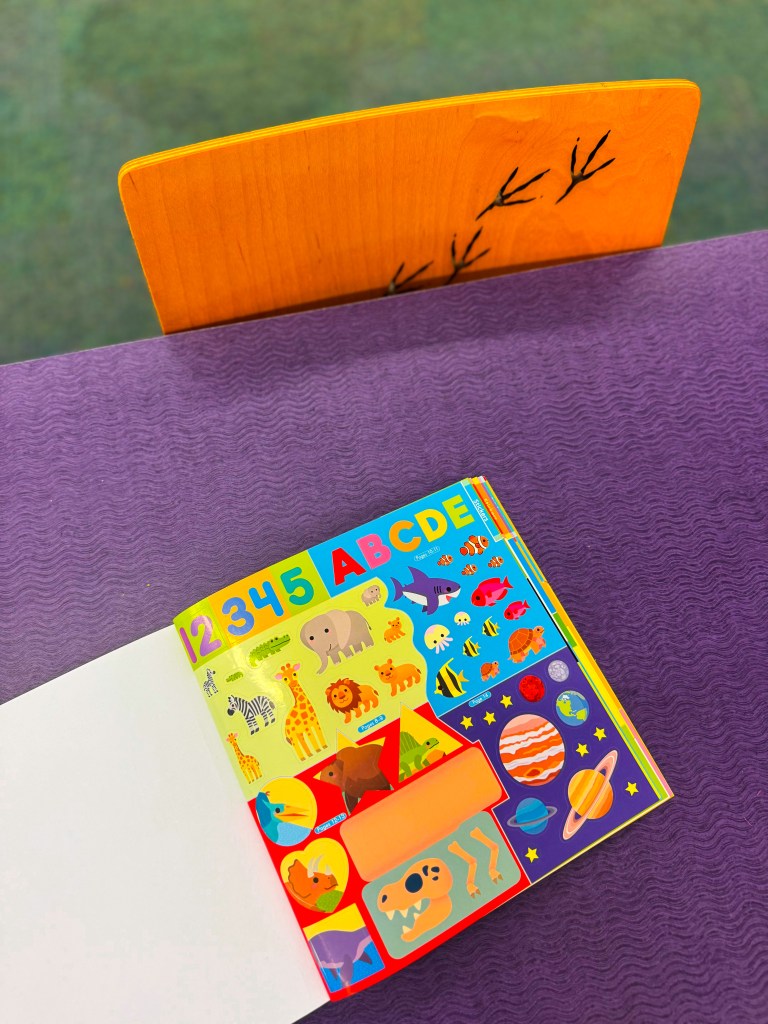
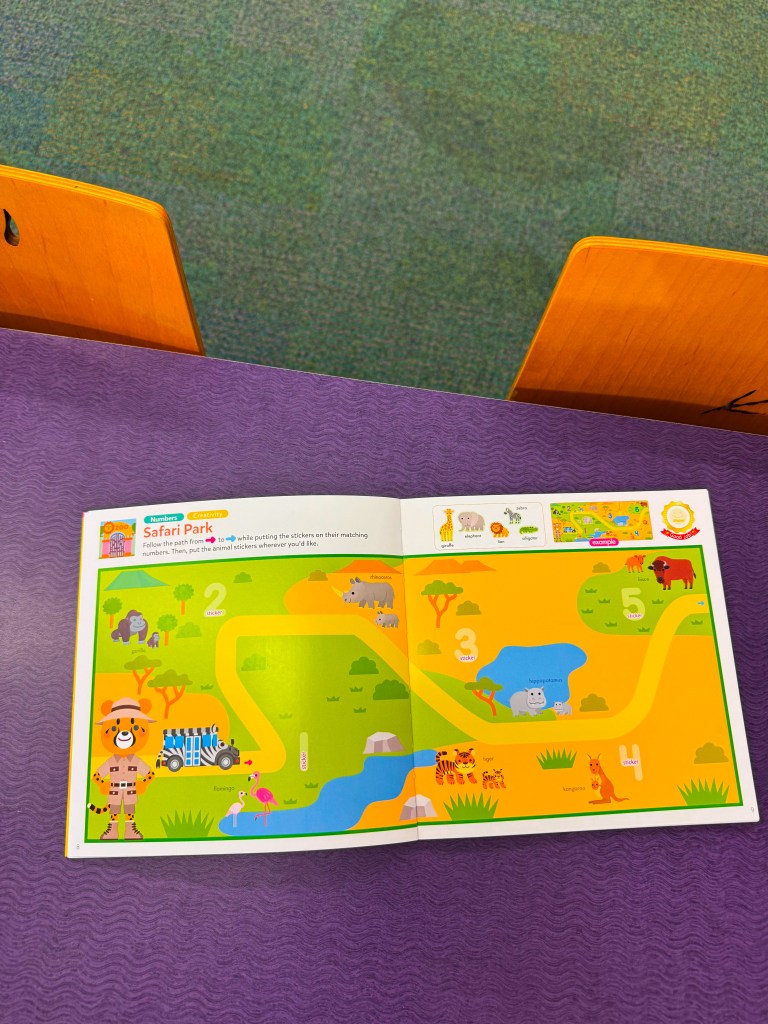
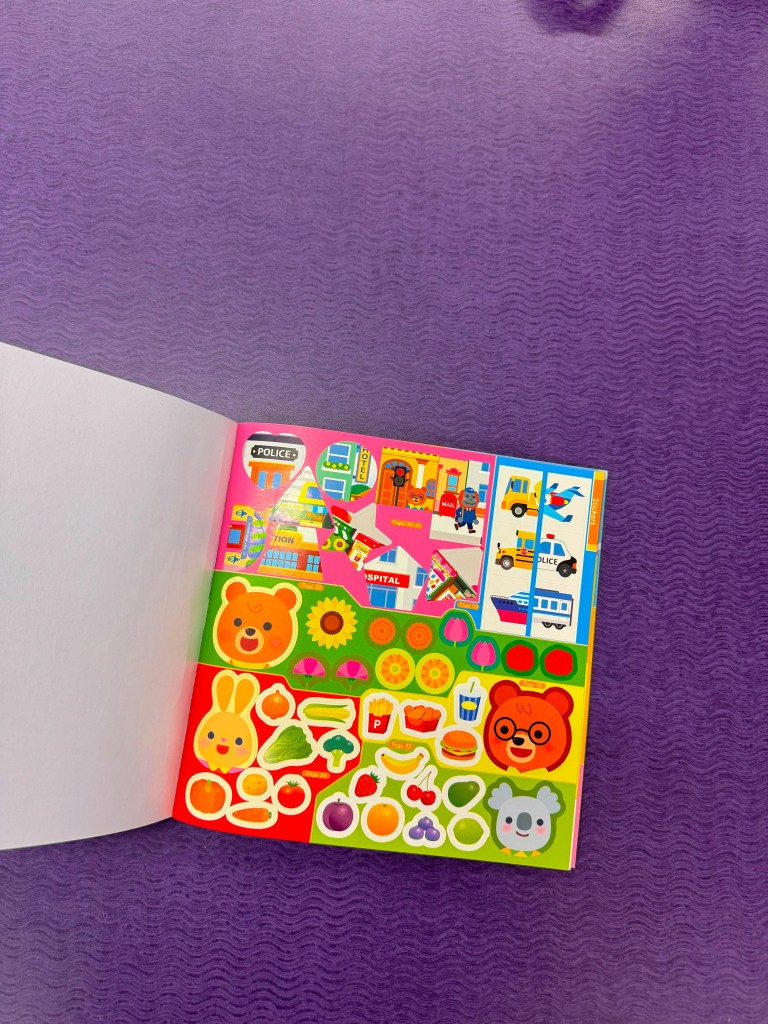
I appreciate that the activities offer a combination of structured learning and creative freedom. Children can practice following simple directions while still having opportunities to make choices, explore their interests, and use their imagination.
It’s also a convenient screen-free activity for homeschool mornings, quiet time, library visits, or traveling.
Part of Timberdoodle’s Gakken Sticker Learning Collection
The Gakken Play Smart 500 Stickers Outdoor Adventures book is also included in Timberdoodle’s Gakken Sticker Learning Collection, a three-book bundle designed to introduce early learning concepts through hands-on sticker activities.
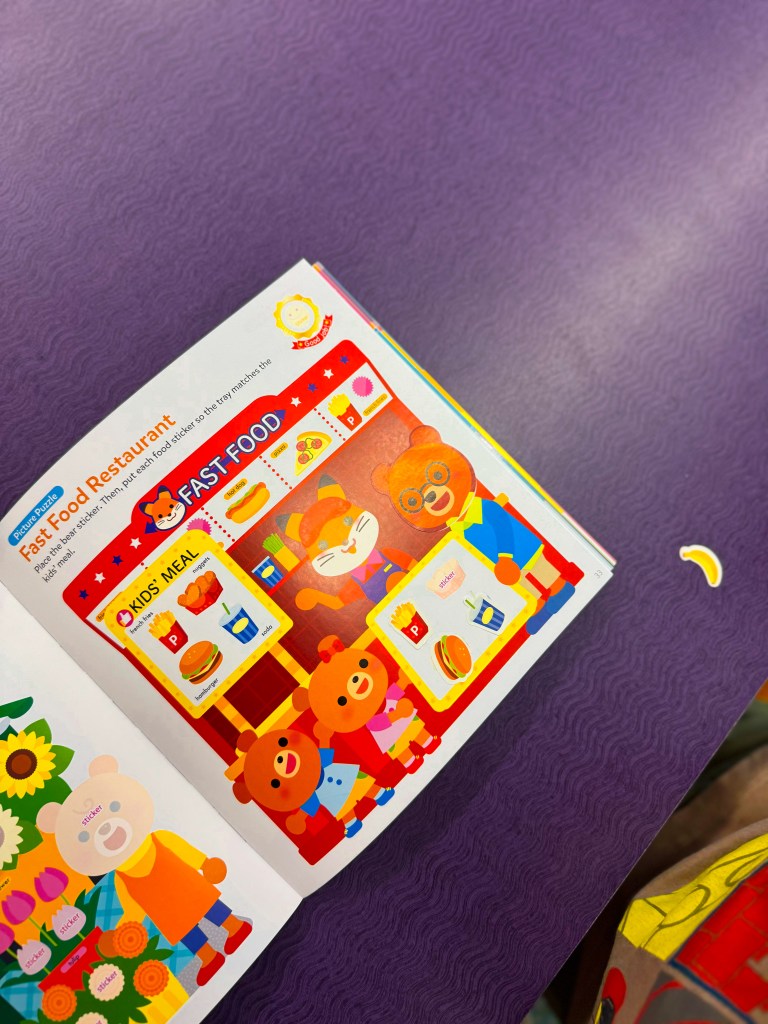
Along with Outdoor Adventures, the collection includes My First Sticker Activity Book and Sticker Superstar, which feature additional activities involving shapes, numbers, matching, patterns, and creative play.
Although we’ve only explored Outdoor Adventures so far, I like the idea of having several sticker-based learning resources available to rotate throughout the preschool years.
You can explore the Gakken Sticker Learning Collection at Timberdoodle.
Final Thoughts: Simple Activities Can Make a Big Difference
What I love most about the Gakken 500 Stickers activity book is that it doesn’t feel like a traditional lesson. My son was simply enjoying himself, recognizing familiar objects, and figuring out where his stickers belonged.
Meanwhile, he was practicing the very skills that support so many other areas of early childhood development.
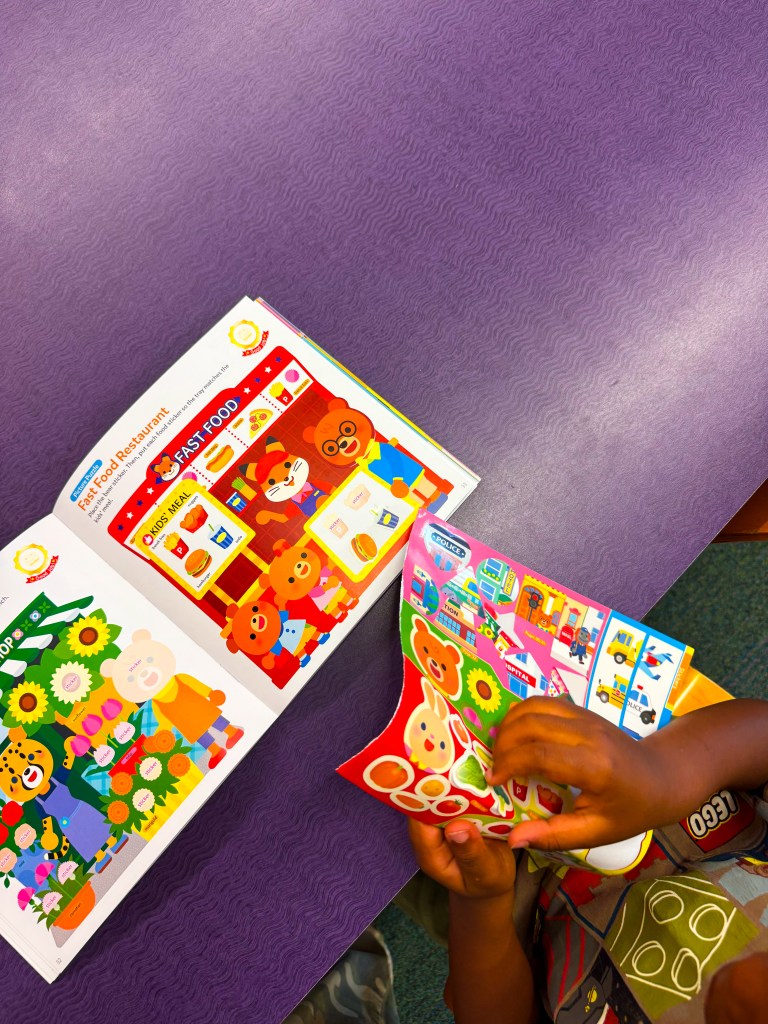
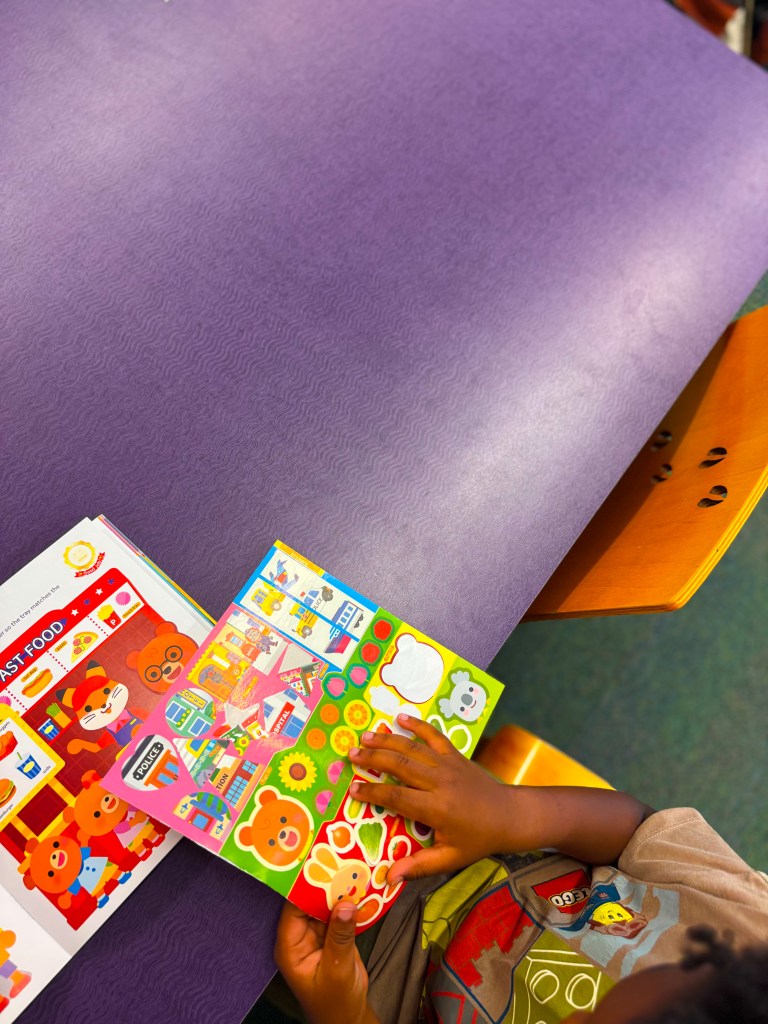
For parents looking for fine motor activities for toddlers, screen-free preschool learning activities, or simple ways to encourage learning through play, this sticker book is worth considering.
Sometimes learning doesn’t require an elaborate setup, expensive materials, or a lengthy lesson plan. Sometimes it really is as simple as a sheet of stickers and a curious little learner.
Pin these for later…
-
Fine Motor and Number Recognition Activity for Kindergarten: Djeco Caribbean Mosaics Review

Finding kindergarten activities that combine learning with something children actually want to sit down and complete can be surprisingly difficult, especially when you have a child who prefers movement over traditional seatwork. That is one reason I enjoyed using Djeco Caribbean Mosaics with my kindergartner.
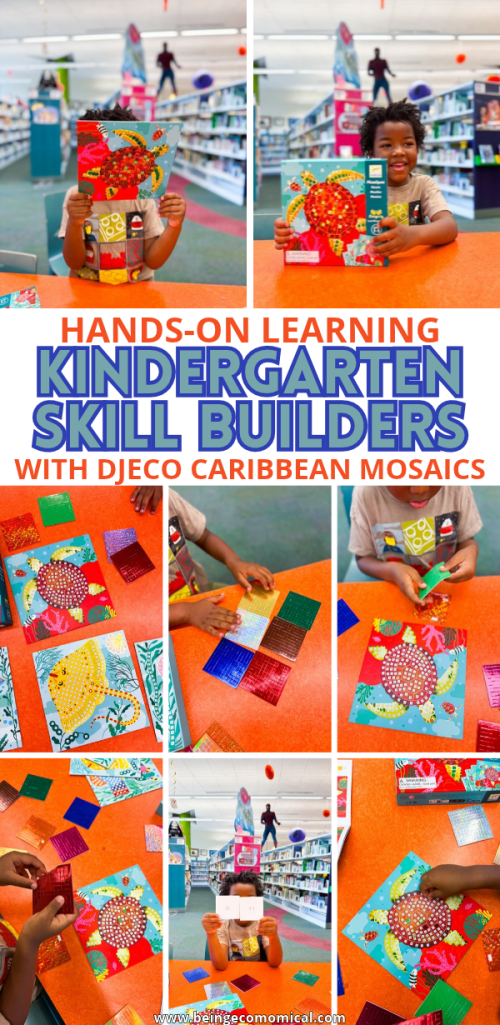
We received this mosaic activity as part of our Timberdoodle Kindergarten Curriculum Kit, and while it is technically an art project, I found it useful for much more than creativity.
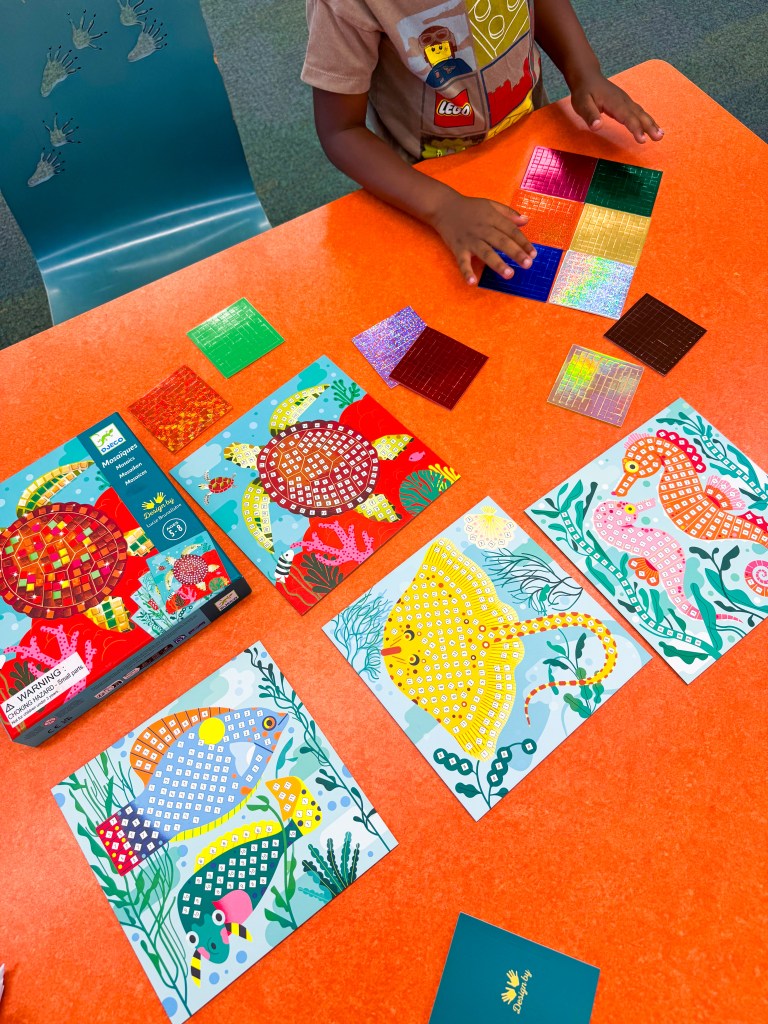
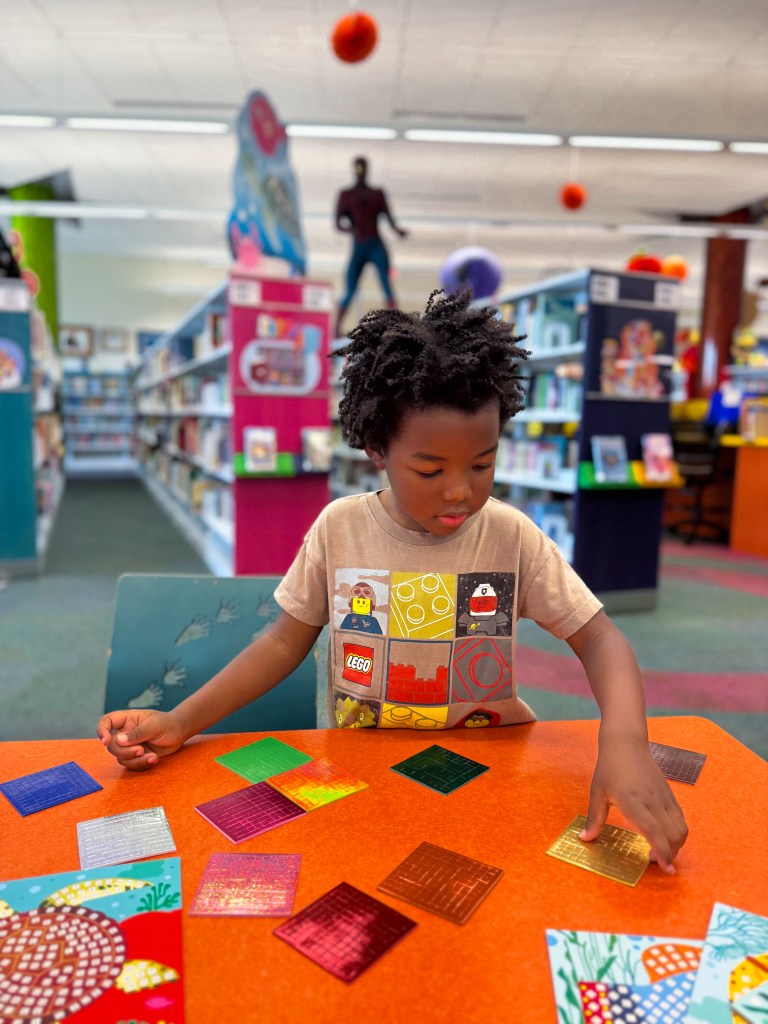
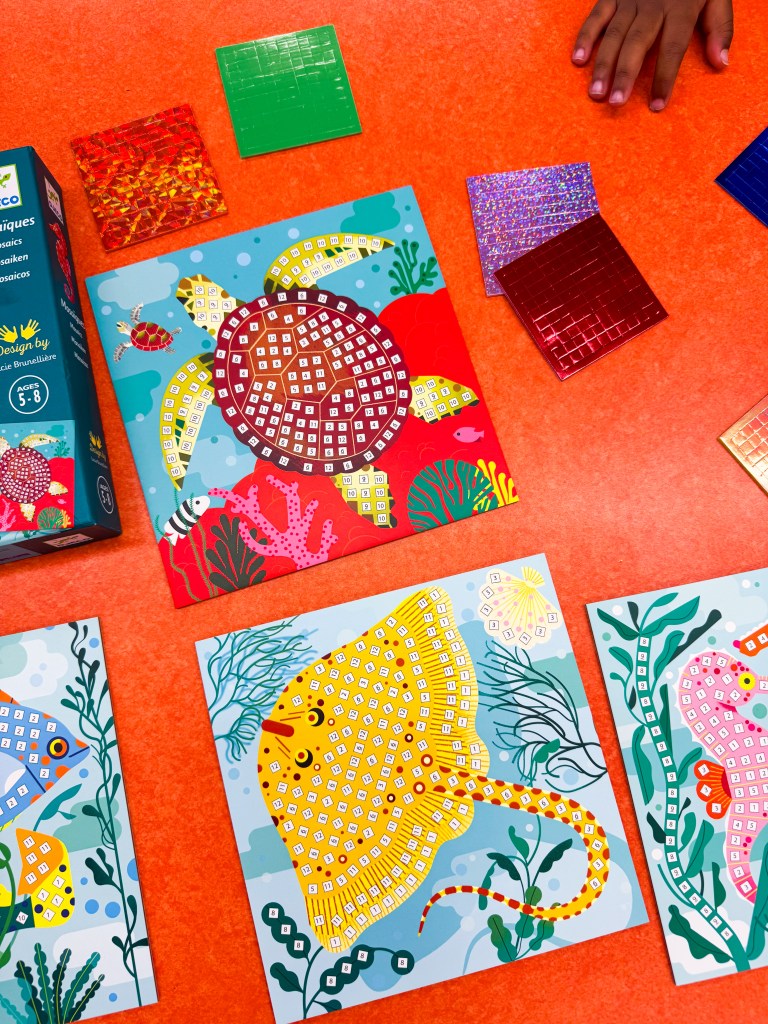
Children work with numbered mosaic pieces to complete colorful ocean-themed designs, which naturally incorporates number recognition, visual matching, fine motor skills, hand-eye coordination, concentration, and independent work.
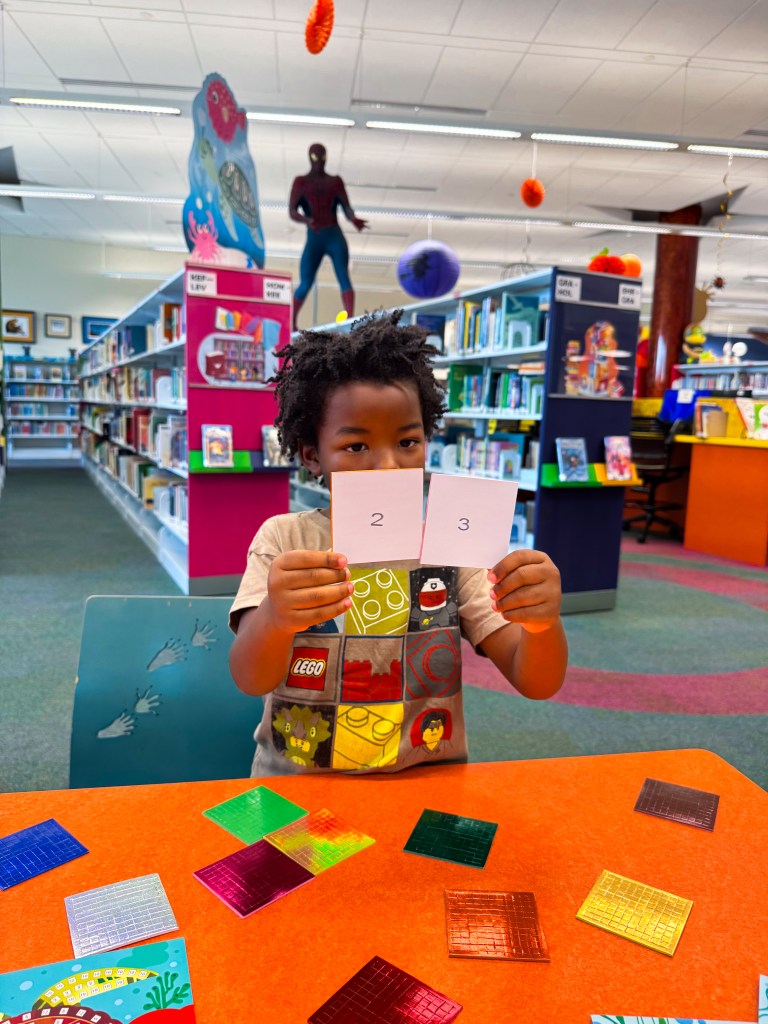
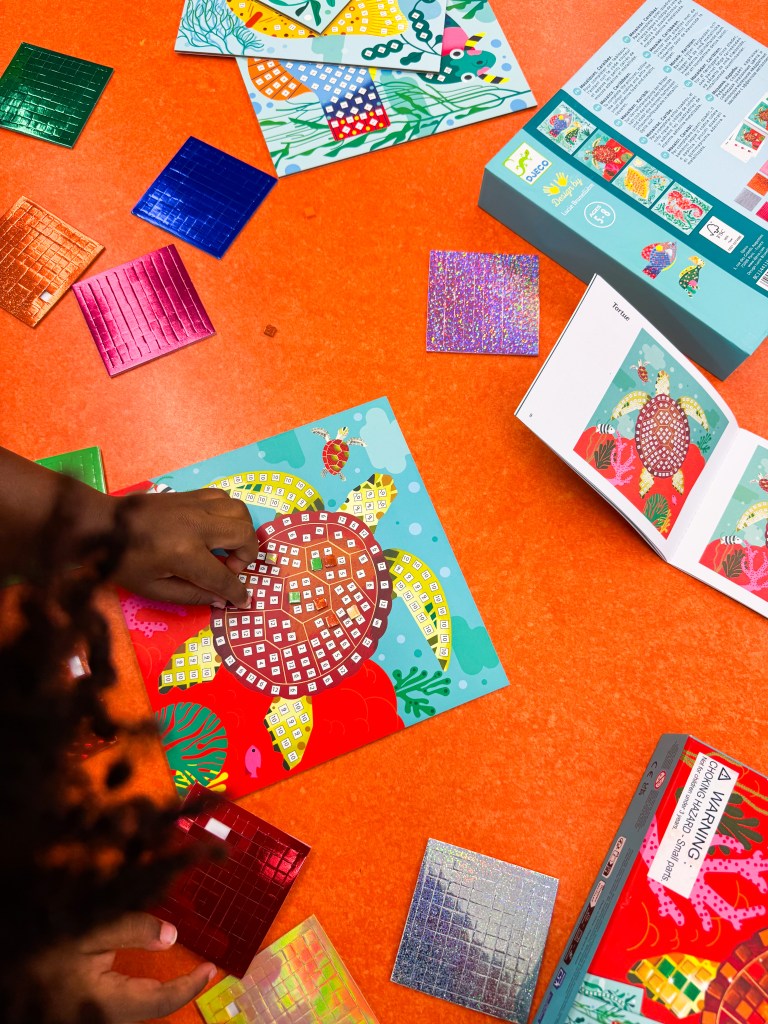
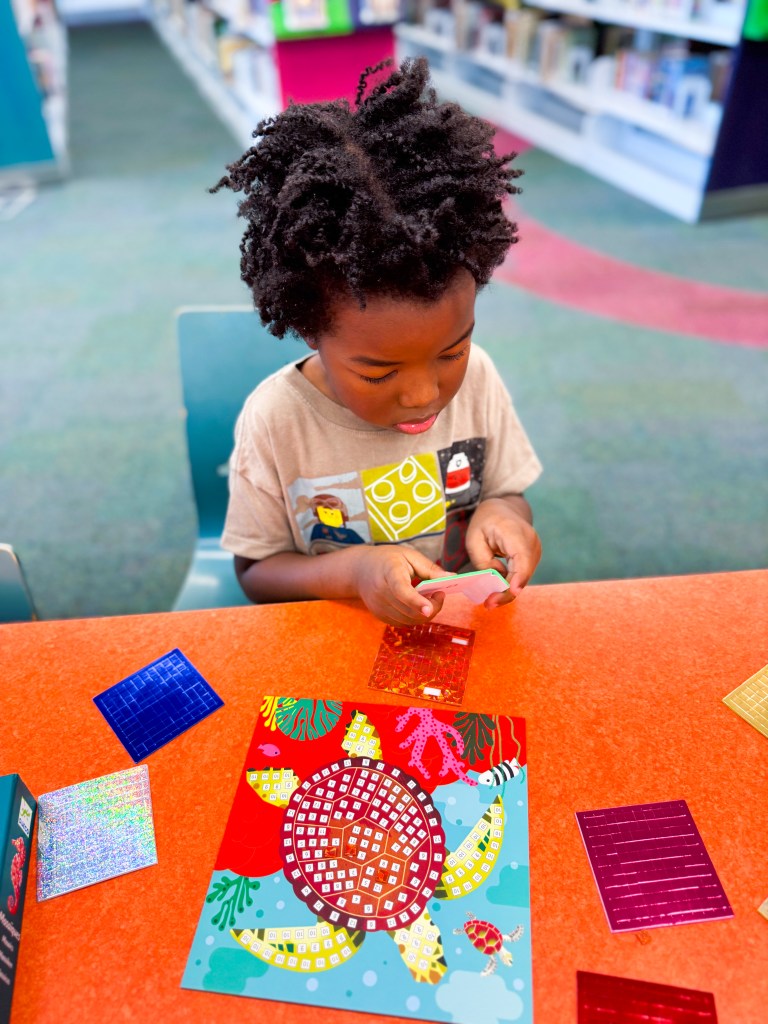
Those were the educational benefits I expected. What surprised me was how calming the activity was for my son.
He is very much a busy-body kindergartner who enjoys movement and hands-on learning, so I pay close attention when something holds his attention without requiring constant redirection. With this project, he settled into the process, concentrated on matching his pieces correctly, and continued working until he completed his mosaic.
For me, that made it much more valuable than simply another art activity.

Fine Motor Skills Through Hands-On Mosaic Art
Fine motor development is an important part of kindergarten because children use those small hand and finger movements for so many everyday academic tasks.
Writing, drawing, cutting, manipulating math tools, turning pages, fastening clothing, and using school supplies all require increasing control of the hands and fingers.
Djeco Caribbean Mosaics provides that practice in a very natural way.
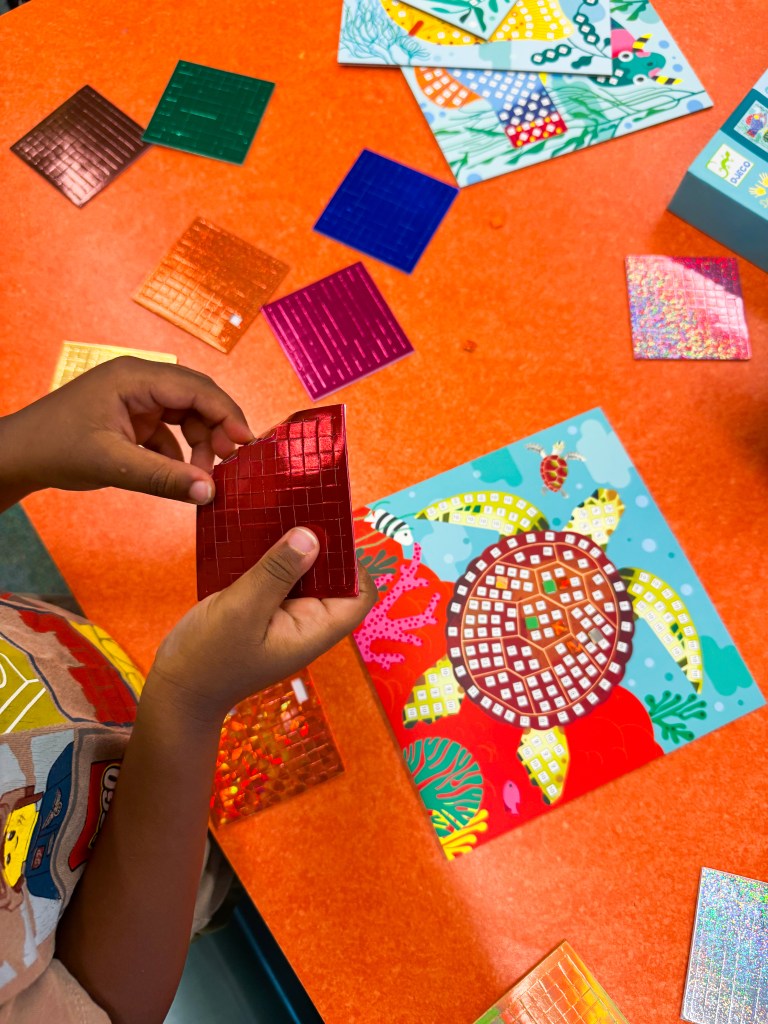
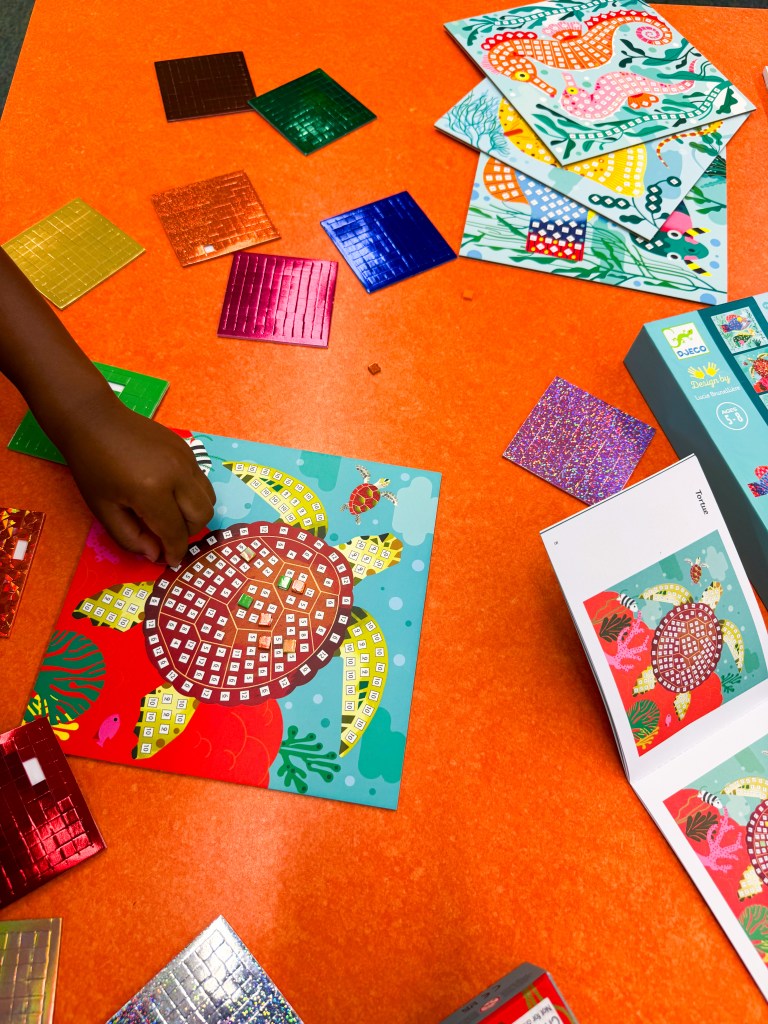
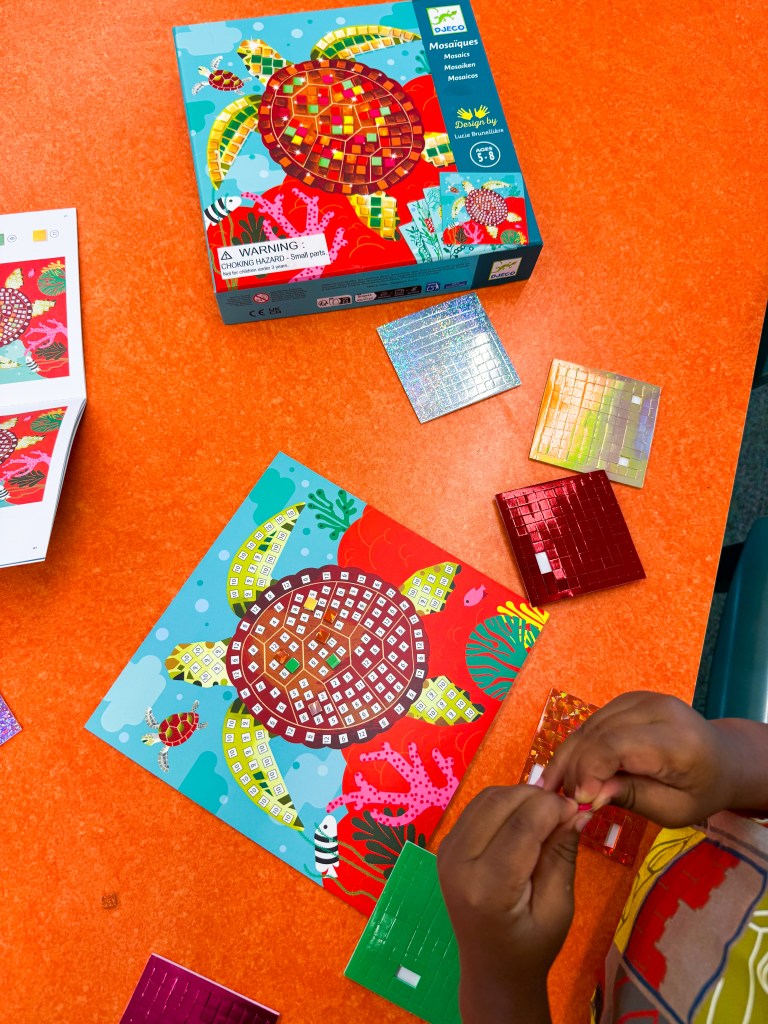
The mosaic sheets contain rows of small adhesive squares that children remove individually and place onto the corresponding spaces on their picture. Picking up a small piece, separating it from the sheet, controlling it between the fingers, and positioning it accurately on the page requires much more precision than simply placing a large sticker onto paper.
That repeated peel-and-place motion gives children plenty of opportunities to practice finger dexterity, hand-eye coordination, pincer grasp, and controlled hand movements without the activity feeling like fine motor practice.
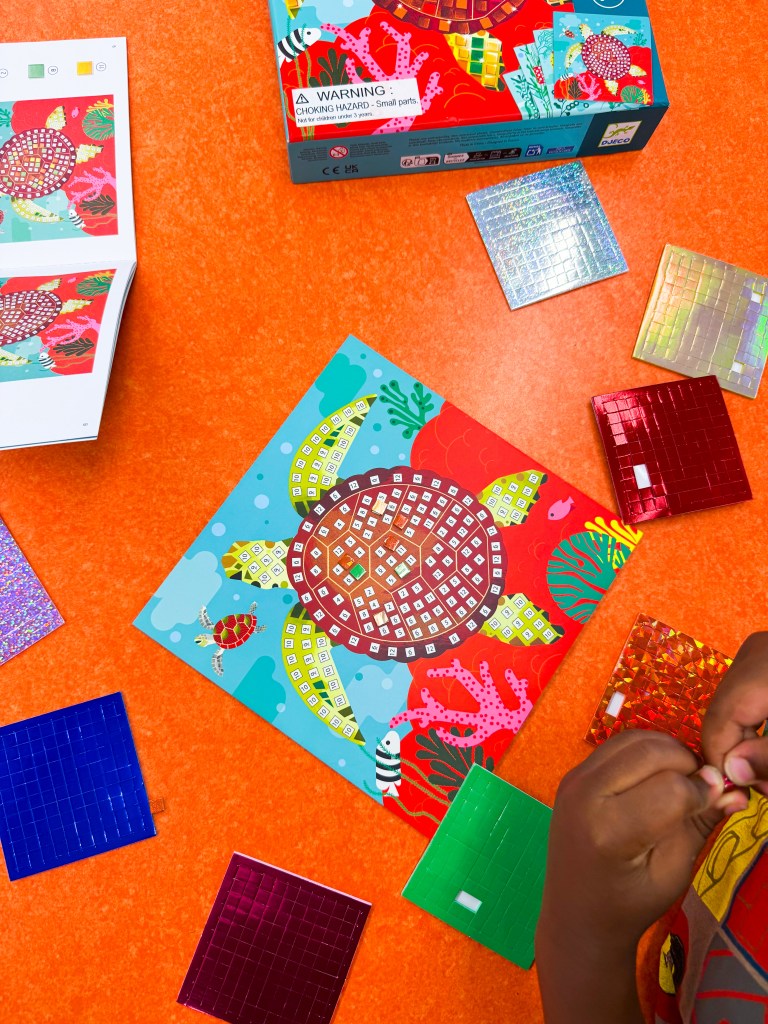
I particularly liked this for my son because he was motivated by the finished picture. Instead of asking him to repeat a fine motor exercise simply for practice, he had a clear reason for every movement he was making. Each small square contributed to the turtle he was creating.
For parents looking for fine motor activities for kindergarten, activities like this can be especially useful because the motor work is embedded inside something creative.
Number Recognition and Visual Matching Practice
Another reason this worked well in our kindergarten routine was the amount of number recognition involved.
The artwork is divided into small, numbered sections, and each mosaic color corresponds with a number. Before placing a piece, my son had to identify the number on the picture, locate the correct mosaic sheet, and then place the matching square in the correct position.
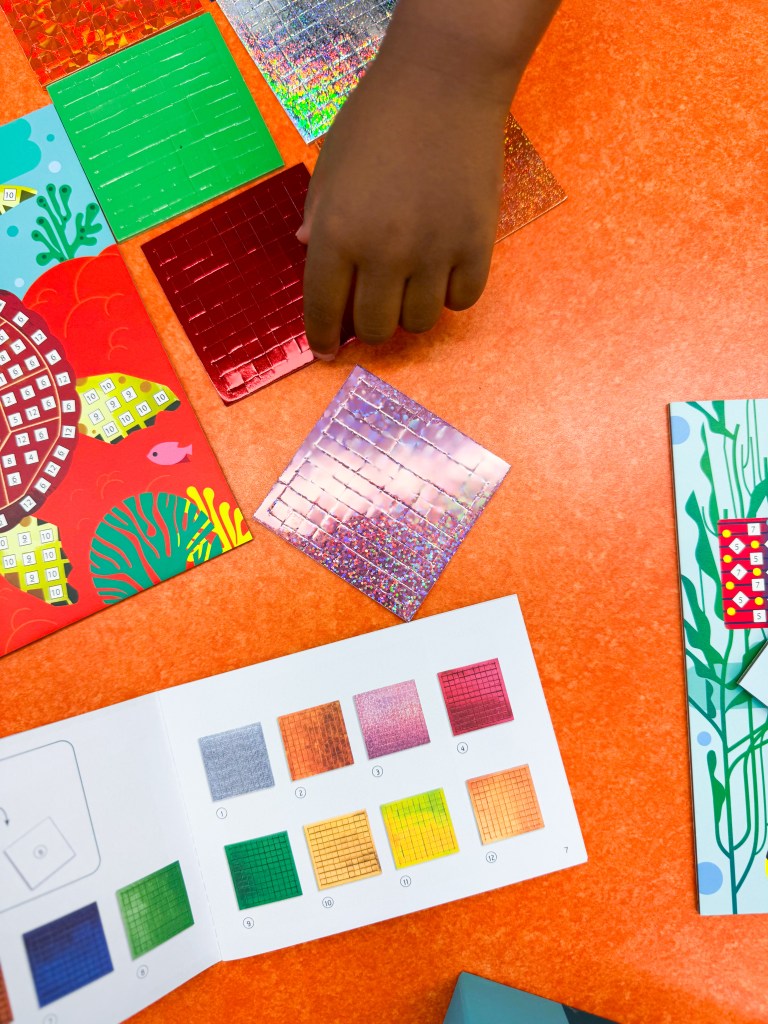
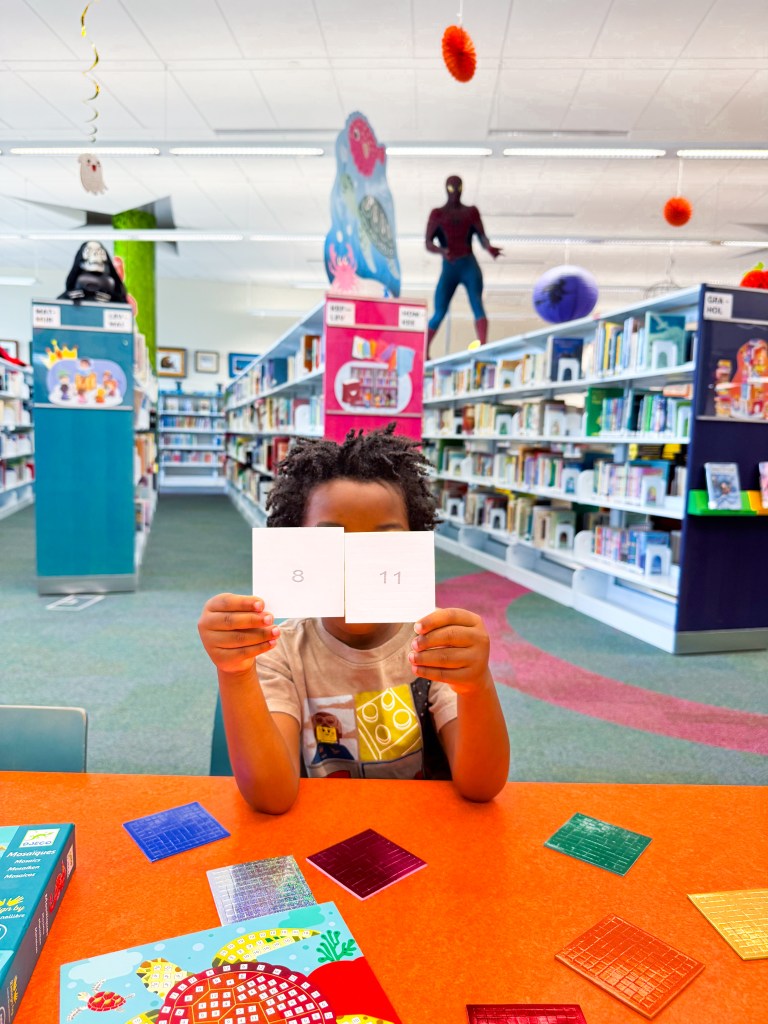
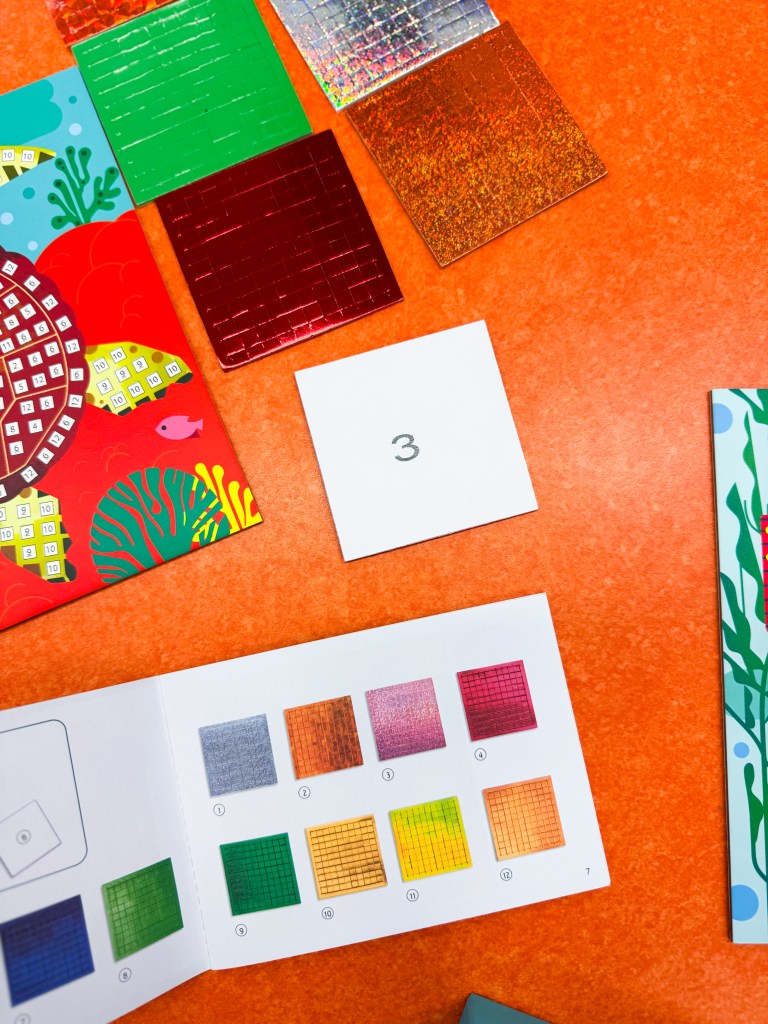
That creates repeated exposure to numbers without turning the activity into another math worksheet.
For children who are still becoming comfortable recognizing numbers quickly, repeated visual matching can help reinforce that familiarity.
The child isn’t simply naming a number once and moving on. They continue searching for the same numbers throughout the project, comparing them with the guide and using that information to decide which mosaic piece belongs in each space.
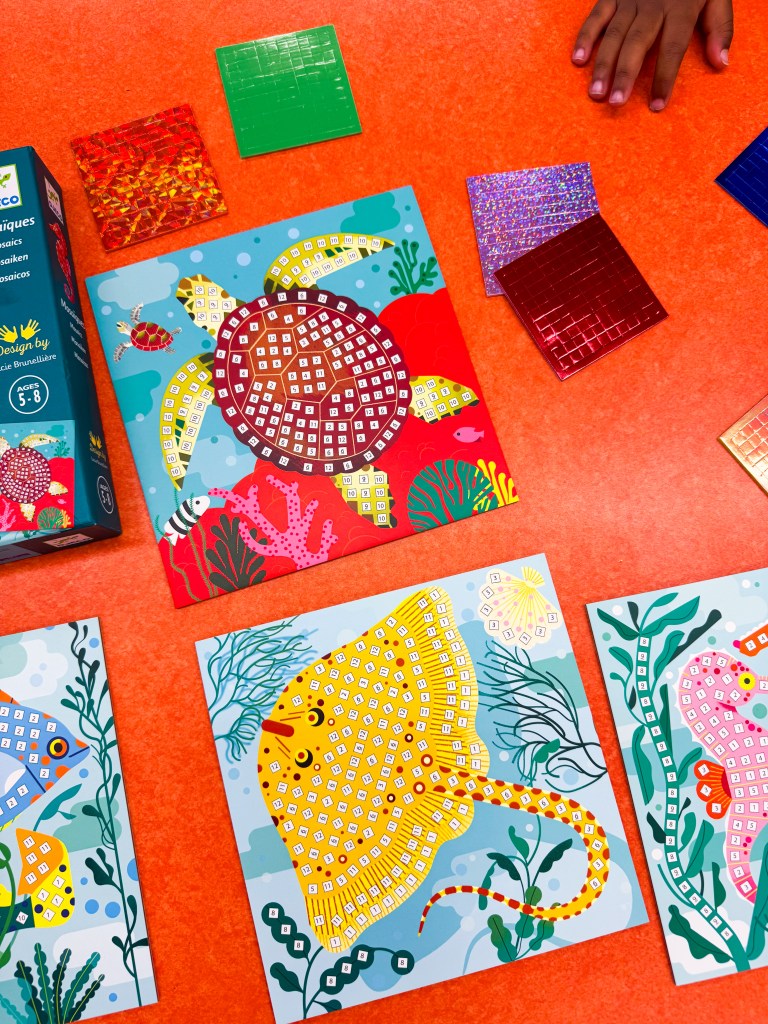
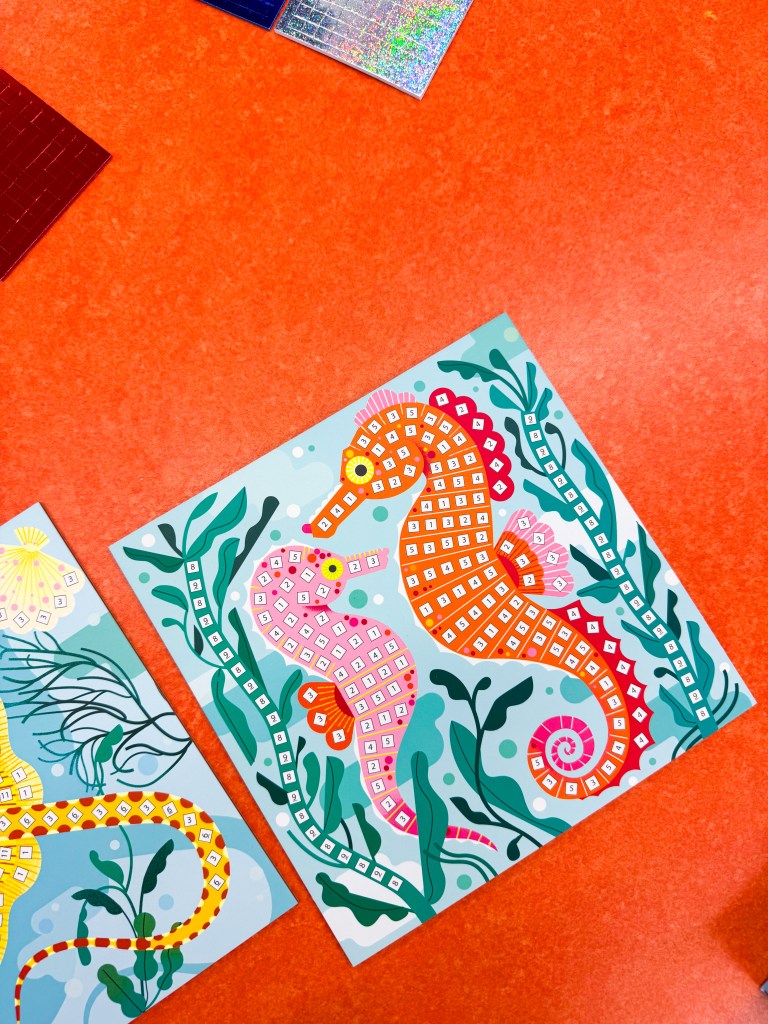
This also introduces an element of following a visual key, similar to the thinking children use with color-by-number activities, simple charts, matching exercises, and other early learning activities.
It requires children to stop, observe, compare, make a choice, and then check whether that choice makes sense.
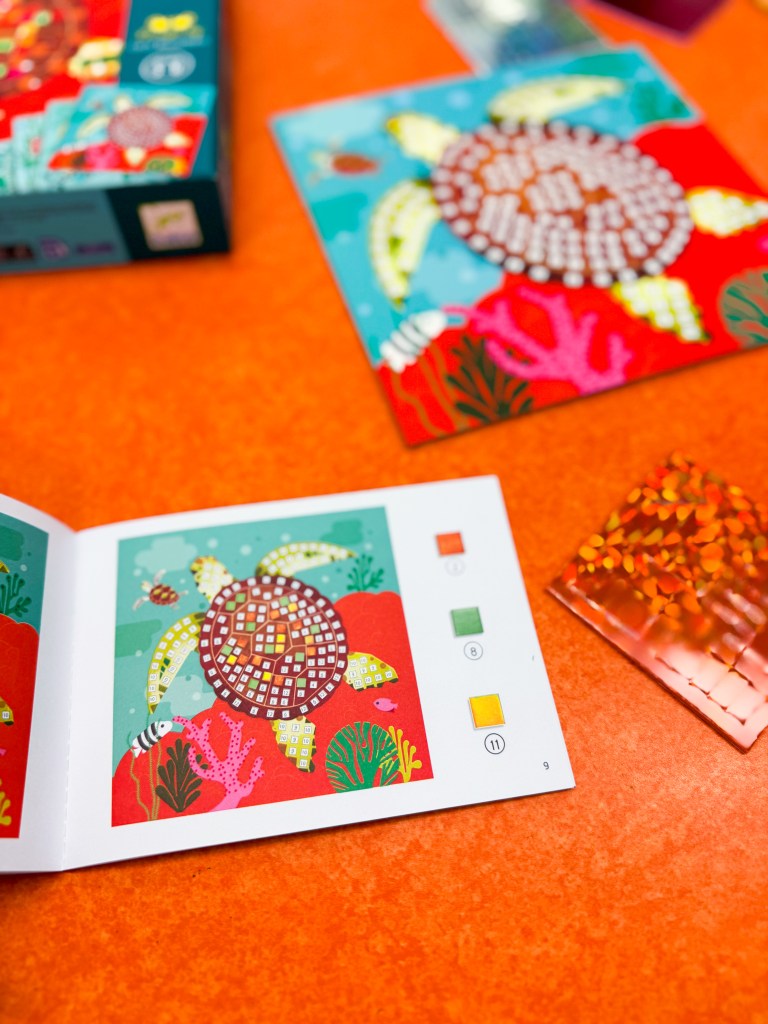
That combination is one of the reasons I like hands-on kindergarten activities so much. Several skills can be practiced during one project without making the child feel as though they are moving from lesson to lesson.
A Concentration Activity for an Active Kindergartner
The benefit that stood out most in our house was concentration.
My kindergartner likes to move. Sitting at a table for a long period of time simply because an assignment requires it isn’t naturally appealing to him, and I don’t necessarily expect it to be.
What I look for instead are activities that give him enough to do that concentration happens naturally.
This mosaic project did exactly that.

Completing the picture required him to continually move through a simple sequence: identify the number, find the correct piece, peel it away, position it, press it onto the picture, and then begin again.
Because each individual step was small and manageable, the overall project never seemed overwhelming. He could focus on one piece at a time while gradually seeing the image come together.
That made this a surprisingly effective quiet kindergarten activity for us.
He wasn’t passively sitting at a table. His hands were working, his eyes were scanning the page, and he was making decisions throughout the project. The activity gave all of that busy energy somewhere productive to go.
As a mom, I genuinely enjoyed watching him become so absorbed in it. There wasn’t the usual feeling of trying to convince an active child to remain seated. He wanted to stay because he wanted to see the finished result.
For families with children who tend to bounce quickly between activities, that may be one of the biggest advantages of this type of hands-on project.
Building Patience and Independent Work Skills
Kindergarten is also a good time to begin developing the ability to work through a multi-step activity independently.
Djeco Caribbean Mosaics worked well for that because the instructions are primarily visual and the basic process is repetitive. Once my son understood how to match the numbers with the correct mosaic sheets, he didn’t need me directing every single step.
He could look at the project, determine what he needed next, and continue working.
That made it useful as an independent kindergarten activity, but it also gave him an opportunity to practice persistence.

A completed mosaic contains a lot of individual pieces. Children don’t see the final result after placing three or four squares. They have to continue working, filling in one area after another until the picture is finished.
That process reinforces something I think is especially valuable for young children: the idea that larger projects are completed through small steps.
He didn’t have to complete an entire turtle all at once.
He just had to find the next number.
Then the next one.
Eventually, all of those tiny steps became a finished piece of artwork he could hold up and be proud of.
Why I Like This for Hands-On Kindergarten Learning
One of the reasons I continue to enjoy including activities like this in our homeschool is that kindergarten doesn’t have to be divided into rigid categories where math looks one way, art looks another way, and fine motor practice happens separately.
Young children can practice several developmental and academic skills within the same experience.
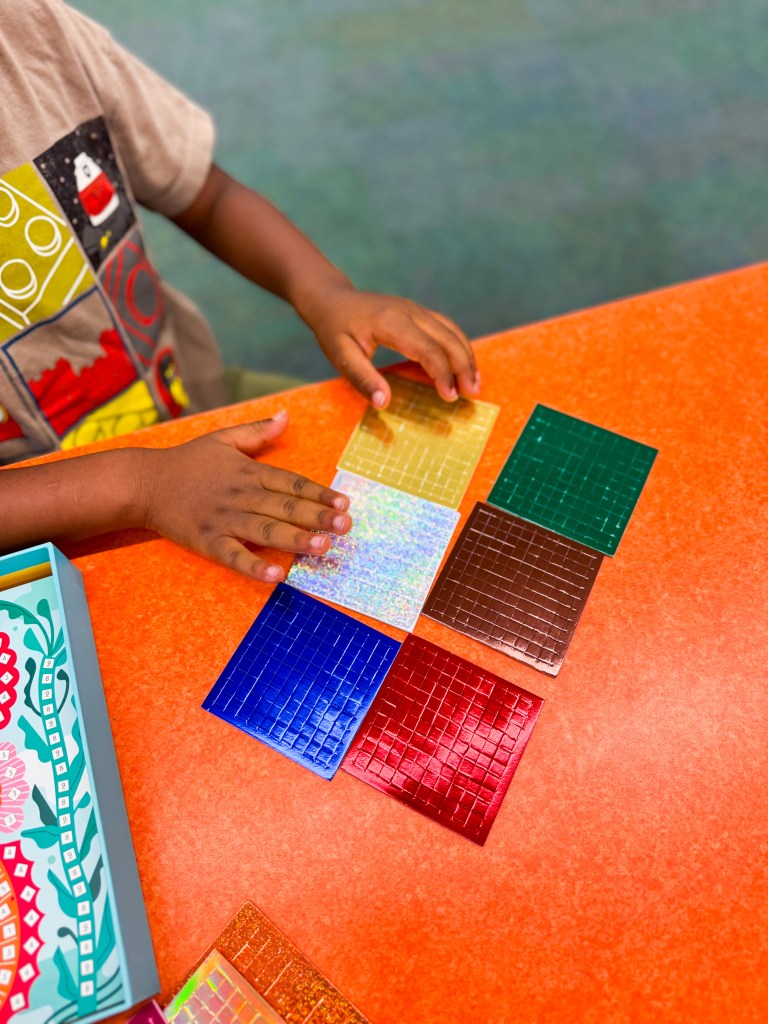
With Djeco Caribbean Mosaics, my son was practicing:
- fine motor control and finger dexterity
- number recognition
- visual discrimination and matching
- hand-eye coordination
- concentration and attention to detail
- following a visual guide
- patience and persistence
- independent work
- creative expression
And to him, he was making a turtle.
That is the kind of learning I want more of during the early elementary years.
Is Djeco Caribbean Mosaics Worth Adding to Kindergarten?
For our homeschool, this was an easy yes.
I wouldn’t look at it as a replacement for formal math, handwriting, or other core kindergarten work. Its value is in how naturally it supports the skills young children are already developing.
It gave my son additional number recognition practice, challenged him to use precise fine motor movements, encouraged him to follow directions independently, and kept him concentrating on one activity for a meaningful amount of time.
And for a mom with a very active little boy, the calmness may have been my favorite benefit of all.
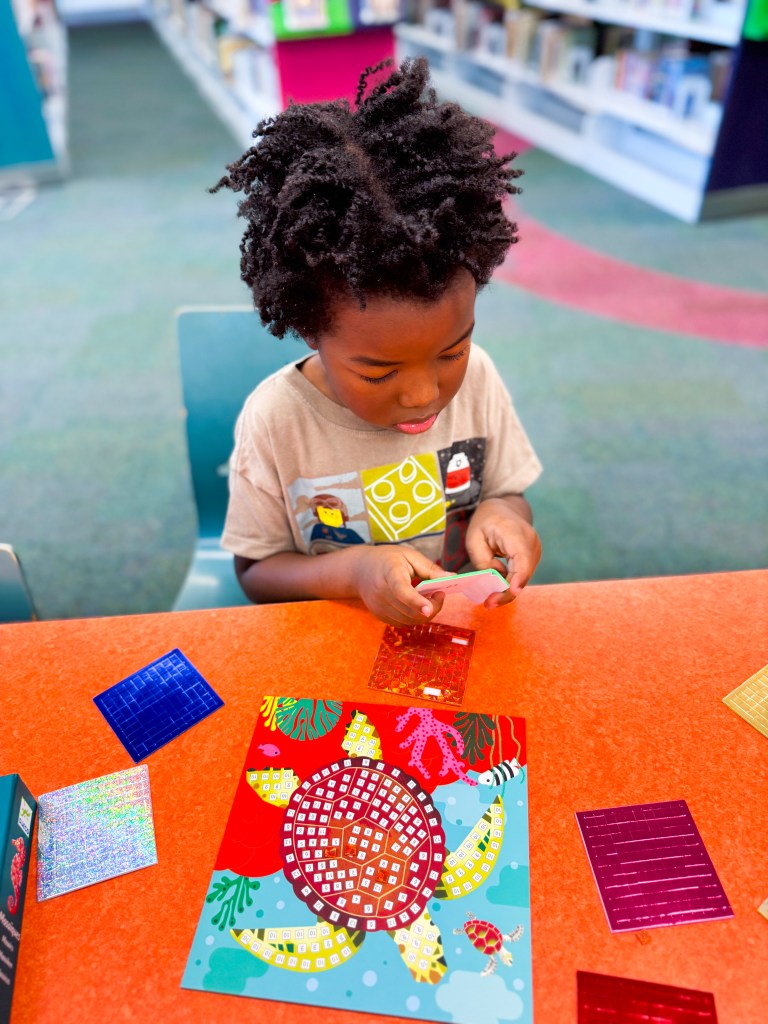
Watching him sit down, work through the project piece by piece, and proudly finish his mosaic reminded me that sometimes the best concentration activities for kids aren’t activities designed specifically to make children sit still.
They’re activities interesting enough that children decide to sit still on their own.
If you’re looking for a hands-on kindergarten activity that combines fine motor skills, number recognition, concentration, and art, Djeco Caribbean Mosaics is one I would happily recommend.
You can find Djeco Caribbean Mosaics from Timberdoodle here.
Pin these for later…
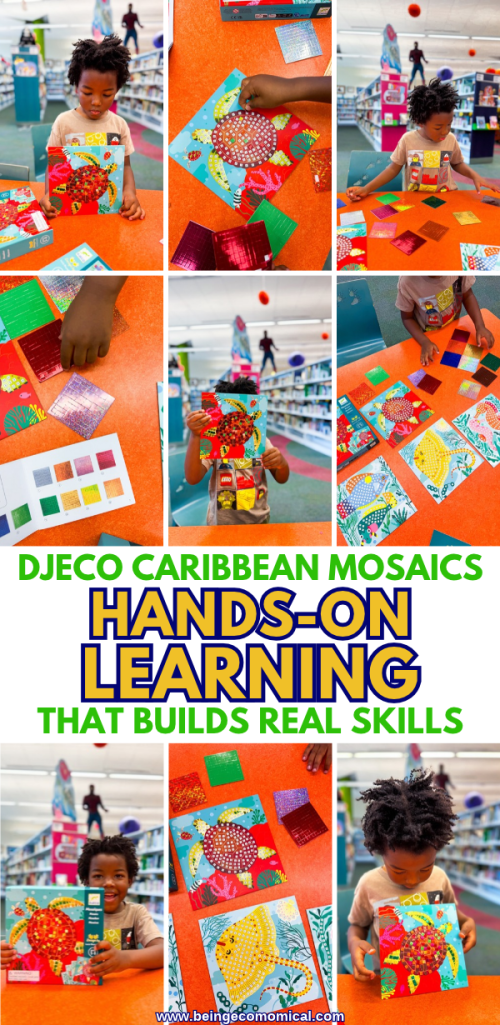
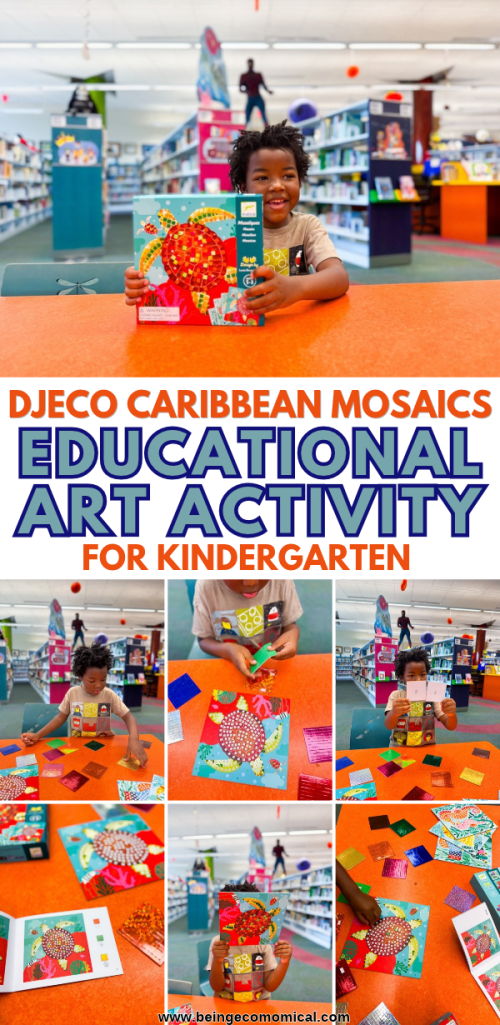
-
Subscribe
Subscribed
Have a WordPress.com account? Log in now.

